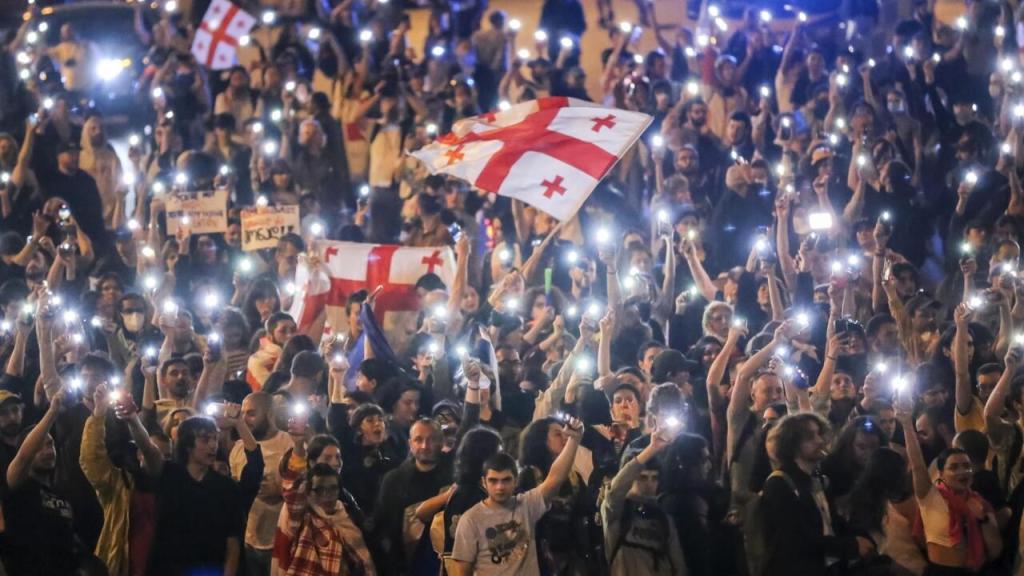
The streets of Tbilisi have erupted in protests—protests against a government that has turned its back on its people’s aspirations for democracy and European integration.
The images are both inspiring and heartbreaking: tens of thousands marching with EU and Georgian flags, their voices demanding a future of transparency and freedom, met with tear gas, water cannons, and violence.
This is a pivotal moment—not just for Georgia, but for Europe.
The decision by the Georgian Dream government to suspend EU accession talks is more than a policy choice; it’s a betrayal. It’s a betrayal of the Georgian people, who have consistently and courageously expressed their desire for a European future. And it’s a betrayal of the democratic values that form the bedrock of Europe.
How did we get here?
The ruling Georgian Dream party, accused of rigging last month’s parliamentary elections, has steadily moved the country away from its democratic commitments.
The EU granted Georgia candidate status last year, but with clear conditions for reform. Instead of meeting those conditions, the government has doubled down on authoritarian tactics, passing repressive laws and silencing dissent.
When the European Parliament called for accountability, Prime Minister Irakli Kobakhidze lashed out, accusing EU leaders of blackmail and foreign interference. His rhetoric, echoing that of other authoritarian-leaning leaders, seeks to distract from the undeniable: his government has failed to uphold the democratic promise Georgians fought so hard for.
Now, Europe faces a choice.
Will we act decisively to support the Georgian people in their quest for a democratic future? Or will we allow yet another government to undermine democracy while claiming impunity?
The stakes are immense.
Georgia is a nation that has consistently resisted Russian influence, standing as a beacon of pro-European sentiment in a region fraught with instability. Its people have made their choice clear, but their government has chosen to suppress that choice.
We should not let this moment pass.
The EU must act—not just with statements but with concrete measures. This means applying targeted sanctions against those responsible for democratic backsliding. It means bolstering civil society and independent media in Georgia. And it means making it clear that the door to Europe remains open—but only if the Georgian government respects its people’s will.
Europe must stand with them—not just because Georgia’s future is at stake, but because Europe’s credibility is as well. If we fail to support those fighting for democracy on our borders, what message does that send to others looking to the EU as a model of freedom and justice?
This isn’t just about sanctions or diplomatic pressure. It’s about reaffirming what Europe stands for.
The Georgian people are showing us what courage looks like. Now it’s our turn to show them what solidarity looks like.
This is a moment for leadership, for bold action, for standing on the side of those who fight for democracy.
Let’s make it clear: Europe sees Georgia. Europe stands with Georgia.
And together, we can ensure that the dream of a democratic, European Georgia does not die in the streets of Tbilisi.
My friend Vato, is on the ground in Tbilisi, and is sharing firsthand accounts of the protests. His videos capture both the courage of the demonstrators and the stark reality of the violence they face—tear gas, water cannons, and masked enforcers intent on silencing dissent.
 Christos Floros
Leave a comment