Author: Christos Floros

  • Human Rights have no borders

    Human Rights have no borders

    Human rights serve as the unshakable foundation of a just and fair society, safeguarding the inherent value and dignity of every individual human. These fundamental rights transcend borders and contexts.

    They represent ‘assured freedoms’, not bestowed upon us by nature, but meticulously defined by the laws and rules we’ve collectively fought for and championed. To defend human rights is to recognize their fragility, acknowledging that they are not automatic features of our existence. Instead, they are guaranteed by our collective commitment to protect and uphold them. It’s a shared responsibility that extends beyond individual interests and national boundaries.

    The phrase ‘assured freedoms’ encapsulates the essence of human rights – freedoms we’ve not stumbled upon but have actively secured through concerted efforts. The assurance of these rights depends on our dedication to defend and uphold them.

    Failure to safeguard these rights constitutes a collective forfeiture, putting at risk the hard-earned fabric of justice and equality. The price of silence or indifference is the erosion of the very principles that have been woven into the societal tapestry through painstaking struggles and relentless advocacy.

    The defense of human rights is not merely a duty; it is a collective responsibility that binds us together in the pursuit of a world where dignity, justice, and equality prevail.

  • Barack Obama’s Vision for an Inclusive Future and the future of Capitalism

    Barack Obama’s Vision for an Inclusive Future and the future of Capitalism

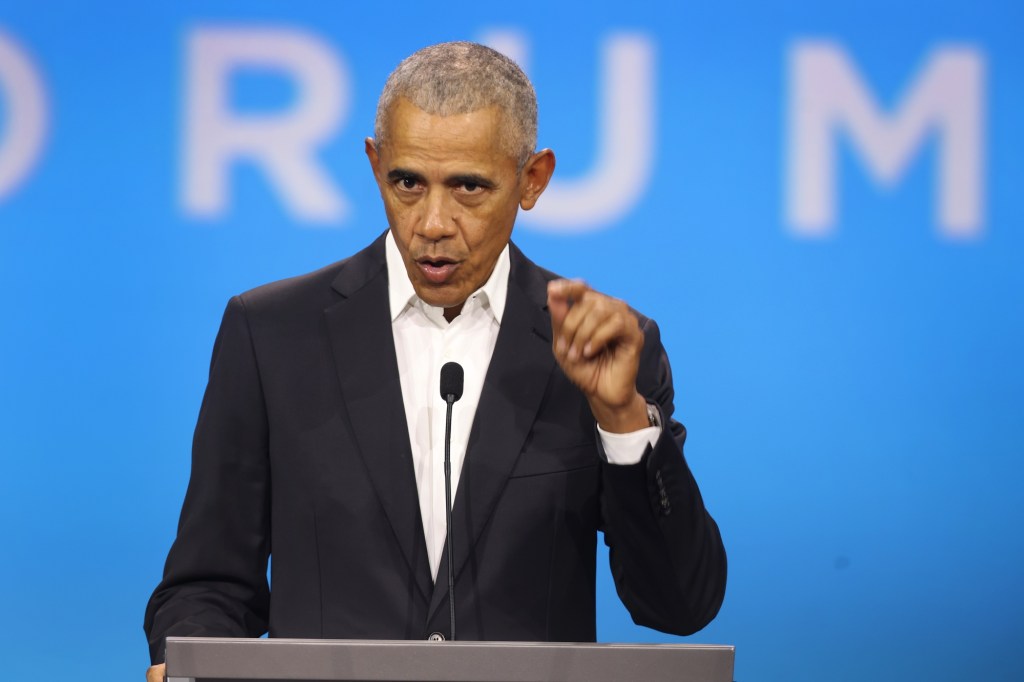
    In a recent thought-provoking speech, former US President Barack Obama offered a compelling perspective on reframing the economic debate.

    Obama delved into economic history, acknowledging capitalism as the unparalleled generator of wealth and innovation. While recognising its historical successes, he pointed out the shortcomings, emphasising that wealth generation doesn’t automatically equate to a just society. He also reminded us of capitalism’s historical compatibility with slavery, exploitation, and environmental degradation.

    The former president acknowledged the role of reformers, organizers, and visionaries in tempering capitalism’s excesses, particularly in the aftermath of the Great Depression and World War II. He underscored the importance of democratic governments in moderating capitalism, highlighting investments in education, social safety nets (of which we should be very proud of here in Europe, and continue maintaining), and regulations to maintain economic balance.

    Obama astutely analyzed the unraveling of the post-Cold War consensus, attributing it to globalization, automation, and the internet. Obama also noted how China and Russia demonstrated that capitalism can thrive under authoritarian regimes as well. He skillfully connected the 2008 financial crisis and the more recent pandemic to the vulnerabilities of a globally connected world, showcasing the interdependence of economies.

    Addressing the concerns of the younger generation, Obama recognized the growing doubts about achieving or surpassing previous living standards. He engaged with the argument that capitalism’s emphasis on growth and consumption, particularly in the face of climate change, might be problematic. Yet, he balanced this by asserting the continued importance of growth and productivity, to uplift billions more out of poverty, urging progressives not to ignore these fundamental economic principles.

    Obama called for a collective effort to align economic policies with our deepest values, echoing the sentiment that economic choices profoundly impact the fabric of our lives. He challenges all of us, who are interested in the commons, to be the new heroes who strengthen the bonds of trust and shape an economic and democratic system that aligns with our shared values and principles.

    Watch the speech: https://www.youtube.com/watch?app=desktop&v=gbog2qF5x-A

    Watch my selected 10 min highlights on Instagram: https://www.instagram.com/p/Cz_DioxI62W/

  • Luxembourg’s Old-Age Dependency Ratio

    Luxembourg’s Old-Age Dependency Ratio

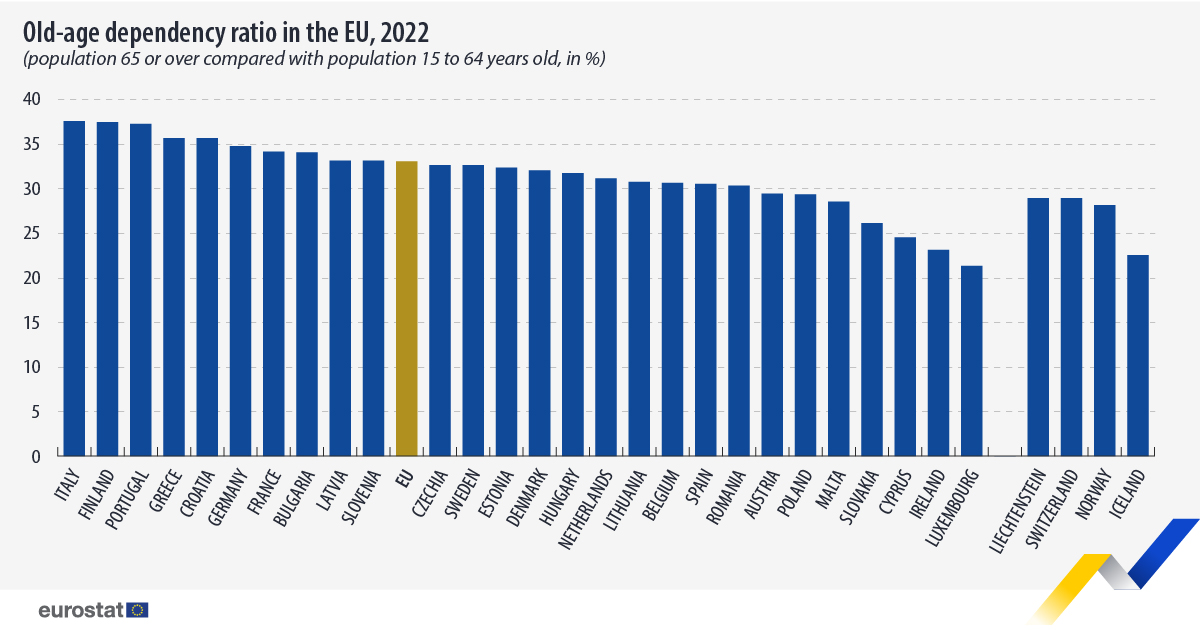
    Luxembourg, is modestly redefining the demographic narrative within the EU. The reason is clear and precise: its old-age dependency ratio is the envy of our neighbors, and it all boils down to a strategic influx of a young, tax-paying, (and mostly European) workforce.

    This isn’t a stroke of luck; it’s policy at its most pragmatic. Luxembourg has cracked the code by actively courting a diverse pool of skilled workers, predominantly from within Europe. Unlike many EU nations grappling with an aging population, Luxembourg has managed to sustain a robust balance between its elderly and working-age citizens.

    The secret lies in the numbers: a workforce that not only contributes to the nation’s economic prosperity but also ensures a manageable burden on its social support systems. In Luxembourg, the elderly aren’t an impending crisis; they’re a population well-supported by the vibrant and tax-generating younger demographic.

    As we gear up for the EU elections in June 2024, Luxembourg’s success story holds crucial lessons. It’s not just about economic growth; it’s about ensuring that the backbone of this success, the young and tax-paying workforce, actively participates in shaping the future of the European Union.

    The call to action is clear: this demographic segment, largely responsible for Luxembourg’s enviable old-age dependency ratio, must not be sidelined in the democratic process. Their voices, their concerns, and their votes need to reverberate in the upcoming elections. The very demographic that has propelled Luxembourg to its unique position is the key to navigating the challenges of an aging population across the EU.

    Ahead of June 2024, register to vote for the European elections in Luxembourg on June 9, and then as we step into the polling booths, let’s not forget the lesson from our country: a thriving, engaged, and diverse workforce is not just an economic asset; it’s the linchpin of a sustainable demographic future for the European Union.

  • Pursuing Peace: Upholding International Law in Gaza

    Pursuing Peace: Upholding International Law in Gaza

    As we see a world plagued by conflict and uncertainty, from Gaza to Ukraine, from Africa to East-Asia, the importance of upholding international law has never been more pronounced.

    Even in the midst of war, rules, rights, and standards bind nations together – but their efficacy depends on the vigilant enforcement by the international community, extending from the streets of Kiev to the heart of Gaza.

    The ongoing tragedy in Gaza, Israel, and the broader Middle East demands a fresh perspective on breaking the cycle of hatred and war.

    The United States, may be the most powerful player in global geo-politics, but it is by drawing inspiration from post-World War II Europe that we can find a roadmap for transformation.

    Enemies can evolve into allies, fostering an environment that guarantees the peaceful coexistence of both Israelis and Palestinians. It is a challenging endeavor but one that, if pursued with determination, promises a secure and harmonious future.

    While acknowledging Israel’s right to target those responsible for the horrific terrorist attack of October 7th, it is crucial to scrutinize the methods employed in its response. Justifiable actions should never escalate to a point where they breach the principles of proportionality and humanity. When strikes extend beyond necessity, and the lives of innocent children are needlessly sacrificed, it becomes not only a tragedy but a violation of international law.

    The overwhelming majority of people in Gaza wanted a peaceful resolution even before the escalation.

    That peaceful resolution that was ever-so-closer, with Israel’s growing positive relations with its neighbours, before October 7. It’s commonly accepted it’s part of the reason Hamas decided to strike, because Hamas does not want a peaceful resolution, Hamas exists thanks to and benefits from the current situation.

    The people of Gaza are willing to compromise, to live in peace. Israel wants peace. The unfolding strategy can not continue, it is in no way creating the conditions for long term peace or safety for neither Israelis or Palestinians.

    Today, as I recall in my mind, the events of the Polytechnic uprising in 1973, 50 years ago, where students took a courageous stand against the military junta of Greece at the time, I am reminded of the fact that peace is not merely the absence of conflict but the result of a constant struggle against oppression and the preservation of fundamental human rights. If we fail to uphold and protect these rights, we all lose our freedom.

    World leaders must agree to do whatever is necessary to prevent the massive loss of life in Gaza and prepare all and every avenue for dialogue to achieve an end to this conflict, in the name of peace and freedom, and so that Israelis and Palestinians, Jews, Christians and Arabs can finally live in peace, and pursue their lives and prosper.

  • Renew Europe’s EU Reform Vision

    Renew Europe’s EU Reform Vision

    The European Union is at a critical juncture, seeking to evolve its governance structure and further its capacity for unified action. Amidst this discussion, our country’s role as an EU capital looms large, not just geographically but symbolically—a meeting ground of diverse cultures and a linchpin for European unity.

    The proposed reforms, advocated by Renew Europe, present a bold vision for a more robust European Union. They prioritize enhancing European democracy, amending Article 7, and extending competences to propel the EU towards increased effectiveness and adaptability.

    While I support the reforms, I respectfully dissent on the proposal to rename the Commission as the ‘Executive’. Preserving the name ‘Commission’ maintains a sense of familiarity and continuity, crucial for the EU’s relationship with its citizens. Changing it might inadvertently detach the Commission from the recognition it has garnered.

    What’s being proposed?

    • European Democracy Enhancement
    • Amend Article 7 for better protection of common values.
    • Remove unanimity requirement.
    • Set clear deadlines for Council action.
    • Grant European Court of Justice authority in violations.
    • Introduction of EU Referendum
    • Aim to involve citizens in critical EU decisions.
    • Empowerment of European Parliament
    • Grant right of initiative for the Parliament to propose legislation.
    • New Competences
    • Establishment of Defense Union and Energy Union.
    • Exclusive competences in environment, biodiversity, and climate change agreements.
    • Shared competences in public health, civil protection, industry, and education.
    • EU Institution Reforms
    • Elimination of unanimity rule in the Council.
    • Introduction of a new Qualified Majority Vote system.
    • Proposal to restructure the Commission to an ‘Executive’ with 15 members, with the President appointed by the Parliament and confirmed by the Council.
  • More Democracy for Young People

    More Democracy for Young People

    As someone deeply rooted in the fabric of European culture and governance, the initiative of MOREin24 Luxembourg strikes a resounding chord within me.

    Growing up surrounded by the intricate workings of European institutions, having had the privilege of witnessing the functioning of the EU from a very young age, I am elated to share my experience and support this groundbreaking effort aimed at encouraging wider participation in the forthcoming EU Elections of 2024 from young people across Luxembourg.

    The event on November 15th, at Melia Luxembourg, organised in collaboration with Change for Luxembourg, promises to be connect young changemakers. Short, inspiring talks in under 15 minutes will be coupled with invaluable insights, fostering an environment conducive to exchanging ideas and perspectives among attendees.

    MOREin24 Luxembourg represents a movement dedicated to bridging the gap between Luxembourg’s youth and critical topics such as youth engagement, voter participation, and the European Union.

    Supported by the European Parliament and spearheaded by the European Youth Card Association (EYCA), the initiative aims to evoke a tidal wave of change, instigating a call to action among young citizens and residents. It strives to embolden them to embrace their inherent right to engage in the democratic process.

    The heart of MOREin24 Luxembourg lies in its mission to ensure that the voice of every member of society resonates in the upcoming EU Elections in Luxembourg.

    This launch marks a pivotal moment in empowering our diverse communities in Luxembourg to drive change.

    I invite you to join us in championing active engagement in the EU Elections 2024. Let us collectively ensure that every voice is heard and every citizen feels empowered to shape the destiny of our shared European landscape.

    Together, we can ignite a movement that reverberates far beyond the ballot box, propelling change and progress across our continent.