Author: Christos Floros

  • Why Talks of An American Civil War Should Concern Us

    Why Talks of An American Civil War Should Concern Us

    More than 40% of Americans think a civil war is likely within a decade, it probably won’t happen, but we are already paying the price of US division.

    While you’re here, you can choose to read this on RTL Today.

    Four in ten Americans believe that a civil war is likely in the next 10 years, and an overwhelming 60% think that an increase in political violence is to be expected in the next few years.

    I don’t think a civil war, as we understand war, is on the horizon, there are no likely scenarios in which a North/South divide may occur, neither conflict, outside courtrooms, between States. However, increased division and local clashes will hurt, not only the United States, but Europe, its allies and the rest of a World left leaderless.

    We need a Strong US on the World Stage

    Domestic divisions in the US have already been damaging and adversaries have become more likely to test the US’ resolve on the world stage. The G7 and G20 have grown increasingly unable to agree, almost leading to their own irrelevance. Some, like Ray Dalio, have already drawn the decline into their predictions for the future, outlining undemocratic China as the world’s new dominant empire.

    A United States that’s preoccupied with fixing internal divisions will be absent on the world stage, where we are trying to solve the Climate Crisis, counter the increased dominance of China, sustain the world’s global food supply chains, ensure access to raw materials to build everything from our phones to computers and electric cars and maintain democracy and global security.

    Europe and the US are tied together

    We have a responsibility to assist our allies in Washington for two main reasons.

    Firstly, the United States was not only instrumental in the liberation of Europe from Nazi Germany, it ensured Europe had what it needed to build its future. The US rebuilt Luxembourg and Europe after World War 2, leading the recovery of the entire continent, through its Marshall Plan, transferring $13 billion ($115 billion today) between 1948 and 1951 to war-torn European nations, as well as funding projects through the World Bank.

    Secondly, in the post-war period, the United States began building a liberal world order, which eventually left it as the World’s Superpower at the end of the Cold War. That same world order supports Luxembourg’s and the EU’s role in the World.

    Together and with our partners around the world, we built institutions and programmes that progressed humanity. Hollywood and giant American technological companies shaped the way we work and communicate, our aspirations and even our beliefs.

    The Internal Politics of the US, concern us too

    Internal US divisions could put all of this at risk. And if the US is filled with disinformation, conspiracies and blurred lines between truth, facts and lies; it will divide the nation more than the issues themselves already divide them.

    If America continues to be separated by ideologies, race and gender issues, inequities in opportunities for education and economic advancements, the domestic division will, to say the least, obscure and derail public and foreign policy, uncertainty will lead to inaction, and even miscalculated actions.

    Suddenly, we would need to learn to live in a world without American leadership, we got but a small taste during Trump’s time as President, and his understanding of NATO. If the current world order breaks down, Europe and our allies will suffer. Furthermore, once challenged, Americans may realise how much they depend and benefit from it. It is in the interest of Luxembourg and the EU to ensure we assist the United States in addressing and healing its internal divisions and help convey the outsized responsibility of the average American citizen, in deciding for the fate of the world.

    One way we could assist is by helping young Americans, many of whom claim to be worried about climate change and other crucial social issues, but often fail to participate in elections, turn up and contribute to electing leaders who will support swift action.

    Additionally, a united effort by the EU and democracies around the world is required to defend the status quo, while America evolves and heals, to ensure increasing autocratic tendencies, that inevitably disregard urgent global issues, are halted.

    I can think of no task of greater importance, than ensuring we step up and show up for our greatest ally, in this time of need. Out of respect for our shared history, and for the survival and betterment of humanity, our governments must take an active and supportive role in the internal business of the United States.

    Talks of a Civil War in the United States, is our business too.
  • Everything and Anything, all at once

    Everything and Anything, all at once

    Do you have the time to listen to me whine about everything and anything all at once?

    If you feel like singing this sentence out loud, it is because I’m paraphrasing it from Green Day’s ‘Basket Case’, a song released in 1994, a year after I was born but before the internet became what it is today, before our lives became endlessly connected to digital devices we carry around in our pockets.


    This opinion article appears on RTL Today, Luxembourg’s English-speaking version of RTL, you can also read it there.

    Before you get out of bed, you have the possibility of reading about the Federal Reserve making its biggest interest rate increase in 22 years, the latest on the War in Ukraine, on the Covid-19 pandemic, the killing of Al Jazeera journalist Shireen Abu Aqla in the West Bank; before you brush your teeth, you check your favourite cryptocurrency, only to see your investment is down 25%.

    You check your Instagram and reply to 6 or 7 stories with a cry emoji, or a heart, or a big smile.

    If you’re younger, you may also check Snapchat and TikTok: a video of a Donald Trump fanboy asking for Hunter Biden’s laptop, making a connection between the Bidens, the war in Ukraine and Putin’s left eyebrow, will grace your eyes, just before you swipe up to see a dance of 3 ridiculously good-looking people swapping clothes in mid-air.

    And that’s all before you get ready for the day, and in a matter of minutes. This compounding, of just about anything, stimulates our brains, all the time.

    Even if you’re more meticulous in the way in which you consume your content and try to distinguish between your time wasters and important news, the sheer amount of endless important news means you’re probably reading about everything, all of the time.

    How much of it can we truly process? Some of us become activists who never stop, and some of us choose to ignore almost everything of importance, to protect ourselves from the overload of information.

    I don’t blame either, at a time where everything feels like it’s happening next door, because it’s happening on every second person’s ‘story’ it’s hard to not engage in digital activism, and at the same time, because of all this constant demand for our attention, I also completely understand those who shut everything out.

    But the biggest loser in all of this is us and our society.

    Because of this ‘everything that’s constantly ‘happening’ and ‘breaking’, it seems we have become unable to connect the things that matter most. We have an endless list of priorities, without actually having any priorities.

    We listen to, subscribe and read ‘everything’ but how much of it do we understand? I think the answer is reflected in our polarised politics (around the world). Clearly there’s a lack of understanding on many urgent issues (including, if not primarily, the issue of Climate Change). Knowledge is based on facts, and yet our voting patterns still suggest tribalism and fanaticism.

    On that note, what responsibility do large media and news organisations have in aiding, not just the fight against misinformation, but also in relating the news in efficient and clear ways, not just in traditional forms, but also by taking social media seriously, and releasing their content in new forms and new ways, to make it truly accessible and relevant to their audiences?

    If this is unclear, I’m sorry: “Sometimes my mind plays tricks on me” (that’s Basket Case again).

    Originally submitted and published on RTL Today.

    You may also like to read other articles written by me, published on RTL Today.

    Restoring the promise of a future (on tackling climate change)

    Your children will feel at home in Luxembourg (on social cohesion and building bonds with and within Luxembourg)

    Making Luxembourg your Home (on voting and participating in Luxembourg’s democratic process)

  • Together for Luxembourg

    Together for Luxembourg

    Moien, I’m Christos, I think its time I spoke to you directly.

    I love Luxembourg, our beautiful City, and our European Union, and I want to make sure it works for all of us.

    We are diverse and international.

    Whether you are Luxembourgish with many generations before you, or you grew up here, you have become a citizen, or you are a resident, old or new, Our society is shaped by all of us.

    Our contribution to society matters, our presence is felt throughout this city and country, and is shaping it and our future.

    It’s about time this diversity is represented, so that we can decide our future together.

    You and I can be instigators of change. I believe that, and I need you to believe that too.

    Thank you for following and helping share our message of community.

  • Luxembourg, the city of 30 year olds

    Luxembourg, the city of 30 year olds

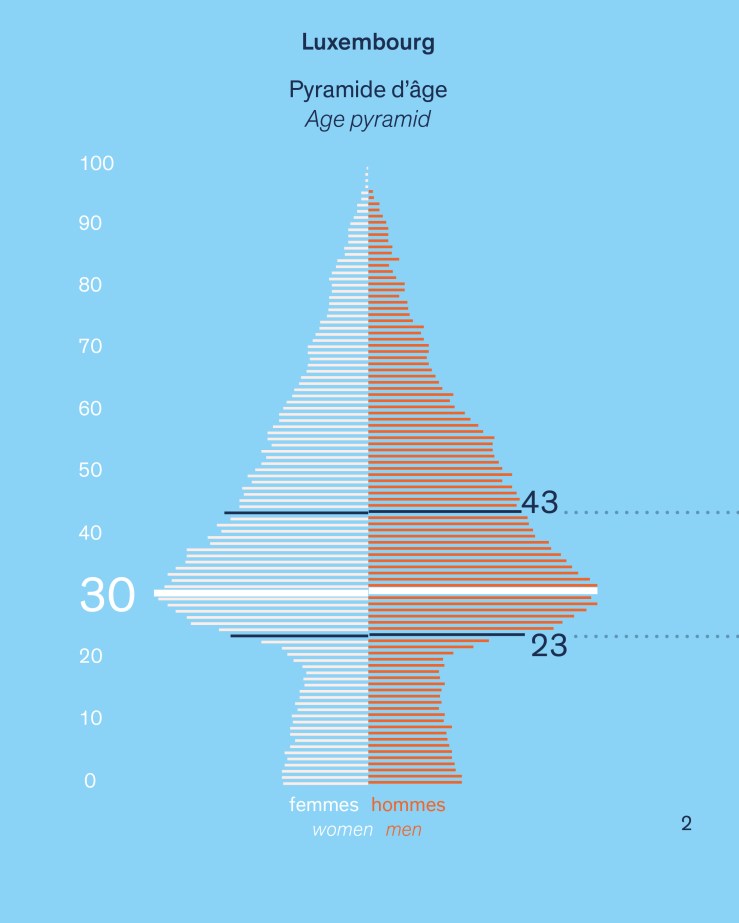
    🇬🇧 + 🇫🇷 Did you know? Luxembourg is a very young city!

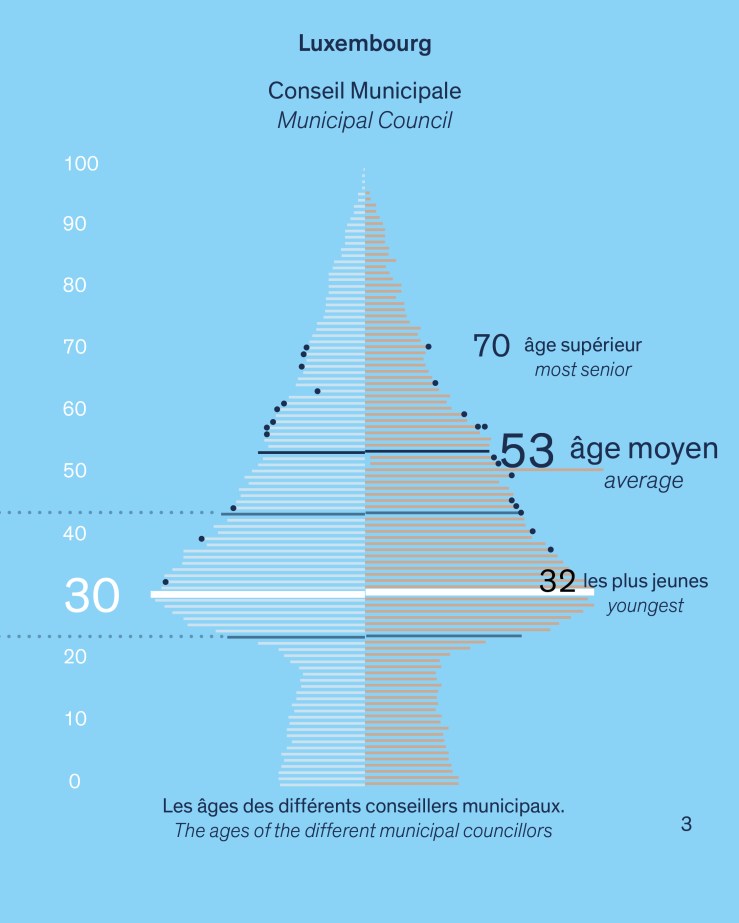
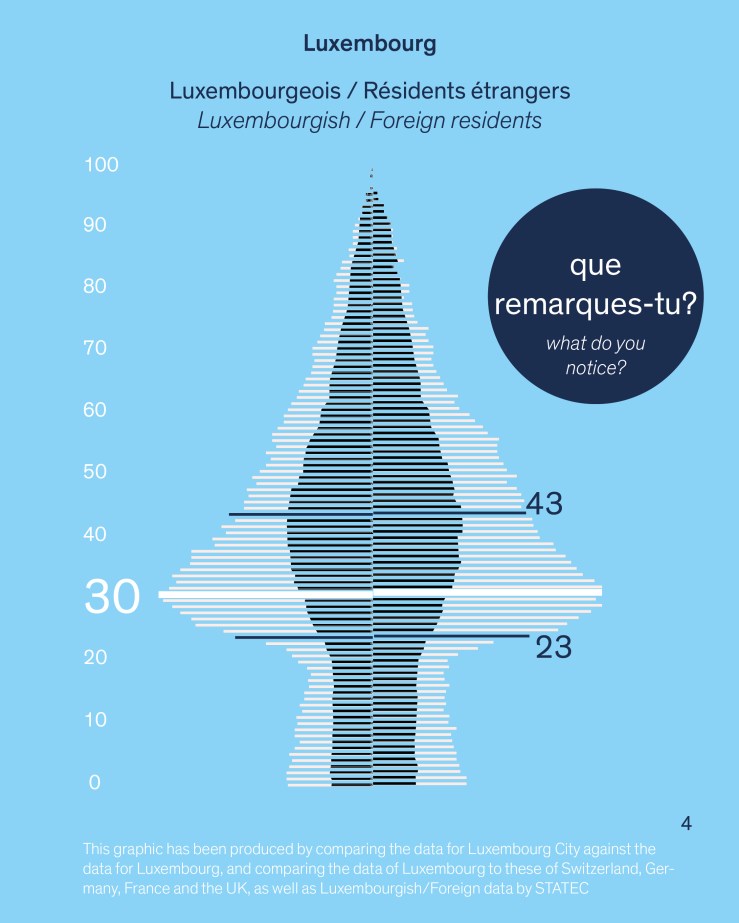
    More people are 30 year olds than any other age, and more people are between the ages of 23 to 43 than any other age.

    What does that mean? Well, if you’re complaining about the dating pool in Luxembourg as a young profesional, maybe try a better bar, but in terms of representation, it means, we have dropped the ball. It means so far, we are not representing what we are, in our political and social dialogue.

    As a society, we need to look ourselves in the mirror, and accept, that what makes us wonderful, is this diversity, is this young talent coming from accross Europe and the world, it is their energy and their work, and therefore we also need to trust that these voices also belong in our social dialogue.

    He who writes this, know what he’s talking about, having grown up an immigrant in Luxembourg, having acquired, patriotically, my Luxembourgish nationality, during the early days of this health crisis, as I was one of the first volunteers, along with many, many foreign-residents in the first lines, and knowing, that this is my home, this is my country I want to contribute to, and I too, deserve to have a voice, in how we shape its future. And so do you.

    A huge thank you to Jana DeGrott for amplifying this article / post on Instagram, by inviting me to collaborate on its sharing.

    En Francais

    ●Le saviez-vous? Luxembourg est une ville très jeune !

    Plus de personnes ont 30 ans que n’importe quel autre âge, et plus de personnes ont entre 23 et 43 ans que n’importe quel autre âge.

    Qu’est-ce que ça veut dire? Eh bien, si vous vous plaignez du ‘dating pool’s au Luxembourg en tant que jeune professionnel, essayez peut-être un meilleur bar, mais en termes de représentation, cela signifie que nous avons laissé tomber la balle. Cela signifie que jusqu’à présent, nous ne sommes pas représentés tels que nous sommes, dans notre dialogue politique et social.

    En tant que société, nous devons nous regarder dans le miroir et accepter que ce qui nous rend merveilleux, c’est cette diversité, c’est ce jeune talent venant de toute l’Europe et du monde, c’est leur énergie et leur travail, et donc nous aussi avons besoin de croire que ces voix ont aussi leur place dans notre dialogue social.

    Celui qui écrit ceci, sait de quoi il parle, ayant grandi immigré au Luxembourg, ayant acquis, patriotiquement, ma nationalité luxembourgeoise, durant les premiers jours de cette crise sanitaire, car j’étais l’un des premiers volontaires, avec beaucoup, de nombreux résidents étrangers en première ligne, et sachant que c’est chez moi, c’est mon pays, et moi aussi, je mérite d’avoir une voix sur la façon dont nous façonnons son avenir. Et toi aussi.

  • Working together for Kirchberg

    Working together for Kirchberg

    I am happy to announce, that I have been elected to the Council of SILK, the Syndicat d’Intérêts Locaux Kirchberg, a non-profit organisation, working for the benefit of the residents of our beautiful Quartier. I will work, in the interest of all residents, to protect Kirchberg, and in a greater extent, the City of Luxembourg, protect our heritage, our old buildings, our shared past, and also ensure that the city we are building forward, is one that is welcoming, open and human.

    Read the story and my remarks below

    Forest.

    Mr. Bento is my Portuguese grandfather. He was my neighbour for my entire childhood. Back when Kirchberg was still a village. He had flowers and vegetables in his garden, and rabbits in the shed. He taught me to eat sausage with bread, and to drink a little bit of Porto.

    Growing up an immigrant in Luxembourg, you experience life, and family, differently. The spaces you share, the traditions you set up — everything is a little bit different.

    The Portuguese community is one of the most welcoming, most loving and diverse in Luxembourg and my childhood and my life, has been shaped under the influence of Portuguese presence in Luxembourg.

    A lot has changed since the days Mr. Bento used to be my neighbour, more buildings, more people, luxury flats in the place that his garden once stood… 

    This is why, today, I am happy to announce, that yesterday I was elected to the Council of SILK, the Syndicat d’Intérêts Locaux Kirchberg (SILK), a non-profit organisation, working for the benefit of the residents of our beautiful quartier. I will work, in the interest of all residents, to protect Kirchberg, and in a greater extent, the City of Luxembourg, protect our heritage, our old buildings, our shared past, and also ensure that the city we are building forward, is one that is welcoming, open and human, so that other kids, can find their immigrant family and their Mr. Bento.

    My remarks during the latest SILK meeting: (in Luxembourgish and French)

    Merci, à chacun d’entre vous, pour tout le travail que vous avez accompli jusqu’à présent, en tant que SILK. 

    Ech sinn an der rue de Kirchberg opgewuess, an ech sinn an d’Europaschoul gaang. Ech sinn och Architekt, an ech engagéieren mech an der Politik. well mir ëm eise Quartier këmmeren. 

    Ech wëll datt mir eng gutt Zukunft fir eise Quartier garantéieren. Ech verstinn firwat alles ännert, awer Ech wëll hëllefen, déi proposéiert PAPen unzepassen, fir datt mir all zesummen eng gutt Zukunft kënne genéissen.

    Ech sinn Pro Vëlospisten, a besser Mobilitéit, a schützen eis Natur.

    J’ai été très heureux d’entendre parler de certaines des propositions concernant l’école. Je suis heureux d’apprendre que nous avons retardé la destruction de la nature dans l’un des PAP proposés. 

    Cependant, nous devons encore analyser le projet Laangfur et le projet Kuebebierg. Nous devons continuer à nous demander, pour qui construisons-nous ? Que laissons-nous derrière nous ?

    Notre ville est une ville à 70% d’habitants étrangers. Comment pouvons-nous en prendre soin, si la majorité de ses habitants ne se présentent pas à ces réunions, et quel avenir voulons-nous pour notre ville et notre quartier ?

    Encore une fois, merci de m’avoir invité. je suis heureux, après tant d’années, de faire partie de cette communauté, plus activement.

  • Building Kirchberg

    Building Kirchberg

    Kirchberg is the physical manifestation of Luxembourg’s international ambitions.

    Understanding the history of Kirchberg is crucial, as we try to understand how our City plans our lives and our future. It represents the shift for Luxembourg’s dependency on the steel economy, to a service economy.

    Over the now 60 years of development, Kirchberg is still not a successful urbanisation project. The vision has changed a lot through these 6 decades, making its development incoherent.

    In the last 15 years the Fonds de Kirchberg @fonds_kirchberg has re-evaluated a lot of the mistakes of the past, and we hope to deliver a Kirchberg that works, for itself, and as part of the City of Luxembourg @villedeluxembourg , to increase the quality of life of its residents, and increase density and services within the Quartier.

    This Instagram post is a retrospective and first-look into Kirchberg before, now and tomorrow (and the challenges we face)

    If you are interested in learning more about life in Luxembourg, and the issues that should concern us all, please do follow me on Instagram and/or send me a friend request on Facebook.

    Kirchberg before and after.