“Social” media has become the heart of contemporary life.
It’s where ideas spread, debates unfold, and communities grow.
These platforms shape how we communicate, how we consume information, and how economies thrive. But they are owned and controlled far from Europe, driven by interests that often clash with our values.
This is no longer sustainable.
For years, Europe has been a bystander in the digital revolution, relying on platforms that profit from our engagement while undermining our privacy, trust, and independence. There’s also immense opportunity still: the creator economy is now worth over $220 billion—and growing to over $500 by 2027—but Europe has yet to claim its space.
That needs to change.
This is why I am leading Project hashtag#Monnet, an initiative to building a true European competitor.
A platform designed from the ground up to reflect European values—privacy, fairness, NEUTRALITY—and to empower creators, not exploit them. A platform where users are respected, data is protected, and creators can thrive sustainably. Currently only 0.1% of creators can live through their work.
This isn’t just about creating another social media platform.
It’s about giving Europe a voice in the digital age.
About ensuring we are not forever dependent and can also help shape innovation through healthy competition.
The challenge is immense.
Platforms like TikTok and Instagram dominate because they’ve invested billions—not just in technology, but in capturing markets and locking in users. Bytedance spent 5 dollars to acquire each of your kids as a user.
And as America doubles down on its digital dominance with unprecedented investments in AI, Europe risks falling even further behind.
But I believe this is the moment.
With the right vision, leadership, and investment, Europe can build its own digital ecosystem.
One that isn’t defined by manipulation, disinformation, or exploitation. One that prioritizes trust, transparency, and opportunity.
The work has already begun. I am collaborating with a team of experts in social media, technology, and digital strategy to turn Project Monnet into a reality. I’m connecting digital, social, business and political leaders throughout Europe (EU+) to get this done.
We know what we are up against, but we also know that Europe cannot afford to wait any longer.
This is our chance to shape the future.
If we don’t, someone else will.
Politics won’t solve this moment, the market must.
Project Monnet is about more than building a platform.
It’s about building Europe’s digital independence.
And the time to act is now.
—-
If you are interested in BUILDING this get in touch. OR: Tag a friend who might be interested. Risk Capital connections very welcome. This is going to be capital intensive. If you’re interested in discussing this at a think tank level, this is NOT for you.
Author: Christos Floros
-

Dear President Trump
Dear President Trump,
Welcome back to the White House.
We’re thrilled to see you return.
And by thrilled, I mean deeply unsettled.Because that’s what leaders like you do. You don’t build trust or courage. You foster fear. Not governance—control. And you don’t do it alone. You surround yourself with those who thrive on power, who help you carve out an oligarchy piece by piece.
And let’s be clear—I’m not calling you a fascist. That would be giving you too much credit. No, the real problem isn’t you. It’s the people around you. The ones using you as their battering ram to break down democracy, one institution at a time.
They’ve mastered the art of pretending to innovate while quietly consolidating power. Platforms that once connected us now manipulate us. Algorithms dictate what we see, what we believe, and what we fear. And now, they have a front-row seat at your table, ready to use your platform to push theirs.
The irony is striking. The people who feared “big government” have created a private one—a government of billionaires, accountable to no one. No Congress. No elections. No public good. They sell freedom while building control. And you, President Trump, are their perfect figurehead: loud, divisive, and a distraction from what’s really happening behind the curtain.
So, what now?
Europe needs to lead on its own too. We can’t keep relying on platforms run by tech billionaires with no sense of accountability. European companies must step up, building digital spaces that prioritize neutrality. Spaces that serve the public good, not dreams of private empires.
Because the warning signs are here.
First, they came for the Communists… (remember that?)
Who will speak up when they come for democracy itself? They’re at the door.
Europe is watching. The world is watching. And for now, some of us are still speaking.
-

Gaza cease-fire comment
The announcement of a ceasefire between Israel and Hamas is welcome news. After 15 months of devastating violence, the prospect of hostages being freed, significant aid finally reaching Gaza, and a pause to hostilities feels like a step in the right direction. But this isn’t peace—it’s a pause. And what happens next is far from certain.
The deal, as it stands, is straightforward but fragile. In the first stage, women, children, and elderly hostages held by Hamas will be released in exchange for hundreds of Palestinian prisoners held by Israel. Displaced Palestinians in Gaza will begin returning to their homes—what’s left of them—and Israeli troops will withdraw from populated areas. Humanitarian aid will also increase, with hundreds of trucks expected to cross into Gaza daily.
Negotiations for what comes next will start soon, but there’s no guarantee they’ll succeed. Both sides harbor deep distrust, and even as the agreement was announced, airstrikes and rocket attacks continued. The violence hasn’t stopped yet, and there’s a real chance it could flare up again.
This war has been brutal. Thousands of lives have been lost, entire neighborhoods destroyed, and families ripped apart. Even with a ceasefire, the people in Gaza face a long road ahead. Homes will need rebuilding, supplies are critically low, and the emotional toll is beyond measure.
The same is true for the families of hostages in Israel, who have spent weeks not knowing if their loved ones are alive. For them, the deal offers some answers, but not all. And for the families who don’t get the news they had hoped for, this ceasefire won’t feel like relief—it will feel like another loss.
The agreement shows that both sides are willing to talk, at least for now, but six weeks isn’t a long time. If these talks fail, the fighting will start again, and everything gained could be lost.
It’s hard to be hopeful after so much suffering, but it’s also hard to ignore that this deal, however small, is something. A pause. A chance, even if it’s slim, to build on.
For now, all we can do is wait and watch.
-

2025 & the Age of AI
This year will not be defined by gradual change but by seismic shifts. Artificial intelligence (AI) and artificial general intelligence (AGI) are advancing at an extraordinary pace, bringing with them a potential to redefine how we live, work, and govern. But this isn’t just about innovation; it’s about control. Who sets the rules for these technologies?
Without strong oversight, we risk entering an era of techno-feudalism, where power consolidates into the hands of a few, and democratic values are eroded by unaccountable algorithms. The danger isn’t just hypothetical—it’s happening now, as technology outpaces regulation and public understanding.
At the same time, the world faces leaders who question the very foundations of sovereignty, borders, and international norms. When powerful figures openly bully smaller nations or disregard global agreements, they don’t just disrupt diplomacy—they unravel decades of stability. These actions weaken international cooperation, embolden autocrats, and destabilise regions already under strain. This isn’t just about rhetoric; it’s a direct attack on the principles that have kept conflict at bay.
Meanwhile, the climate crisis accelerates in the background, affecting billions and amplifying existing inequalities. Technology could help us adapt and innovate, but it could also distract us, becoming a tool for inaction rather than transformation. A warming planet doesn’t wait for regulation, political will, or innovation—it simply reacts to what we do, or don’t do, today.
We are not powerless in the face of these challenges, but the window to act is narrowing. First, we must establish robust global frameworks for AI development—guidelines that prioritise human dignity over extreme corporate profit and geopolitical advantage. Second, we need to confront the root causes of populism by addressing inequality, rebuilding trust in institutions, and ensuring the rule of law applies equally to everyone, regardless of wealth or influence. Finally, we must double down on climate action, leveraging technology to decarbonise industries and rethink consumption, while making space for new, sustainable economic models.
This isn’t alarmism—it’s urgency.
The decisions we make in 2025 will ripple for generations. Will AI serve humanity, or will we become its servants? Will we bridge the gap between the haves and the have-nots, or let it widen into a chasm? Will we rise to meet the climate challenge, or allow the planet to dictate terms we can’t live with?
These questions require courage, clarity, and cooperation. The future isn’t written yet, but it is being drafted now. Let’s make sure we’re the authors of it.
Christos Floros
-

Syria: Caution Before Celebration
Syria has been liberated. That’s the headline.
It’s a sentence that carries so much weight. For some, it’s a moment of hope.
For others, it’s the beginning of worry.
It’s easy to jump to conclusions when power shifts hands. But if there’s one thing the last decade should have taught us, it’s this: the fall of a regime is not the same as the rise of peace.
I remember the early debates about Syria. The case for intervention. The case against it. Back then, every side claimed moral high ground. Some said intervention would protect civilians. Others warned it would only lead to more destruction. Looking back, it’s hard to say anyone was completely right. What we do know is that ordinary Syrians paid the price.
This time, the situation feels eerily familiar. Assad is gone. Rebel forces have taken control. Images of freed prisoners fill social media feeds. Some of them spent years in dungeons like Saydnaya — a place so horrific it was called a “human slaughterhouse.”
For them, this moment is freedom. For their families, it’s justice.
But I’m holding back on total celebration. Not because I doubt the value of toppling a dictator, but because I know what happens next is just as important as what happened before.
When power shifts in the Middle East, the story rarely ends there. Leaders fall. New factions rise. Promises of “liberation” are made. And yet, too often, the people remain trapped in a cycle of violence and uncertainty.
We’ve seen this before. Libya. Iraq. Afghanistan. We cheer for the end of one era, only to watch another one begin—just as bloody, just as brutal.
The question on my mind isn’t, “Is Assad gone?” It’s, “What comes next?”
The West will face a choice soon. To recognize the new leaders or to isolate them. To engage or to retreat. If history is any guide, we won’t get this decision right unless we start thinking beyond the immediate.
If we cheer too soon, if we look away too quickly, we risk letting history repeat itself.
Hope isn’t a strategy.
This time, let’s not mistake liberation for the end of struggle.
This time, let’s be prudent. Let’s be vigilant.
For Syria, and the whole middle east.
-
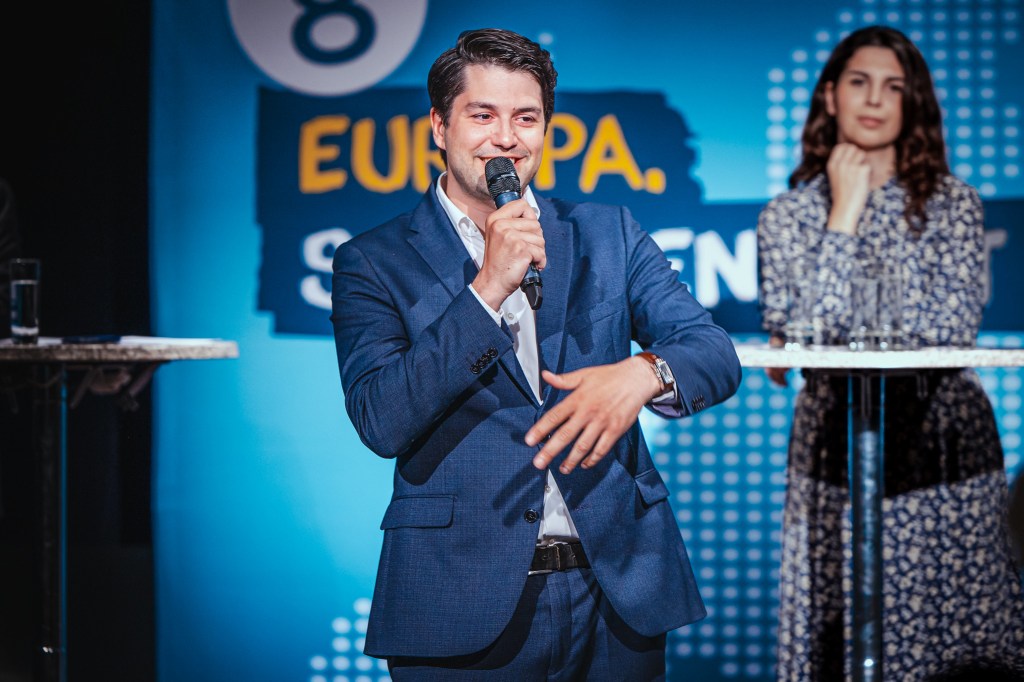
Our Dream of Europe
Do you like my shirt in this video? I think I have about 50 shirts, if not more.
That’s a lot of shirts. Winter shirts, summer shirts, office shirts.
If it helps, I’ve owned many of them for more than 10 years and I still wear them.
But this isn’t a newsletter about fast fashion. It’s about Europe.
My grandmother owned two skirts. In her entire life, she owned two skirts. She keeps reminding me of this.
She bought a dress once, just once. Then, she cut it in half to make two skirts. When my father was young, she worked in the small shop my grandparents ran, keeping my father in a little bucket beside her as she worked.
My mother grew up in a house without running water. No hot water. They carried water into the house and warmed it on the stove.
That wasn’t 100 years ago. That was 50 years ago. In Europe. In the West. In our European Union.
Too many of us have forgotten—or never lived—what true hardship feels like. Not just individual poverty, but poverty on a collective, systemic scale.
We have taken our collective progress for granted. And now, many of us are complicit in dismantling it.
Populist politicians, who don’t understand the complexity and value of our collective progress, are hastening our decline. And we, in our ignorance, too often support them.
At the same time, establishment politicians cling to power, even here in Luxembourg. They’re not creating the space for a new generation to lead, to build on what we’ve achieved, and to take us forward.
A Fragile Foundation
Let’s not forget what made our progress possible. The European Union was built from the ashes of two world wars. It’s a dream rooted in peace, collective security, and economic cooperation.
These, our, achievements require constant maintenance.
Today, political apathy and polarisation threaten the foundation of these achievements.
Our Engagement Today?
In Luxembourg, only one in ten eligible (non-citizen) voters participates in local elections.
This apathy isn’t unique to Luxembourg.
Meanwhile, those who do engage are often driven by frustration or fear, creating an echo chamber of extremes.
We see this in the rise of populist movements that capitalize on dissatisfaction but fail to deliver real solutions.
If we’re to reverse this trend, we need action at both the individual and systemic levels:
- Individuals: Join civic organisations, volunteer, or simply vote. Show up where it’s hard to make a difference.
- Systems: Politicians must ensure their actions are accountable—not just to today’s voters but to future generations. Policies must align with long-term goals, from combating climate change to ensuring equitable economic growth.
The Dream of Europe
I am inspired by the resilience of Ukrainians fighting for their democracy and their commitment to a European future.
I am moved by the Georgian people, marching for the hope of Europe.
Their courage reminds us what’s at stake—and what we have to lose if we take Europe for granted.
It’s not rocket science.
It’s far more complicated.
But that’s why we need to start.
Our dream of Europe rests on each and every one of you.
Only together, and with massive effort, we can sustain it and build a brighter, fairer future for all.
 Christos Floros