Blog

  • Europe’s Role in Ending the War in the Middle East

    Europe’s Role in Ending the War in the Middle East

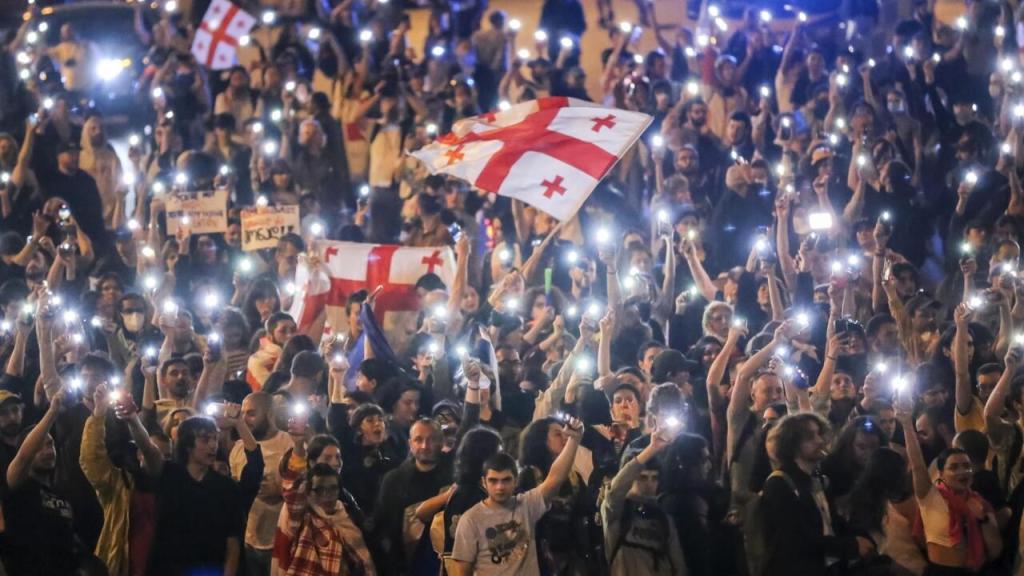
    For weeks, and months, more than a year now, we’ve been grappling with the devastating war in Gaza, and now Lebanon, Israel, and the broader Middle East, and with a deep frustration at Europe’s inaction. I’ve struggled to understand how we—neighbours to this region, allies, supposed champions of human rights—are allowing this to continue. Our silence is deafening. And for those of us who see the damage unfolding daily, it feels like complicity.

    Europe’s support for Israel should never mean blind endorsement of every decision its leaders make. True allies—friends who care—challenge each other when they see harm being done. Instead, by failing to speak up, we are doing both Israel and the people of Israel and the region a profound disservice.

    Benjamin Netanyahu’s government, a far-right coalition, is pursuing a war that not only risks Israel’s moral standing but its long-term security. The ICC’s recent ruling for Netanyahu’s arrest underscores this—the world is watching.

    The bombing campaigns in Gaza and Lebanon are exacting a human cost that is unjustifiable.

    Civilian casualties mount daily, families are torn apart, and trust in any future peace evaporates.

    Meanwhile, Lebanon suffers under bombardments, with whole neighborhoods turned to rubble.

    How did we get here? How did the international community, which proclaims “Never again,” fail to prevent a catastrophe that feels all too familiar?

    Diplomacy has been too slow, too reactive, and—dare I say it—too self-interested. And the blame isn’t just on Netanyahu or Israel’s far-right ministers. The region is caught in a web of extremism and political failure, from Hezbollah’s deadly provocations to the international community’s unwillingness to prioritize peace.

    I can’t stop thinking about the families—on all sides—who have paid the ultimate price for this violence. Every child killed in Gaza, every civilian buried under rubble in Beirut, every Israeli family mourning their dead is a failure of leadership. A failure of us all.

    There is still hope.

    Reports of a possible ceasefire between Israel and Hezbollah in Lebanon offer a glimmer of what diplomacy can achieve. But we need more than temporary truces. We need bold, transformative action. We need Europe to find its courage and action in the Middle East. Even if some will oppose it.

    Europe must stop sitting on the sidelines. It must push for an immediate end to hostilities, not just in Lebanon but in Gaza, too. It must use its influence to demand accountability—from Israeli leadership, from Hezbollah, from every party stoking the flames of war. And it must commit to rebuilding trust in the region, which begins with protecting civilians and upholding international law.

    This is a personal plea.

    I have spent my life believing in the power of democracy, the necessity of collective action, and the duty of leaders to stand up for what is right…

    This year, over and over, I feel that belief being tested. But I also know that despair is not an option. We owe it to the people of the Middle East to demand better. As we owe it to the people of Eastern Europe.

    History will remember what we did—or failed to do—in this moment.

    Let it remember that we chose peace.

    Let it remember that we found the courage to act.

    I understand what Israel wants to achieve. Or at least I think I do. This is not how it achieves it. This is not the way, to secure long-term peace.

  • How to address Political Participation in Luxembourg

    How to address Political Participation in Luxembourg

    One of our biggest challenges in Luxembourg is political participation.

    When we consider the future of our country, we have to ask: Are we all in?

    Because the truth is, the challenges we face need everyone’s input.

    We need your voice, your ideas, your energy.

    Here’s what we’ve got:

    • Only about 10% of non-citizens vote.
    • Nearly half of our residents are non-citizens.

    As of 2023, about 47% of Luxembourg’s population are foreign nationals.

    Back in 2000, it was around 37%.

    Here’s the question:

    • How do we make everyone feel they have a stake in our future?

    In 2015, we had a referendum that could have extended voting rights to foreign residents who’ve lived here for over 10 years.

    We lost that opportunity.

    So now, we need to continue finding and building alternative ways to understand how people want us to lead, and towards where.

    It’s not just about voting (although that’s a great start, so register to vote for the next ones, it takes 2 minutes).

    It’s about participation at every level.

    It’s about caring for our commons—our shared spaces, our communities, our environment.

    We need to find ways to include more people, to convince them that their voice matters.

    Because it does.

    If we want to tackle the big issues—whether it’s housing, climate change, or economic development—we need everyone on board.

    So here’s my call to action:

    Join the dialogue, where it is.

    Join political platforms, parties, debates (online or offline – even better)

    Whether you’re a lifelong Luxembourger or you’ve just moved here, your perspective is valuable. It helps us inform our decisions.

    We need to explore new ways to engage with all residents, to gather their feedback, their hopes, their ideas for our future.

    We can’t afford to have half of our population feel disconnected.

    Your thoughts?

    Christos Floros

  • 2050: What future will we work towards?

    2050: What future will we work towards?

    When we think about the world in 2050, what do we see?

    Is it a planet struggling under the weight of climate disasters and social inequalities?

    Or is it a world where humanity has finally learned to live in harmony with nature—a post-Anthropocene era where both people and the planet thrive?

    I know which future I want.

    But I get it—it’s tough to imagine a better future today. When we’re still engaged in some of the most primitive conflicts worldwide, envisioning a harmonious 2050 feels like a stretch. How can we focus on healing the planet when we’re still grappling with wars, inequality, and injustice?

    We have to.

    Because the alternative—the worst-case scenario—is unthinkable. If we don’t act now, we risk heading straight toward extinction. And we know that if everyone wants to live the lives we currently live in Luxembourg, as we currently produce energy, we would need 8 planets.

    So, what do we do?

    We need to continue our massive investment in renewable energy and the ecological transition that preserves our Blue Planet’s ecosystems —what I like to refer to as the “Blue Transition” (because I also want to prevent a so-called Greentocracy*).

    It’s about fundamentally rethinking how we live and work. And the private and public sectors will have to play their parts. (And it will be nearly impossible for the private sector, without support from the public sector).

    We need to allocate resources swiftly to rebuild local economies where it makes sense, reducing dependencies on fragile global supply chains and focus on economies that are sustainable, resilient, and rooted in their regions.

    The Post-Anthropocene Era

    Imagine it’s 2050, and we’ve made the hard choices.

    We’ve shifted from being exploiters of the planet to stewards of it. Society consumes resources at the rate they can be replenished. We’re not just minimizing harm; we’re actively regenerating the Earth’s systems.

    Global ecosystems are valued and protected. Biodiversity loss has halted, and we’re witnessing the recovery of forests, oceans, and wildlife. Circular economies are the norm, with waste becoming a thing of the past because everything is seen as a resource.

    Education has become a lifelong pursuit, focusing on environmental stewardship and global citizenship. People are empowered with knowledge thanks to AI, fueling innovation and cooperation on an unprecedented scale.

    So how do we get there? Because the alternative is dire.

    If we continue on our current path—ignoring the signs and failing to act—we’re not just risking a decline in quality of life; AGAIN, we’re facing potential extinction.

    We must prevent this worst-case scenario. We owe it to ourselves and future generations to act decisively.

    1) Our oceans, forests, and atmosphere all must have a voice on the world stage, and within our economic systems.

    2) Growth at the expense of the environment must no longer be acceptable, growth must be aligned with environmental protection.

    That’s how we get there.

    Of course this future isn’t going to build itself. It requires collective action. Politically and democratically, we need to choose leaders who are committed to this vision balancing our anthropocentric view and use of our world, with our need to sustain social cohesion and protect the environment.

    What future will we work towards?

    Christos Floros


    These thoughts follow last week’s United Nations General Assembly in New York. Much of the thinking and scenarios are based on Arup‘s monumental work on 2050 scenarios published in 2019. A lot of this work and research heavily influenced me during my time at architecture school.

    *The four scenarios as suggested by ARUP’s Research.
  • Can Luxembourg lead in AI?

    Can Luxembourg lead in AI?

    Let’s have a real conversation.

    When we ask if Luxembourg can lead in AI, we’re not questioning our country’s capability.

    We’re really asking whether we’re ready to back the people who are already pushing the boundaries.

    I’m thinking of Misch Strotz from LetzAI, today. Misch and the team are the kind of innovators who make you sit up and think, “F8vk, this is happening right here in Luxembourg!” They’re putting us on the map in a global race that’s moving faster every day.

    Let’s be honest—we’ve got challenges:

    – Living Costs: Starting something new is tough in Luxembourg.

    – We’re Culturally Cautious: Taking risks isn’t exactly our national pastime.

    – WHERE’S THE MONEY?: Tech start-ups need capital, and the ecosystem here isn’t as nurturing as it could(should) be.

    It’s not about whether we have talent.

    We do.

    It’s about whether we’re creating the right environment for that talent to thrive.

    If a company from Luxembourg becomes a global household name, something people talk about for the next 20 years, it’s going to be LetzAI.

    That’s the potential I see in LetzAI. Their market reach could be massive—from Netflix producers and Hollywood studios to advertisers across Europe and Asia. They’re already becoming a go-to tool for creators around the world.

    They empower people and brands to contribute their own content, creating “AI Models” that respect intellectual property. As Misch puts it:

    “Better AI requires better niche data. By encouraging users to add themselves and optimize their datasets on our platform, we’re tackling one of AI’s biggest problems: the lack of quality data for niche content.”

    This opens many doors; two that I want to highlight here for my Luxembourg IP laywers and investors:

    – Intellectual Property: They are offering SOLUTIONS in a time when AI and COPYRIGHT are in a messy relationship.

    – Creator Economy: They will be HELPING artists and creators MONETISE and TRACK the impact of their work in ways we haven’t seen before.

    If I were in VC, I’d back them in a heartbeat.

    Supporting companies like LetzAI isn’t just good for them; it’s good for all of us.

    We said years ago we wanted to set the stage for Luxembourg to become a tech hub.

    We got very good at saying it.

    Now it’s time to show how it’s done.

    While we’re pushing forward, we obviously can’t ignore the impact of AI on society. The UN released the “Governing AI for Humanity” report last week and it talks about how we need global cooperation to manage the risks of AI and make sure its benefits reach everyone.

    But the key word is ‘while’.

    We (especially in Europe) have done a lot to be ahead of regulation, but not ahead of Tech.

    And here’s something I’ve kept saying and we need to consider seriously: the future of AI should be shaped by democratic values and democratic countries.

    If we leave AI development to countries or companies that don’t prioritise transparency and individual freedoms, we put the future of our democracies at risk.

    Supporting teams like LetzAI isn’t just business — it ensures Luxembourg can be an active and influential participant in the global AI conversation, outside of Parliaments and Bureaucracies: in the actual tech.

    So, can Luxembourg lead in AI?

    I believe we can.

    But now is the moment to prove it by supporting and funding our innovators.

    Those are my thoughts. What are yours?

    Christos Floros

  • Invest, Reform or Lose it All

    Invest, Reform or Lose it All

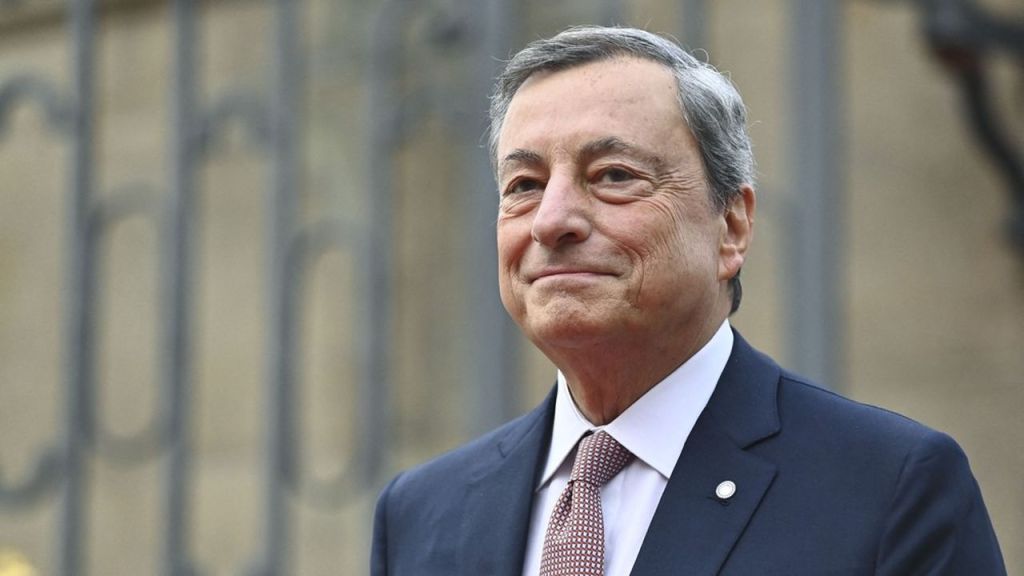
    I just read Mario Draghi’s Report, and here’s what it proposes for Europe.

    Having already read an earlier draft of Mario Draghi’s report, I was prepared for strong words. But now that the full document is out, let me tell you: the urgency in Draghi’s message is unmistakable, and it couldn’t come at a more critical time. His call to action isn’t just for policymakers in Brussels—it’s for every one of us who believes in the promise of a united Europe, able to be a global player.

    Draghi’s report makes one thing clear: we can no longer pretend that we can have our pie and eat it too—that we can sustain our welfare systems, lead the world in environmental protection, and safeguard our freedoms without massive investments and reforms. We cannot. This is a fight for survival.

    Here’s what I take away from it:

    Joint Borrowing

    Draghi calls for €800 billion in additional annual investments to save Europe from falling behind the U.S. and China, through joint borrowing. I’ve long supported that joint borrowing is the most effective way to finance this level of investment, and much needed.

    This is the solution he sees to maintaining our social model, driving innovation, and protecting our climate. As Draghi bluntly puts it, without this kind of action, we will be forced to make devastating choices. Do we sacrifice welfare, environmental leadership, or our freedom? We cannot maintain all three without decisive action.

    Which leads us to the next big theme:

    Europe’s Challenge

    This report is a wake-up call. Draghi doesn’t sugarcoat it, and neither should we. Europe is facing an existential challenge—either we invest in ourselves now, or we fall behind. Without joint borrowing and massive public and private investment, we will lose our edge. We will lose the ability to set the global agenda. And most dangerously, we will lose our independence, as the rest of the world moves ahead without us.

    No Welfare Without Action

    Draghi’s report is a stark reminder: there can be no welfare without economic strength. Our social systems, which have been the pride of Europe for decades, are unsustainable without investment in innovation and productivity. If Europe doesn’t become more productive, we’ll have to scale back on our ambitions—and that will hurt every single one of us.

    We cannot fund our social safety nets without the economic muscle to back them. Draghi’s report lays it bare: without joint borrowing, without doubling down on technology, and without massive investments in clean energy, there will be no environmental agenda and no welfare.

    Time to Act

    Europe’s future is not guaranteed. If we want to preserve the values we hold dear—our welfare, our environment, our freedoms—we need to act now. Draghi’s report is calling for a Europe that is able to continue leading.

    We must invest. We must reform. Europe’s place as a global superpower is within reach—but only if we’re brave enough to fight for it.

    Here are some key proposals from Draghi’s report:

    Common EU debt issuance: The EU should regularly issue common debt to fund major initiatives, including defense needs. (Building on the Next Generation EU framework)

    Massive €800 billion per year investment push: Draghi calls for an unprecedented €800 billion per year in public and private investment to boost productivity, tackle decarbonization, and secure Europe’s position in advanced technologies.

    Telecoms and Tech Mergers: Reform EU competition rules to encourage mergers in key sectors like telecoms and defense, to enable European companies to scale globally and compete with Chinese and American firms. This will definitely upset some people, even in Luxembourg, but the competition from China especially should be a warning sign to go ahead with it.

    Reduce reliance on China: Reduce Europe’s dependence on Chinese imports, especially in critical raw materials, semiconductors, and digital tech.

    AI and Innovation / Commercialization: Close our innovation gap with the U.S. and China by translating our research into commercially viable products, particularly in AI and advanced industries. This might sound too Liberal to some folks across our continent, but I couldn’t agree more.

    Industrial strategy overhaul: He proposes a coordinated industrial strategy to boost sectors like the car industry, where Europe is falling behind.

    Streamline EU decision-making: Draghi argues for reforms to speed up EU policymaking, reducing bureaucracy and national vetoes that slow down essential reforms, which are increasingly vital in a rapidly evolving global landscape.

    This is a clear call, for a Liberal, prosperous Europe, one that must be able to reject nationalist and the far right, to preserve and protect our present and future.

    Are our eyes open?

    PART A: https://commission.europa.eu/document/download/97e481fd-2dc3-412d-be4c-f152a8232961_en?filename=The%20future%20of%20European%20competitiveness%20_%20A%20competitiveness%20strategy%20for%20Europe.pdf

    PART B: https://commission.europa.eu/document/download/ec1409c1-d4b4-4882-8bdd-3519f86bbb92_en?filename=The%20future%20of%20European%20competitiveness_%20In-depth%20analysis%20and%20recommendations_0.pdf

  • Addressing Water Scarcity: Europe’s Role

    Addressing Water Scarcity: Europe’s Role

    Water Management and Addressing the Climate Crisis

    The first time I remember learning about water conflict was in a high school geography class. It was there that I began to understand the complexities of global warming, environmental change, and how a climate crisis would affect not only humanity but also the ecosystems that sustain us. Mr Whales, our GCSE Geography teacher explained to us how water scarcity could spark conflicts, disrupt societies, and devastate natural habitats. This early lesson planted for me the seeds of awareness about the interconnectedness of our world and the critical importance of water.

    As our planet heats up and the global population approaches 8 billion, the challenge of water scarcity grows ever more urgent. Water-related conflicts have surged by 2.4 times from 2014 to 2023 (according to the Pacific Institute), with Asia and Africa being the most affected. These conflicts underscore a harsh reality: water, once taken for granted, is now a precious and contested resource.

    In this context, Europe stands at a pivotal moment. The EU has the technological expertise, policy influence, and moral responsibility to lead the world in water management. By championing sustainable and equitable growth, the EU can set a global standard. This involves not only advancing water-efficient technologies and sustainable agricultural practices but also ensuring that water access is equitable, particularly in regions prone to conflict.

    To manage our water resources effectively, we need a profound shift in our worldview. Water must be seen not as a commodity to be hoarded, but as a shared resource that requires collective stewardship. The EU can play a critical role in fostering this shift, promoting international cooperation and setting examples through its policies and practices.

    I believe Europeans are capable of driving this change. By adopting a conservative approach to water management, we can ensure that future generations inherit a stable and sustainable world. This requires immediate action, we are already decades late, to conserving water, managing it wisely, and working together across borders.

    If we continue on our current path without adjusting our values and priorities, we may soon realise there is little value in Tesla stock when you can’t feed your populations.