In Luxembourg we know our size doesn’t define our impact, especially when it comes to Europe.
We were there at the start, Schuman’s dream woven into our country’s fabric. Now, on June 9th, it’s time to raise our voices again, not just because it’s our right, but because our vote truly steers the future of a united Europe.
Anyone still remember the struggles our grandparents and parents faced, divided by borders?
Today, thanks to the EU, we hop across those same borders for work, study, even love, with barely a blink. Schengen, a cornerstone of that freedom, was signed right here in our backyard.
That’s our legacy, built brick by brick with our European partners, showing the power of working together.
We, the generation raised on a united Europe, need to remind ourselves and others what we’ve gained: cleaner air, stronger economies, Erasmus adventures that opened our eyes to the world. These aren’t distant concepts, they’re the realities that shape our lives.
However, the rising tide of nationalism threatens to wash away these achievements. We see it across Europe, and even here in Luxembourg too, unfortunately. But here’s the thing: Luxembourg, small but fierce, has always stood up to bullies. We did it before, and we can do it again, not with fists, but with our votes, all together, as one diverse, united, European country.
On June 9th, let’s cast our ballots for a progressive, social-liberal Europe. Let’s honour the vision of our founding fathers and mothers, reject the divisive voices, and weave the future of Europe, stronger than ever before.
Our vote, like our voice, is powerful. Let’s use it to remind everyone, from Vianden to Differdange, from Luxembourg City to Troisvierges, and from Lisbon to Vilnius, that a united Europe isn’t just possible, it’s essential.
This decade, we must defend democratic values and ensure we are still able to excerpt influence globally, as a united Europe.
We must encourage our compatriots to vote, to show a strong democratic Luxembourg voice, for a strong European Union.
We should offer a programme that is pragmatic, and calls for European unity, cooperation and European compromise, so that we can continue working together, in the face of global challenges.
Our Party must ensure that the EU remains globally competitive, able to defend itself, and driven by the potential that lies in our future instead of what the Conservatives and Nationalists are trying to offer us, which is inspired from an illusion of our past, and is a road to nowhere.
The only way to be able to do any of that, is to ensure our Renew Europe / ALDE / Liberal group remains strong. And that means offering something substantial, something our fellow Luxembourgers, and Europeans, here and across Europe, can believe we can work towards. It means offering new hope, new direction, and communicating that intention effectively.
So let us work together, to become the guarantors of our common European destiny.
Christos Floros
Luxembourg
.
When is the deadline to register to vote in the European Elections in Luxembourg?
The deadline to register to vote in Luxembourg for the 2024 Elections to the European Parliament is April 15, 2024.
When is the deadline to sign up to vote in the European Elections in Luxembourg?
The deadline to register to vote in Luxembourg for the 2024 Elections to the European Parliament is April 15, 2024.
Who can I vote for in the EU elections 2024 in Luxembourg?
The Democratic Party of Luxembourg is the party of choice for those seeking a pragmatic, ambitious and social, liberal and democratic future for Europe and our European Union.
How to register to vote in Luxembourg?
To register to vote in Luxembourg in 2024, you will need to sign up online through MyGuichet. Click the button above, or here to get started, and sign up to vote.
Who can vote in Luxembourg?
All EU Citizens living in Luxembourg can sign up to vote in Luxembourg for the EU Elections of 2024. You must register to vote before April 15.
Jo, de Christos Floros ass e Lëtzebuerger. Hie gouf 1993 zu Athen gebuer, a Griicheland. De Christos ass an der Stad opgewuess, wou seng Famill sech 1994 niddergelooss huet. Hien huet op der Europäescher Schoul vu Lëtzebuerg studéiert an zu Oxford, London a Boston studéiert, ier hien zréck op Lëtzebuerg koum fir seng Aarbecht ofzeschléissen. Studien an Aarbecht.
Christos Floros est-il luxembourgeois ?
Oui, Christos Floros est luxembourgeois. Il est né à Athènes, en Grèce, en 1993. Christos a grandi à Luxembourg-Ville, où sa famille s’est installée en 1994. Il a fréquenté l’École européenne de Luxembourg et étudié à Oxford, Londres et Boston, avant de revenir au Luxembourg pour terminer ses études et travailler.
Who is Charles Goerens?
Charles Goerens is a Member of the European Parliament (MEP) from Luxembourg for the Democratic Party and Renew Europe. Goerens has been a member of the European Parliament from 1982 to 1984, from 1994 to 1999, and again from 2009 until now. He is 71 years old and lives in Schieren.
What is our priority for the EU Elections 2024 in Luxembourg?
This decade, we must defend democratic values and ensure we are still able to excerpt influence globally, as a united Europe.
Our Party must ensure that the EU remains globally competitive, able to defend itself, and driven by the potential that lies in our future instead of what the Conservatives and Nationalists are trying to offer us, which is inspired from an illusion of our past, and is a road to nowhere.
Our campaign of inclusion and participation has never been about one person.
All of it has been about you, about all of us together.
About the belief that when more people get a say, our democracy works better.
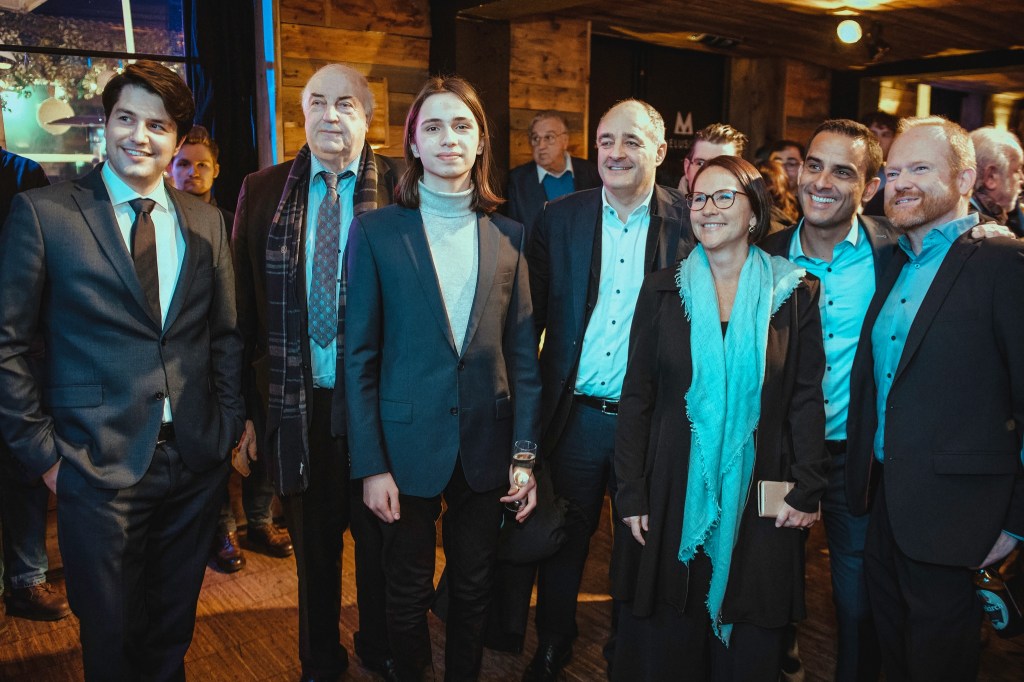
I am incredibly happy to have seen so many new faces, so many of you last night, showing up, getting involved.
Luxembourg needs all of us, our European Union needs all of us.
United in diversity is the motto of our Union, and where could that be more true, than in our Luxembourg?
Luxembourg brings us together, and we will continue to celebrate this, and show the rest of Europe, what we can do when we work together.
In these images, you will see people from Luxembourg to Romania to India, who all have one thing in common: Luxembourg is their home.
Many of them have already become Luxembourgish citizens, many of them are European, many of them were always Luxembourgish citizens, what we all have in common is that we believe that Europe can work, must work, and will work, if we work together.
Thank you once again, for all the interesting conversations and every word of encouragement.
But more importantly, thank you for showing up, thank you for your engagement, thank you for your voice.
Few challenges loom as large as wealth inequality. The staggering chasm between the world’s haves and have-nots demands innovative solutions and steadfast commitment.
It is imperative for the EU to spearhead initiatives combating global wealth inequality, grounded in the social-liberal ethos that defines us. I believe that Luxembourg’s international financial know-how can play a constructive role to help shape a vision where financial expertise converges with social justice.
A social-liberal EU direction can deliver a more equitable global economic order.
Progressive Global Taxation and fighting Tax Evasion: In true social-liberal spirit, the EU can join the US and others in championing the cause of progressive global taxation and ensure tax evasion is fought throughout the world. We must call for tax policies that pave the way for a more equitable and optimised distribution of resources, within an economically free, but always socially responsible and accountable market. This resonates with our commitment to individual freedoms and equal opportunities, and protection against monopolies.
Responsible Business Practices: ALDE and ‘Renew Europe’ advocate for a dynamic and responsible business landscape. The EU can lead the charge by instituting frameworks that foster ethical practices—fair wages, ethical sourcing, and eco-friendly operations.
Developing Countries: The EU must intensify support for developing friends. Fair trade, educational investments, and debt relief are not mere policies; they’re expressions of social and humane solidarity.
Human rights serve as the unshakable foundation of a just and fair society, safeguarding the inherent value and dignity of every individual human. These fundamental rights transcend borders and contexts.
They represent ‘assured freedoms’, not bestowed upon us by nature, but meticulously defined by the laws and rules we’ve collectively fought for and championed. To defend human rights is to recognize their fragility, acknowledging that they are not automatic features of our existence. Instead, they are guaranteed by our collective commitment to protect and uphold them. It’s a shared responsibility that extends beyond individual interests and national boundaries.
The phrase ‘assured freedoms’ encapsulates the essence of human rights – freedoms we’ve not stumbled upon but have actively secured through concerted efforts. The assurance of these rights depends on our dedication to defend and uphold them.
Failure to safeguard these rights constitutes a collective forfeiture, putting at risk the hard-earned fabric of justice and equality. The price of silence or indifference is the erosion of the very principles that have been woven into the societal tapestry through painstaking struggles and relentless advocacy.
The defense of human rights is not merely a duty; it is a collective responsibility that binds us together in the pursuit of a world where dignity, justice, and equality prevail.
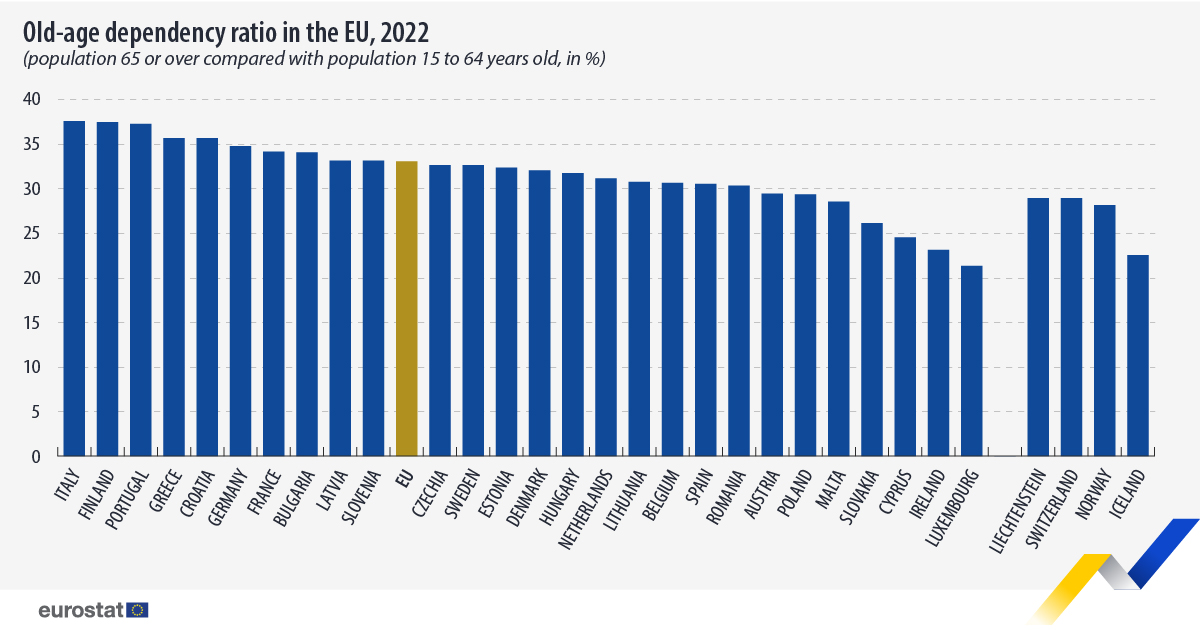
Luxembourg, is modestly redefining the demographic narrative within the EU. The reason is clear and precise: its old-age dependency ratio is the envy of our neighbors, and it all boils down to a strategic influx of a young, tax-paying, (and mostly European) workforce.
This isn’t a stroke of luck; it’s policy at its most pragmatic. Luxembourg has cracked the code by actively courting a diverse pool of skilled workers, predominantly from within Europe. Unlike many EU nations grappling with an aging population, Luxembourg has managed to sustain a robust balance between its elderly and working-age citizens.
The secret lies in the numbers: a workforce that not only contributes to the nation’s economic prosperity but also ensures a manageable burden on its social support systems. In Luxembourg, the elderly aren’t an impending crisis; they’re a population well-supported by the vibrant and tax-generating younger demographic.
As we gear up for the EU elections in June 2024, Luxembourg’s success story holds crucial lessons. It’s not just about economic growth; it’s about ensuring that the backbone of this success, the young and tax-paying workforce, actively participates in shaping the future of the European Union.
The call to action is clear: this demographic segment, largely responsible for Luxembourg’s enviable old-age dependency ratio, must not be sidelined in the democratic process. Their voices, their concerns, and their votes need to reverberate in the upcoming elections. The very demographic that has propelled Luxembourg to its unique position is the key to navigating the challenges of an aging population across the EU.
Ahead of June 2024, register to vote for the European elections in Luxembourg on June 9, and then as we step into the polling booths, let’s not forget the lesson from our country: a thriving, engaged, and diverse workforce is not just an economic asset; it’s the linchpin of a sustainable demographic future for the European Union.




 Christos Floros