Category: Uncategorized

  • 2025 & the Age of AI

    2025 & the Age of AI

    This year will not be defined by gradual change but by seismic shifts. Artificial intelligence (AI) and artificial general intelligence (AGI) are advancing at an extraordinary pace, bringing with them a potential to redefine how we live, work, and govern. But this isn’t just about innovation; it’s about control. Who sets the rules for these technologies?

    Without strong oversight, we risk entering an era of techno-feudalism, where power consolidates into the hands of a few, and democratic values are eroded by unaccountable algorithms. The danger isn’t just hypothetical—it’s happening now, as technology outpaces regulation and public understanding.

    At the same time, the world faces leaders who question the very foundations of sovereignty, borders, and international norms. When powerful figures openly bully smaller nations or disregard global agreements, they don’t just disrupt diplomacy—they unravel decades of stability. These actions weaken international cooperation, embolden autocrats, and destabilise regions already under strain. This isn’t just about rhetoric; it’s a direct attack on the principles that have kept conflict at bay.

    Meanwhile, the climate crisis accelerates in the background, affecting billions and amplifying existing inequalities. Technology could help us adapt and innovate, but it could also distract us, becoming a tool for inaction rather than transformation. A warming planet doesn’t wait for regulation, political will, or innovation—it simply reacts to what we do, or don’t do, today.

    We are not powerless in the face of these challenges, but the window to act is narrowing. First, we must establish robust global frameworks for AI development—guidelines that prioritise human dignity over extreme corporate profit and geopolitical advantage. Second, we need to confront the root causes of populism by addressing inequality, rebuilding trust in institutions, and ensuring the rule of law applies equally to everyone, regardless of wealth or influence. Finally, we must double down on climate action, leveraging technology to decarbonise industries and rethink consumption, while making space for new, sustainable economic models.

    This isn’t alarmism—it’s urgency.

    The decisions we make in 2025 will ripple for generations. Will AI serve humanity, or will we become its servants? Will we bridge the gap between the haves and the have-nots, or let it widen into a chasm? Will we rise to meet the climate challenge, or allow the planet to dictate terms we can’t live with?

    These questions require courage, clarity, and cooperation. The future isn’t written yet, but it is being drafted now. Let’s make sure we’re the authors of it.

    Christos Floros

  • Capital that works where we need it

    Capital that works where we need it

    Hello,

    In capitalism lies an inherent promise: the ability to swiftly allocate resources, solve problems, and create prosperity through innovation. This dynamic flow of capital has propelled societies forward, fostering advancements that shape our world. However, this system only functions at its best when it serves all of us. A market must be truly free — not just in the sense of avoiding complicated regulation, but free from the stranglehold of unfair monopolies that threaten to lead us down a path of neo-feudalism.

    To protect a truly free market, we must continue to strengthen our model of social capitalism. This means recognising the profound social impact of our economic activities and taking responsibility for it.

    When a market and an economy performs well, it is a force for good, driving innovation while ensuring fairness and equity. Monopolies on the other hand, by their very nature, stifle competition and concentrate power in the hands of a few. This concentration of power is leading us to economic disparity, reduced innovation, and the erosion of individual freedoms.

    We are indeed at risk of regressing into a form of neo-feudalism, where few, often for us Europeans, very far from home, would control vast resources and opportunities, leaving the majority disenfranchised. We must prevent this regression by fostering a market environment where competition thrives, and opportunities are accessible to all. This is not just about protecting our businesses; it’s about safeguarding the fundamental freedoms and purchasing power of individuals.

    A truly free market must empower people, providing them with the choices and opportunities necessary for a prosperous life. Now here’s two things:

    • 1. ESG goals are a vital part of achieving this. ESG principles guide businesses to operate responsibly, considering their impact on the environment, society, and governance structures. When businesses commit to ESG principles, they demonstrate a dedication to more than just profit—they show a commitment to the well-being of people and the planet. This approach aligns with the ideals of social capitalism, where economic success and social responsibility go hand in hand.
    • 2. Innovation is the lifeblood of progress. We must protect and encourage the entrepreneurial spirit that drives economic growth and job creation. However, this protection must not come at the expense of fairness and equity. We need a balanced approach that fosters innovation while preventing unfair concentration of power and wealth.

    We’ve got to commit to reform, and the building of a market that is truly both free and just. We must advocate for policies that prevent monopolies, support small and medium-sized enterprises, and ensure that the benefits of capitalism are broadly shared. We must continue to implement and strengthen ESG goals, holding businesses accountable for their social and environmental impact.

    Together, we must protect our freedoms, empower our communities, and build a just and prosperous future for all. We need capital to work, where we need it, how we need it. Human-centric capital at work. Of course, all of this, depends on our ability to remain strong enough to set our own rules. Any sudden, thoughtless shift, would damage us. If we do nothing too, if we continue our European decline, without any reaction to the state of global affairs, then we will eventually be left to follow the rules and norms set by others.

    Food for thought,

    Christos FLOROS

  • Have we forgotten Ukraine?

    Have we forgotten Ukraine?

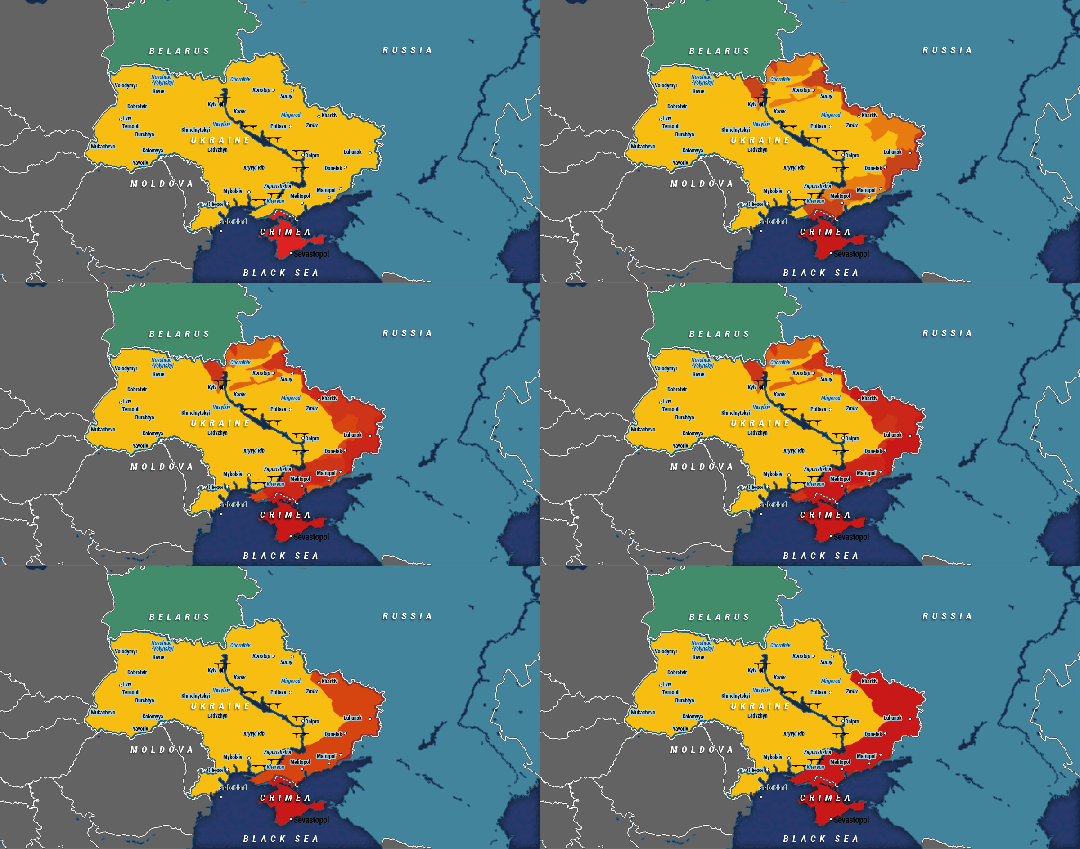
    Recent advances by Russian forces north and north-east of Kharkiv and intensified attacks along the eastern front are reminders that we must remain steadfast in supporting Ukraine.

    Russia’s recent territorial gains in Ukraine represent a significant threat to the stability and security of the European continent. The advances near Kharkiv and the intense fighting in the eastern regions highlight Moscow’s persistent ambition to extend its influence and control further into Europe. Allowing Russia to succeed would embolden other authoritarian regimes, undermine NATO’s collective security framework, and destabilize the broader region.

    The war in Ukraine is not just a regional conflict; it is a fundamental battle over the principles of national sovereignty and the rule of law.

    While other urgent and brutal conflicts and warfare around the world understandably capture public attention, we must not lose sight of the ongoing situation in Ukraine. Despite heavy losses, Ukrainian forces continue to hold critical positions, demonstrating the importance of sustained support.

    By supporting Ukraine, we defend the principles that underpin our global order and ensure that aggression and lawlessness do not prevail.

    The world must not turn away. It is imperative that we maintain our support and stand united against the forces of tyranny and oppression (wherever they are).

    At the same time, while we grapple with the grave allegations against Israel and the complex situation in Gaza, it is crucial to prioritise human lives first. Yes, of course, the international community must strive to support the Palestinian peoples’ self-determination and ensure that any violations of international law are met with consequences. However, our immediate priority must be the cessation of all warfare to prevent further loss of life.

    The tragic situations in Ukraine, Gaza, and other conflict zones demand urgent attention and resolution. Ending the bloodshed must come first, paving the way for peace and justice to follow.

  • A Vision for a Stronger and United Europe

    A Vision for a Stronger and United Europe

    Our Democratic Party (DP) election programme for the period 2024-2029.

    We outline a vision for a stronger and more united European Union. ​ In a time of social upheaval, a changing climate, and geopolitical risks, the DP emphasizes the need for collective action and a self-confident EU capable of addressing these challenges. ​Here’s a quick overview, and I encourage you to explore the full document for more details.

    Economic and Social Priorities ​

    • Building a competitive, resilient, and sustainable economy that creates jobs. ​
    • Strengthening the EU’s investment capacity to drive ecological and digital transitions. ​
    • Developing renewable energy sources and reducing dependence on fossil fuels. ​
    • Ensuring access to essential medicines and strategic reserves in Europe. ​
    • Promoting research and development to enhance competitiveness and tackle energy prices. ​
    • Investing in digitalization, cybersecurity, and defense capabilities.

    Effectively Combating Climate Change ​

    • Implementing the obligations of the Paris Climate Agreement and the commitments of the Green Deal. ​​
    • Urgently investing in renewable energies and expanding carbon sinks. ​
    • Promoting sustainable management of natural resources and circular economy practices. ​
    • Introducing reusable systems for packaging and combating programmed obsolescence. ​

    The Common Agricultural Policy ​​

    • Addressing the challenges faced by the agricultural sector, including price pressures and ecological transition. ​
    • Ensuring fair compensation for farmers affected by biodiversity protection measures. ​
    • Supporting scientific research to revitalize European agriculture. ​
    • Reforming the CAP to align with the Green Deal and improve implementation.

    Health

    • Prioritizing prevention and strengthening the EU’s capacity to respond to health crises. ​
    • Developing a decision-making capacity in the area of health and increasing production and storage of medical supplies. ​
    • Supporting medical research and utilizing digital data for innovative treatments.
    • Ensuring access to healthcare and protecting the rights of vulnerable groups.

    Strong Institutions for a High-Performance EU ​

    • Advocating for a Convention to revise the Treaties and improve the EU’s decision-making mechanisms. ​
    • Reforming the unanimity rule and enhancing qualified majority voting. ​
    • Strengthening the role of the European Parliament and promoting regular exchanges with citizens. ​
    • Defending Luxembourg’s role as the capital of Europe and ensuring smooth operation of EU institutions. ​

    Preparing the EU and Candidate Countries for Future Enlargements

    • Guaranteeing the maintenance of fundamental values and the ability to sanction violations.
    • Reforming the CAP and increasing the EU’s absorption capacity. ​
    • Welcoming new member states in stages based on their readiness and EU reform progress. ​
    • Strengthening European defense capabilities and promoting security cooperation. ​

    The EU’s Foreign Affairs and Defense Policy ​

    • Developing a coherent and effective foreign policy decision-making process. ​
    • Strengthening the EU’s voice in the world and promoting international cooperation. ​
    • Redefining relations with the African continent and supporting African representation in the UN Security Council. ​
    • Promoting cultural exchanges and defending artistic creation. ​

    New Migration Policy ​

    • Ensuring the right of asylum for those fleeing war, violations, and dictatorships. ​
    • Enhancing cooperation with countries of origin and transit and promoting humanitarian monitoring. ​
    • Strengthening solidarity and fair burden-sharing among member states. ​
    • Developing legal channels for skilled migration and addressing root causes of migration pressures.

    Rights and Values

    • Promoting gender equality, combating gender-based violence, and supporting LGBTQIA+ rights.
    • Protecting women’s reproductive rights and ensuring equal access to participation and decision-making. ​
    • Strengthening children’s rights and supporting education and cultural exchange programs.
    • Fighting discrimination and promoting social inclusion. ​

    Better Prospects for Young People​​

    • Supporting children’s rights, education, and vocational training.
    • Strengthening the Erasmus+ program and promoting youth entrepreneurship and innovation. ​
    • Addressing mental health challenges and combating drug use through balanced strategies.
    • Ensuring access to housing and promoting diverse housing typologies. ​

    Culture

    • Embracing cultural diversity, digital innovation, and sustainability. ​
    • Defending artistic creation and protecting cultural heritage.
    • Supporting cultural exchanges and promoting cultural diplomacy. ​
    • Strengthening the socio-economic impact of the cultural sector and protecting creators’ rights. ​

    Want to read the full document and explore the party’s detailed proposals for the future of Europe?

  • 30,605 EU Citizens will vote in Luxembourg for the future of Europe

    30,605 EU Citizens will vote in Luxembourg for the future of Europe

    I celebrate the surge in voter turnout among our non-Luxembourgish EU compatriots in the 2024 EU elections. This is not a statistical anomaly; it is a testament to the enduring spirit of democracy and the result of collective action!

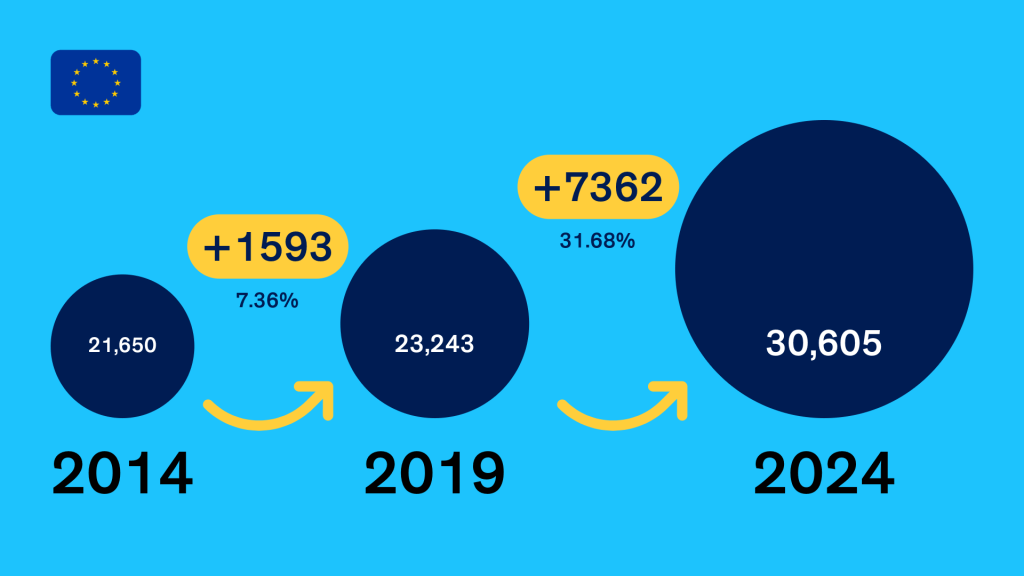
    A record-breaking 15.1% of non-Luxembourgish EU citizens have registered to cast their ballots here, in the country they call home, to shape the future of Europe, here, in Luxembourg.

    Behind this surge lies a tapestry of public and private multiplier efforts – a symphony of grassroots initiatives, advocacy campaigns, and community outreach programs aimed at amplifying the voices of the electorate.

    From neighborhood mobilization drives to digital and physical advocacy platforms, these initiatives have galvanized our compatriots, empowering them to wield their political voice and make them heard.

    Between 1994 and 1999, we witnessed an increase from 6,907 to 9,811 registered voters. From 9,811 in 1999 to 11,739 in 2004. The most substantial leap previously occurred between 2009 and 2014, as registrations surged from 17,579 to 21,650. From 2014 to 2019 registrations only rose from 21,650 to 23,243. Yet, between 2019 and 2024 we’ve got an unprecedented leap from 23,243 to 30,605 registrations, symbolizing a resounding affirmation of democratic values and the enduring spirit of civic engagement. (And not even counting the tens of thousands naturalised citizens!)

    Vive la participation, vive la democratie!

    Official Information: https://elections.public.lu/fr/actualites/2024/17-inscriptions-europennes.html

  • The EU Migration Pact, and Why we need Renew Europe

    The EU Migration Pact, and Why we need Renew Europe

    The European Union recently took a significant step forward on migration with the approval of the New Pact on Migration and Asylum. This complex legislation aims to overhaul the bloc’s approach to migration, balancing security concerns with humanitarian obligations.

    What Does the EU Migration Pact Do?

    The Pact is a comprehensive package designed to create a more fair, efficient, and humane migration system. Here are some of its core goals:

    • Sharing Responsibility: The burden of managing migration will be distributed more evenly among member states. This could include relocation programs for asylum seekers arriving in frontline countries like Greece and Italy.
    • Faster Procedures: Streamlining asylum applications aims to reduce processing times and improve efficiency.
    • Stronger Borders: The Pact strengthens border security with increased use of technology and information sharing between member states.
    • Return and Readmission: Improved mechanisms for returning those whose asylum claims are rejected are included.

    Renew Europe’s Support

    I believe Renew Europe likely saw the Pact as a necessary compromise that addresses several key issues:

    • Unsustainable Pressure: The current system places an unfair burden on southern European countries facing large migrant inflows. The Pact’s relocation mechanisms aim to alleviate this pressure.
    • Inaction is Not an Option: The migration issue has been a source of division in the EU for years. The Pact offers a framework for progress, even if it may not be perfect.
    • Humanitarian Values: Renew Europe supports the Pact’s commitment to upholding human rights while managing migration effectively.

    Why Compromise Matters

    The EU Migration Pact is a prime example of why centrist parties like Renew Europe are crucial. They act as a bridge between opposing viewpoints, facilitating compromise to deliver on the mandates given by the people.

    • Finding Common Ground: The migration issue is complex, with strong opinions on all sides. Renew Europe plays a vital role in finding common ground and creating workable solutions.
    • Delivering Results: Without compromise, the EU risks paralysis on critical issues. Renew Europe’s willingness to compromise helps ensure progress is made.
    • A Stable Future: A well-managed migration system is essential for a stable and prosperous EU. Renew Europe’s support for the Pact contributes to this goal.

    A significant step forward, but just the beginning. The success of the Pact will depend on its implementation and the willingness of member states to cooperate. With continued compromise and a focus on both security and humanity, the EU can create a more effective migration system for the future.

    Journalist? Reporter / Christos Floros

    Are you a journalist?

    Are you a reporter?

    For media inquiries, journalists and reporters can now contact me at cfloros [@] dp lu

    Please avoid DM’s on Instagram, they can get lost. Email is best.