Tag: Christos Floros

  • Compete Now or Forever Hold Your Peace

    Compete Now or Forever Hold Your Peace

    Before 9 AM today, I’d already had two meetings.

    The pace is intense, but that’s what makes being involved in new ventures so exciting.

    Every conversation opens a door—new ideas, new challenges, and a constant test of how quickly I can absorb, adapt, and apply.

    Since announcing Project Monnet, the messages haven’t stopped. People from across industries reaching out, offering insights, asking the right questions, challenging my thinking. I still have a list of people I need to reach out to.

    First call was key developments and messaging strategy for Deelan, a project Panos Meidanis is leading to redefine training platforms, that I’m incredibly excited to be involved in.

    Two completely different worlds—one about the future of digital public spaces, the other about the future of learning—but the same lesson applies: the steepest learning curves are where the real energy is.

    In the second call, Brian and I talked today about how social media doesn’t just connect people—it shapes them. How easily influenced 17-24 year-olds are running around supporting new oligarchs. How platforms don’t just reflect culture, they create it. What decentralised hosting really would mean for a platform like Monnet, how decisions now will impact the way it scales, how it’s governed, and who truly owns the conversation.

    This is the beauty of being in the middle of something new.

    You start by trying to solve a problem, and along the way, you realise the real challenge is learning to be hyper-focused—knowing what matters, what doesn’t, and to bring in people who are stronger where you are not.

    There’s a temptation in any venture to try to do everything. To be everywhere.

    But that’s not how things get built.

    The best founders don’t micromanage every detail—they surround themselves with the right people, the ones who can take a vision and execute it better than they ever could alone.

    On another, really meaningful note. Sven Clement recently asked me: Imagine you succeed. What happens if, in five years, Meta wants to buy you out?

    It’s a good question.

    One I don’t have a perfect answer to yet.

    But what I do know is that real alternatives can still be built. That despite Peter Thiel’s fixation on monopolies, competition isn’t dead. That Apple wasn’t first, IBM didn’t stay dominant, and history is full of moments where something new disrupted what looked untouchable.

    And history is shifting again.

    The U.S. is locking in its digital dominance. A $500 billion AI investment will attempt to cement its control over the next era of technology. Trump is openly pushing to make Canada a state, reinforcing the fact that this is no longer just about trade or defense alliances—it’s about control.

    About consolidating influence, about deciding who owns the future.

    So where does that leave Europe?

    Still debating whether we need to compete.

    Still relying on platforms that don’t reflect our interests.

    Still waiting.

    But we don’t have time to wait.

    The future of democracy is linked to digital sovereignty.

    Right now, I’m in the middle of that learning curve—balancing multiple projects, solving different problems, staying focused while embracing what I don’t yet know. It’s challenging. It’s chaotic. It’s exactly where I want to be.

    On to the next call. For Hootsuite, the regular work day begins, we’re building the future of social media performance. The entire #Oneteam is working on solving the biggest marketing and ROI question since the invention of social media. Perhaps even media itself.

    2025, accelerating fast.
  • Our Dream of Europe

    Our Dream of Europe

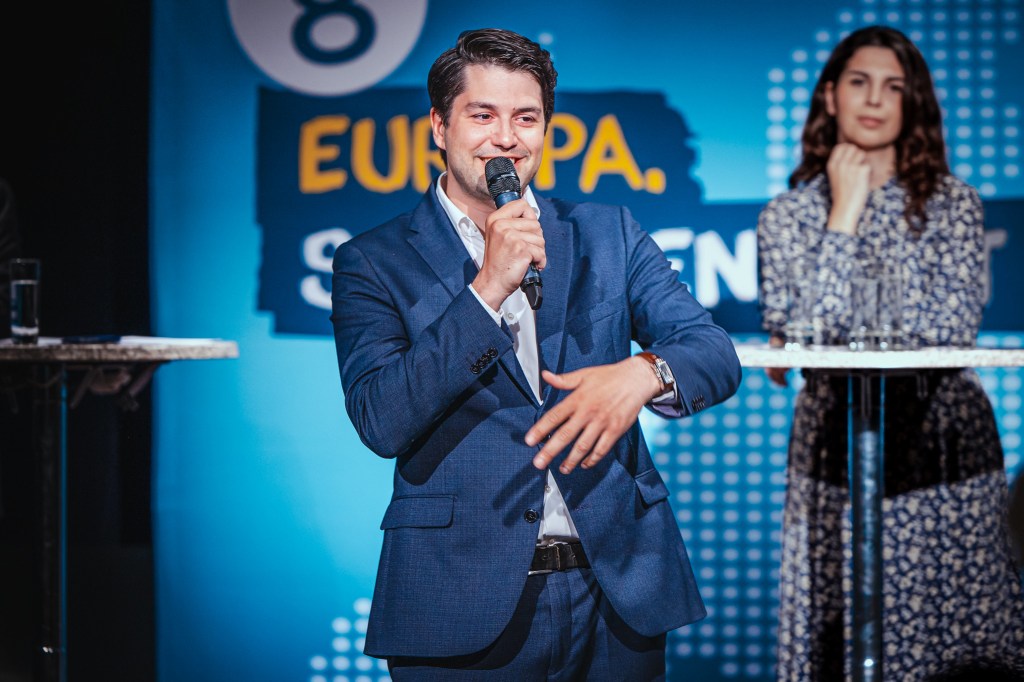
    Do you like my shirt in this video? I think I have about 50 shirts, if not more.

    That’s a lot of shirts. Winter shirts, summer shirts, office shirts.

    If it helps, I’ve owned many of them for more than 10 years and I still wear them.

    But this isn’t a newsletter about fast fashion. It’s about Europe.

    My grandmother owned two skirts. In her entire life, she owned two skirts. She keeps reminding me of this.

    She bought a dress once, just once. Then, she cut it in half to make two skirts. When my father was young, she worked in the small shop my grandparents ran, keeping my father in a little bucket beside her as she worked.

    My mother grew up in a house without running water. No hot water. They carried water into the house and warmed it on the stove.

    That wasn’t 100 years ago. That was 50 years ago. In Europe. In the West. In our European Union.

    Too many of us have forgotten—or never lived—what true hardship feels like. Not just individual poverty, but poverty on a collective, systemic scale.

    We have taken our collective progress for granted. And now, many of us are complicit in dismantling it.

    Populist politicians, who don’t understand the complexity and value of our collective progress, are hastening our decline. And we, in our ignorance, too often support them.

    At the same time, establishment politicians cling to power, even here in Luxembourg. They’re not creating the space for a new generation to lead, to build on what we’ve achieved, and to take us forward.

    A Fragile Foundation

    Let’s not forget what made our progress possible. The European Union was built from the ashes of two world wars. It’s a dream rooted in peace, collective security, and economic cooperation.

    These, our, achievements require constant maintenance.

    Today, political apathy and polarisation threaten the foundation of these achievements.

    Our Engagement Today?

    In Luxembourg, only one in ten eligible (non-citizen) voters participates in local elections.

    This apathy isn’t unique to Luxembourg.

    Meanwhile, those who do engage are often driven by frustration or fear, creating an echo chamber of extremes.

    We see this in the rise of populist movements that capitalize on dissatisfaction but fail to deliver real solutions.

    If we’re to reverse this trend, we need action at both the individual and systemic levels:

    1. Individuals: Join civic organisations, volunteer, or simply vote. Show up where it’s hard to make a difference.
    2. Systems: Politicians must ensure their actions are accountable—not just to today’s voters but to future generations. Policies must align with long-term goals, from combating climate change to ensuring equitable economic growth.

    The Dream of Europe

    I am inspired by the resilience of Ukrainians fighting for their democracy and their commitment to a European future.

    I am moved by the Georgian people, marching for the hope of Europe.

    Their courage reminds us what’s at stake—and what we have to lose if we take Europe for granted.

    It’s not rocket science.

    It’s far more complicated.

    But that’s why we need to start.

    Our dream of Europe rests on each and every one of you.

    Only together, and with massive effort, we can sustain it and build a brighter, fairer future for all.

  • How to address Political Participation in Luxembourg

    How to address Political Participation in Luxembourg

    One of our biggest challenges in Luxembourg is political participation.

    When we consider the future of our country, we have to ask: Are we all in?

    Because the truth is, the challenges we face need everyone’s input.

    We need your voice, your ideas, your energy.

    Here’s what we’ve got:

    • Only about 10% of non-citizens vote.
    • Nearly half of our residents are non-citizens.

    As of 2023, about 47% of Luxembourg’s population are foreign nationals.

    Back in 2000, it was around 37%.

    Here’s the question:

    • How do we make everyone feel they have a stake in our future?

    In 2015, we had a referendum that could have extended voting rights to foreign residents who’ve lived here for over 10 years.

    We lost that opportunity.

    So now, we need to continue finding and building alternative ways to understand how people want us to lead, and towards where.

    It’s not just about voting (although that’s a great start, so register to vote for the next ones, it takes 2 minutes).

    It’s about participation at every level.

    It’s about caring for our commons—our shared spaces, our communities, our environment.

    We need to find ways to include more people, to convince them that their voice matters.

    Because it does.

    If we want to tackle the big issues—whether it’s housing, climate change, or economic development—we need everyone on board.

    So here’s my call to action:

    Join the dialogue, where it is.

    Join political platforms, parties, debates (online or offline – even better)

    Whether you’re a lifelong Luxembourger or you’ve just moved here, your perspective is valuable. It helps us inform our decisions.

    We need to explore new ways to engage with all residents, to gather their feedback, their hopes, their ideas for our future.

    We can’t afford to have half of our population feel disconnected.

    Your thoughts?

    Christos Floros

  • Who wants to lead?

    Who wants to lead?

    Hello,

    The elections are over.

    But those of us who are engaged in politics know that elections are never over.

    That democracy is not a periodic appointment, but a constant, passionate, selfless and demanding engagement. Because democracy is simply the electoral system that allows participatory selection of leadership, but leadership is required throughout.

    I will continue to do my best, to contribute to our young country’s and our Union’s present and future, and to offer you reasons to participate and get engaged yourselves. My engagement did not begin a month ago, and will certainly not seize now.

    I’m grateful and thankful to all those who supported our effort, and I’m convinced that with your engagement, our generation will finally be able to take its future in its own hands.

    State of Affairs, Technology and Misinformation

    The situation in Europe worries me, and should worry us all. Whilst we enjoy some of the highest standards of living in the world, we have become complacent and susceptible to those who seek to divide us, and exploit our weaknesses.

    The extremes are polarising us, by amplifying our fears and using each other to drive us further apart. The moderate political centre, from socialists to conservatives, is being pulled further and further apart. Moderation, consensus, policies by and for all, are out — those who shout louder want increasingly, entirely different things.

    This is happening across Europe and across most Western liberal democracies. It’s not the first time our societies reach such a breaking point, however I still hope this time around we’ll be able to handle these situations more efficiently. After all, we’ve never had as much technology, never had the power to communicate as instantly, and never been as enabled to be informed and rally against a common cause (and unfortunately, empowered by the same technology to be misinformed and divided).

    Western leadership is dwindling, and that worries me for the world’s stability. Just look at who’s in Borgo Egnazia for the G7 today. Those who are dividing us internally, those politicians and the politics of division and finger pointing, those who claim to want to sustain every part of the system that supports us, whilst breaking and changing every part of it: they simply can’t. You can’t have your cake and eat it. Only moderates get that. And we’ve done a terrible job of communicating this.

    The Lack of Meaningful Debate

    Which brings me back to our elections. Where was the debate? Personally, if it weren’t for my own social media and online presence, which I maintained alone, I would have reached zero people. Unfortunately, I had zero media engagements. But even those who did. Was there debate? Was there real discussion about the big issues facing our continent today? Were there actual debates? I’d argue I only saw shows, but no debate. Talking points being communicated, but no exchange. And I refuse to believe that our public does not desire it. We saw very limited exchanges, heavily moderated exchanges. 

    Did we discuss the urgent questions surrounding our environmental impact on the world? Did we discuss any of the crucial debates happening worldwide around our access to resources? Specifically, plans to continue to press on with deep sea mining? Did we discuss the scopes and limitations of the European Union vis a vis our engagement and influence in Israel and Gaza, in Ukraine, in Russia, in China and Taiwan, in Africa? Did we discuss immigration beyond the talking points presented by political parties (with facts and expertise?); did we discuss the resurgence of religious political influence throughout Europe? Did we discuss voting participation in Luxembourg, and what it means that so many of our EU compatriots chose to vote in Luxembourg? And how about showing an interest in all candidates? Political parties do not define us, nor do they define our ideas; it is we, the party members, who define our parties — and by not allowing all of us some minimum visibility, you are not accurately representing either the process, ourselves, or the public’s options. I was asked not to criticise the press during the campaign, but I hope this is seen at least now, not as negative criticism, but positive feedback and criticism to improve. Because we desperately need the press today, we desperately need the media to contribute to our democracy.

    “My advice to the press is to remember that you’re an important part of government and democracy, and act like it.” Howard Dean, former governor of Vermont

    “The backbone of any democracy is an independent, professional and responsible media. Their role is to inform, criticise and stimulate debate.” Peter Joseph Millett CMG, British Diplomat

    “The media today is driven by numbers. If you get a congressman idiotic enough to take pictures of himself and tweet them out, that gets 600 times more coverage than the dangers of an Iranian nuclear weapon.” Newt Gingrich, former speaker of the House (USA)

    If we want to restore our ability to decide together, based evidence and not ideology, if we want to enable ourselves to live and co-exist and decide together, we need to enable an environment that rewards stepping up to offer yourself for leadership, an environment where ideas and exchange of facts and perspectives is not only permitted, certainly not thwarted, but supported. We need the press to step up, and play a role in mediating and flourishing our democratic debate, or it will be entirely ignored, for the much more efficient, direct, and entire uncensored social media, where extremist, flashy, unfounded claims attract, maintain, and grow the voting base of those who offer very little substance, but a very good show.

    The world needs leadership, Europe needs leadership, Luxembourg needs leadership — and we need my generation, your generation, the generation after us, to be inspired and convinced, that the herculean task of putting yourself up for public leadership positions, is worthwhile and not simply toxic and thankless (even if it’s certainly the latter).

    (By the way, if some of you are thinking of our climate and ability to protect our natural habitat while reading this, well done! Without clear leadership, we will be en route to destroy the very ecosystem that sustains all of us)

    I sincerely hope that over the next 5 years, I can convince more of you to get involved, and get engaged in our shared decision making.

    Who wants to lead?

    The fight for our democracies must continue, with you.

    We’re just beginning.

    Christos FLOROS

    My ancestors called themselves Roman. I call myself European. How long will we last? It’s up to us.

  • Boosting Europe’s Industries

    Boosting Europe’s Industries

    Europe’s industrial landscape is still dynamic, diverse, and certainly globally interconnected. To maintain and enhance competitiveness, the European Union must adopt strategic measures that promote innovation, efficiency, and sustainability.

    We’ve got to invest in innovation

    The EU should double down on R&D spending. Encouraging both public and private investment in cutting-edge technologies to drive breakthroughs. We’ve also got to foster collaboration between businesses, academia, and research institutions. Joint efforts can lead to technological advancements that benefit all of us, not just our industries. But we’ve got to go beyond throwing money at it. We’ve got to actually implement these relationships.

    We’ve got to bring the price of energy down

    Reducing energy costs is critical for industrial competitiveness. Everyone tells us that. It’s common sense, we’ve got to do it. So we’ve got to diversisy energy sources, at scale, fast and slash prices in the process. Big ask, but we’ve got to deliver. Partners are playing at an advantage we don’t have, and we keep adding disadvantages for our own businesses.

    Get rid of unneeded bureaucracy

    We’ve got to streamline regulations to enhance business agility. The DP proposes a Commissioner with the specific agenda of bringing regulation into the 21st century. Easy to navigate, helping our business grow, instead of employing more people in compliance than the actual business itself. We’ve got to foster a supportive ecosystem for businesses to thrive.

    Europe’s commitment to the ecological transition and sustainability should align with its drive for economic growth and global competitiveness. Europe must strengthen its industries and remain a formidable player on the world stage. There’s a lot more work to be done, more than I’ve covered here. But I want you to know that’s on my mind, not just from a business perspective, from a strategic and geopolitical perspective too.

    We’ve got to work for Europe, all Europeans, in the interest not only of ourselves, but the entire world. An EU that thrives, can inspire and motivate the rest of the world.

  • How the EU Can Help Young People Find a Home

    How the EU Can Help Young People Find a Home

    Let’s talk about housing. Not about soaring penthouses and bidding wars. Let’s talk about the kind young people across Europe are struggling to find: a decent, affordable place to call home.

    Now, housing policy is primarily a national competency. But here’s the thing: a generation stuck in cramped flatshares or priced out of the market altogether isn’t good for national economies, social mobility, or frankly, the future of Europe.

    The EU, as the champion of social progress and economic dynamism, can – and should – play a leading role. We’re not talking about a Housing Commissioner (though that’s a conversation for another day). We’re talking about smart policy frameworks that incentivize member states and empower young Europeans.

    Here’s a couple of ideas; and why I insisted on Housing being in our programme.

    1. Across the continent, red tape and permitting nightmares are strangling new construction. The EU can work with national governments to streamline approvals, especially for projects that prioritize affordability and diverse housing typologies. Think student dorms, co-operative housing models, and mixed-use developments that integrate housing with offices and green spaces.

    2. Financing a first home is a boulder on young shoulders. The EU can encourage national programs that offer loan guarantees, down payment assistance schemes, and tax breaks for first-time buyers. But let’s not forget developers. Here, the EU can create incentives for building diverse housing options, not just luxury condos.

    3. From Vienna’s renowned social housing program to innovative co-operative models in Germany, Europe has a wealth of successful housing policies. The EU can act as a platform for knowledge exchange, facilitating member states to learn from each other and adapt successful approaches to their specific contexts.

    4. The EU should continue to convene panels of architects, urban planners, mobility experts, and social scientists. To advise on best practices for sustainable, inclusive housing development that integrates seamlessly with transportation networks and public services. Their insights can inform national policy decisions and ensure we’re building not just homes, but livable, thriving communities.

    This isn’t about a one-size-fits-all solution. Each member state has its own unique housing challenges. But the EU can be the orchestra conductor, setting the tone and harmonizing national policies towards a shared goal: ensuring young Europeans have a secure and affordable place to build their lives.

    This isn’t just about bricks and mortar. It’s about a generation feeling empowered, rooted in their communities, and ready to contribute their full potential to a brighter European future. Let’s get building.