Tag: Christos Floros DP

  • Barack Obama’s Vision for an Inclusive Future and the future of Capitalism

    Barack Obama’s Vision for an Inclusive Future and the future of Capitalism

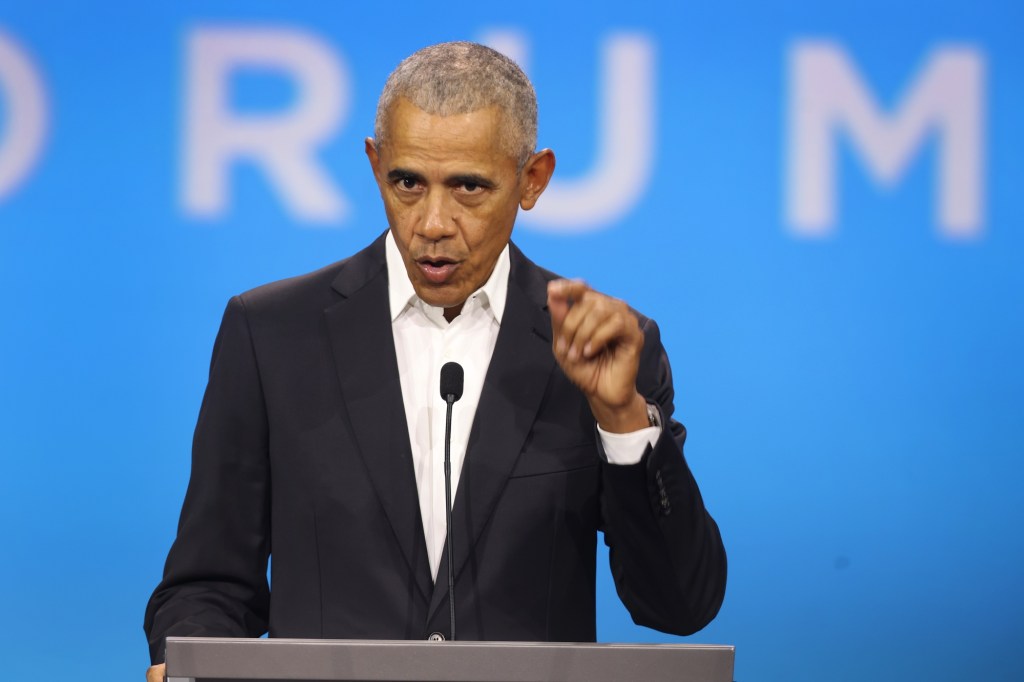
    In a recent thought-provoking speech, former US President Barack Obama offered a compelling perspective on reframing the economic debate.

    Obama delved into economic history, acknowledging capitalism as the unparalleled generator of wealth and innovation. While recognising its historical successes, he pointed out the shortcomings, emphasising that wealth generation doesn’t automatically equate to a just society. He also reminded us of capitalism’s historical compatibility with slavery, exploitation, and environmental degradation.

    The former president acknowledged the role of reformers, organizers, and visionaries in tempering capitalism’s excesses, particularly in the aftermath of the Great Depression and World War II. He underscored the importance of democratic governments in moderating capitalism, highlighting investments in education, social safety nets (of which we should be very proud of here in Europe, and continue maintaining), and regulations to maintain economic balance.

    Obama astutely analyzed the unraveling of the post-Cold War consensus, attributing it to globalization, automation, and the internet. Obama also noted how China and Russia demonstrated that capitalism can thrive under authoritarian regimes as well. He skillfully connected the 2008 financial crisis and the more recent pandemic to the vulnerabilities of a globally connected world, showcasing the interdependence of economies.

    Addressing the concerns of the younger generation, Obama recognized the growing doubts about achieving or surpassing previous living standards. He engaged with the argument that capitalism’s emphasis on growth and consumption, particularly in the face of climate change, might be problematic. Yet, he balanced this by asserting the continued importance of growth and productivity, to uplift billions more out of poverty, urging progressives not to ignore these fundamental economic principles.

    Obama called for a collective effort to align economic policies with our deepest values, echoing the sentiment that economic choices profoundly impact the fabric of our lives. He challenges all of us, who are interested in the commons, to be the new heroes who strengthen the bonds of trust and shape an economic and democratic system that aligns with our shared values and principles.

    Watch the speech: https://www.youtube.com/watch?app=desktop&v=gbog2qF5x-A

    Watch my selected 10 min highlights on Instagram: https://www.instagram.com/p/Cz_DioxI62W/

  • Luxembourg’s Old-Age Dependency Ratio

    Luxembourg’s Old-Age Dependency Ratio

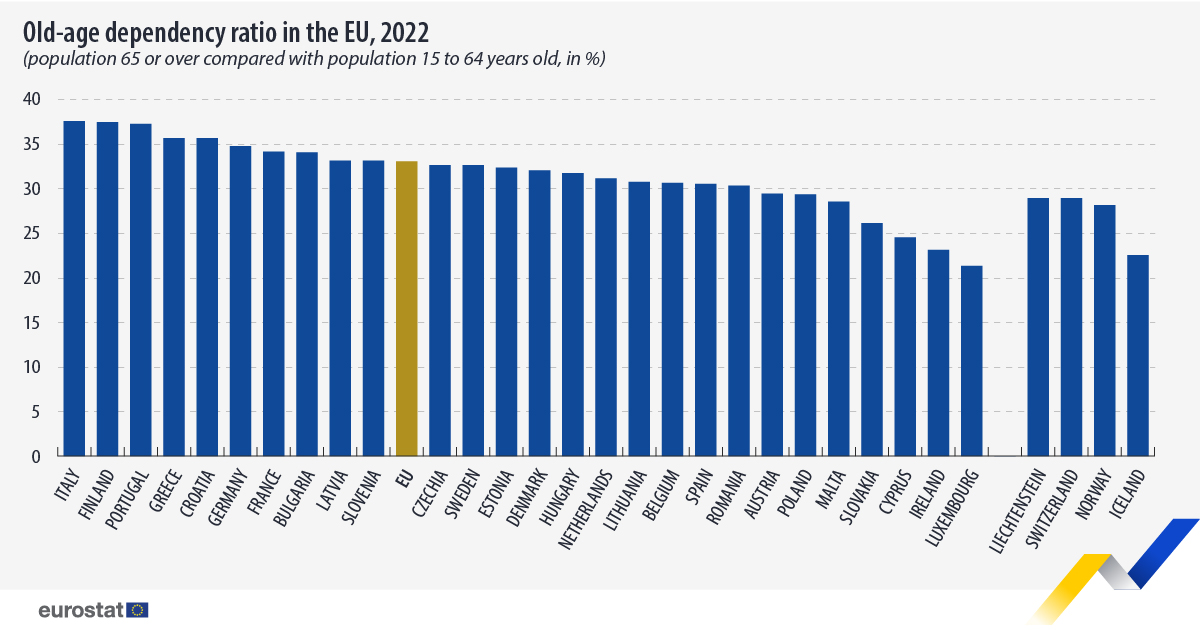
    Luxembourg, is modestly redefining the demographic narrative within the EU. The reason is clear and precise: its old-age dependency ratio is the envy of our neighbors, and it all boils down to a strategic influx of a young, tax-paying, (and mostly European) workforce.

    This isn’t a stroke of luck; it’s policy at its most pragmatic. Luxembourg has cracked the code by actively courting a diverse pool of skilled workers, predominantly from within Europe. Unlike many EU nations grappling with an aging population, Luxembourg has managed to sustain a robust balance between its elderly and working-age citizens.

    The secret lies in the numbers: a workforce that not only contributes to the nation’s economic prosperity but also ensures a manageable burden on its social support systems. In Luxembourg, the elderly aren’t an impending crisis; they’re a population well-supported by the vibrant and tax-generating younger demographic.

    As we gear up for the EU elections in June 2024, Luxembourg’s success story holds crucial lessons. It’s not just about economic growth; it’s about ensuring that the backbone of this success, the young and tax-paying workforce, actively participates in shaping the future of the European Union.

    The call to action is clear: this demographic segment, largely responsible for Luxembourg’s enviable old-age dependency ratio, must not be sidelined in the democratic process. Their voices, their concerns, and their votes need to reverberate in the upcoming elections. The very demographic that has propelled Luxembourg to its unique position is the key to navigating the challenges of an aging population across the EU.

    Ahead of June 2024, register to vote for the European elections in Luxembourg on June 9, and then as we step into the polling booths, let’s not forget the lesson from our country: a thriving, engaged, and diverse workforce is not just an economic asset; it’s the linchpin of a sustainable demographic future for the European Union.

  • Renew Europe’s EU Reform Vision

    Renew Europe’s EU Reform Vision

    The European Union is at a critical juncture, seeking to evolve its governance structure and further its capacity for unified action. Amidst this discussion, our country’s role as an EU capital looms large, not just geographically but symbolically—a meeting ground of diverse cultures and a linchpin for European unity.

    The proposed reforms, advocated by Renew Europe, present a bold vision for a more robust European Union. They prioritize enhancing European democracy, amending Article 7, and extending competences to propel the EU towards increased effectiveness and adaptability.

    While I support the reforms, I respectfully dissent on the proposal to rename the Commission as the ‘Executive’. Preserving the name ‘Commission’ maintains a sense of familiarity and continuity, crucial for the EU’s relationship with its citizens. Changing it might inadvertently detach the Commission from the recognition it has garnered.

    What’s being proposed?

    • European Democracy Enhancement
    • Amend Article 7 for better protection of common values.
    • Remove unanimity requirement.
    • Set clear deadlines for Council action.
    • Grant European Court of Justice authority in violations.
    • Introduction of EU Referendum
    • Aim to involve citizens in critical EU decisions.
    • Empowerment of European Parliament
    • Grant right of initiative for the Parliament to propose legislation.
    • New Competences
    • Establishment of Defense Union and Energy Union.
    • Exclusive competences in environment, biodiversity, and climate change agreements.
    • Shared competences in public health, civil protection, industry, and education.
    • EU Institution Reforms
    • Elimination of unanimity rule in the Council.
    • Introduction of a new Qualified Majority Vote system.
    • Proposal to restructure the Commission to an ‘Executive’ with 15 members, with the President appointed by the Parliament and confirmed by the Council.
  • More Democracy for Young People

    More Democracy for Young People

    As someone deeply rooted in the fabric of European culture and governance, the initiative of MOREin24 Luxembourg strikes a resounding chord within me.

    Growing up surrounded by the intricate workings of European institutions, having had the privilege of witnessing the functioning of the EU from a very young age, I am elated to share my experience and support this groundbreaking effort aimed at encouraging wider participation in the forthcoming EU Elections of 2024 from young people across Luxembourg.

    The event on November 15th, at Melia Luxembourg, organised in collaboration with Change for Luxembourg, promises to be connect young changemakers. Short, inspiring talks in under 15 minutes will be coupled with invaluable insights, fostering an environment conducive to exchanging ideas and perspectives among attendees.

    MOREin24 Luxembourg represents a movement dedicated to bridging the gap between Luxembourg’s youth and critical topics such as youth engagement, voter participation, and the European Union.

    Supported by the European Parliament and spearheaded by the European Youth Card Association (EYCA), the initiative aims to evoke a tidal wave of change, instigating a call to action among young citizens and residents. It strives to embolden them to embrace their inherent right to engage in the democratic process.

    The heart of MOREin24 Luxembourg lies in its mission to ensure that the voice of every member of society resonates in the upcoming EU Elections in Luxembourg.

    This launch marks a pivotal moment in empowering our diverse communities in Luxembourg to drive change.

    I invite you to join us in championing active engagement in the EU Elections 2024. Let us collectively ensure that every voice is heard and every citizen feels empowered to shape the destiny of our shared European landscape.

    Together, we can ignite a movement that reverberates far beyond the ballot box, propelling change and progress across our continent.

  • A New Era for Politics: Starting from the Grassroots

    A New Era for Politics: Starting from the Grassroots

    Society should never be taken for granted. Across Europe, citizens are growing increasingly discontented, rejecting passivity, and demanding more from their leaders.

    The time has come for a transformation in European politics, one that begins at the grassroots level. The traditional “funnel” approach of party politics, which often rewards long-time members while neglecting society, needs a profound overhaul. This need for change is not unique to any one country; even in Luxembourg, similar concerns resonate.

    Arrogance in politics has become a significant concern for the public. Politicians who fail to listen to their constituents and prioritize their own egos over the needs of the people are being met with growing resistance. The electorate is no longer willing to tolerate the politics-as-usual approach that often reeked of complacency and entitlement.

    A notable shift is underway in the realm of European politics. The old routine has been disrupted over the past decade, signaling a need for new inspiration. Citizens are growing more engaged and interested in politics, seeking genuine change and accountability from their leaders. This surge in political interest is a reflection of society’s evolving values and expectations.

    To bridge the growing gap between traditional party politics and the changing society they aim to serve, a fundamental shift is necessary. Parties must adapt to these new realities and create an inclusive political environment. The parties themselves must become platforms for fresh voices and ideas.

    European politics, starting at the grassroots level, must embrace change. Parties need to facilitate increased citizen participation and actively seek out diverse perspectives. Society should never be taken for granted, and the political landscape must evolve to reflect the aspirations and demands of the people.

    In Luxembourg, as in other European nations, the call for change is echoing louder with each election. The time has come for a politics that is more responsive, inclusive, and humble. To restore trust and relevance in the eyes of the public, parties must adapt and recognize that the real power lies with the people.

    A new era of European politics is on the horizon, and it begins with a change in mindset at the grassroots level.

  • And the Case for EU Defense?

    And the Case for EU Defense?

    As we look back at the tumultuous events of the past two decades, it’s impossible to ignore the seismic shifts in global geopolitics. Georgia, Syria, Ukraine, Israel: all these recent and current conflicts serve as stark reminders that our world order is fraying at the seams.

    The violations of longstanding norms of international law by a permanent member of the UN Security Council have released a Pandora’s box of warlike tendencies. War is no longer mostly confined to history books; it is reemerging as the ultimate arbiter, underlining the law of force as the new rule.

    This growing instability isn’t merely a distant menace but is inexorably creeping towards Europe. The pressing question now is whether the EU can muster the strength needed to make its diplomatic efforts truly effective, and work towards European Defense.

    The European Union must now grapple with the reality of power. This means crafting mechanisms within its member states to ensure the integrity of our political model, safeguard our interests, and support our allies.

    To gain the respect of increasingly emboldened global actors, Europe cannot shy away from the military dimension. The need for a strong defense is evident. We’ve got to aspire to be more self-reliant.

    At the moment, we seek reassurance in grand alliances and issue calls for restraint to international actors who are boldly disregarding them. The challenge before us is clear: will Europe seize the moment to secure its future in a rapidly evolving world?