Tag: Christos Floros Politician

  • Our Dream of Europe

    Our Dream of Europe

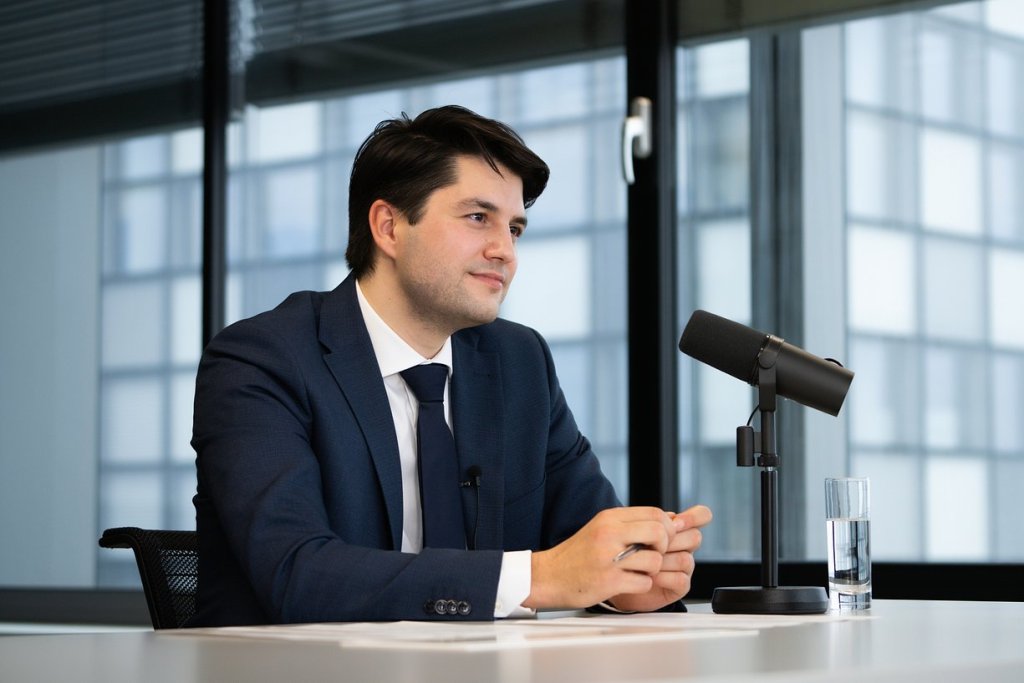
    Do you like my shirt in this video? I think I have about 50 shirts, if not more.

    That’s a lot of shirts. Winter shirts, summer shirts, office shirts.

    If it helps, I’ve owned many of them for more than 10 years and I still wear them.

    But this isn’t a newsletter about fast fashion. It’s about Europe.

    My grandmother owned two skirts. In her entire life, she owned two skirts. She keeps reminding me of this.

    She bought a dress once, just once. Then, she cut it in half to make two skirts. When my father was young, she worked in the small shop my grandparents ran, keeping my father in a little bucket beside her as she worked.

    My mother grew up in a house without running water. No hot water. They carried water into the house and warmed it on the stove.

    That wasn’t 100 years ago. That was 50 years ago. In Europe. In the West. In our European Union.

    Too many of us have forgotten—or never lived—what true hardship feels like. Not just individual poverty, but poverty on a collective, systemic scale.

    We have taken our collective progress for granted. And now, many of us are complicit in dismantling it.

    Populist politicians, who don’t understand the complexity and value of our collective progress, are hastening our decline. And we, in our ignorance, too often support them.

    At the same time, establishment politicians cling to power, even here in Luxembourg. They’re not creating the space for a new generation to lead, to build on what we’ve achieved, and to take us forward.

    A Fragile Foundation

    Let’s not forget what made our progress possible. The European Union was built from the ashes of two world wars. It’s a dream rooted in peace, collective security, and economic cooperation.

    These, our, achievements require constant maintenance.

    Today, political apathy and polarisation threaten the foundation of these achievements.

    Our Engagement Today?

    In Luxembourg, only one in ten eligible (non-citizen) voters participates in local elections.

    This apathy isn’t unique to Luxembourg.

    Meanwhile, those who do engage are often driven by frustration or fear, creating an echo chamber of extremes.

    We see this in the rise of populist movements that capitalize on dissatisfaction but fail to deliver real solutions.

    If we’re to reverse this trend, we need action at both the individual and systemic levels:

    1. Individuals: Join civic organisations, volunteer, or simply vote. Show up where it’s hard to make a difference.
    2. Systems: Politicians must ensure their actions are accountable—not just to today’s voters but to future generations. Policies must align with long-term goals, from combating climate change to ensuring equitable economic growth.

    The Dream of Europe

    I am inspired by the resilience of Ukrainians fighting for their democracy and their commitment to a European future.

    I am moved by the Georgian people, marching for the hope of Europe.

    Their courage reminds us what’s at stake—and what we have to lose if we take Europe for granted.

    It’s not rocket science.

    It’s far more complicated.

    But that’s why we need to start.

    Our dream of Europe rests on each and every one of you.

    Only together, and with massive effort, we can sustain it and build a brighter, fairer future for all.

  • Who wants to lead?

    Who wants to lead?

    Hello,

    The elections are over.

    But those of us who are engaged in politics know that elections are never over.

    That democracy is not a periodic appointment, but a constant, passionate, selfless and demanding engagement. Because democracy is simply the electoral system that allows participatory selection of leadership, but leadership is required throughout.

    I will continue to do my best, to contribute to our young country’s and our Union’s present and future, and to offer you reasons to participate and get engaged yourselves. My engagement did not begin a month ago, and will certainly not seize now.

    I’m grateful and thankful to all those who supported our effort, and I’m convinced that with your engagement, our generation will finally be able to take its future in its own hands.

    State of Affairs, Technology and Misinformation

    The situation in Europe worries me, and should worry us all. Whilst we enjoy some of the highest standards of living in the world, we have become complacent and susceptible to those who seek to divide us, and exploit our weaknesses.

    The extremes are polarising us, by amplifying our fears and using each other to drive us further apart. The moderate political centre, from socialists to conservatives, is being pulled further and further apart. Moderation, consensus, policies by and for all, are out — those who shout louder want increasingly, entirely different things.

    This is happening across Europe and across most Western liberal democracies. It’s not the first time our societies reach such a breaking point, however I still hope this time around we’ll be able to handle these situations more efficiently. After all, we’ve never had as much technology, never had the power to communicate as instantly, and never been as enabled to be informed and rally against a common cause (and unfortunately, empowered by the same technology to be misinformed and divided).

    Western leadership is dwindling, and that worries me for the world’s stability. Just look at who’s in Borgo Egnazia for the G7 today. Those who are dividing us internally, those politicians and the politics of division and finger pointing, those who claim to want to sustain every part of the system that supports us, whilst breaking and changing every part of it: they simply can’t. You can’t have your cake and eat it. Only moderates get that. And we’ve done a terrible job of communicating this.

    The Lack of Meaningful Debate

    Which brings me back to our elections. Where was the debate? Personally, if it weren’t for my own social media and online presence, which I maintained alone, I would have reached zero people. Unfortunately, I had zero media engagements. But even those who did. Was there debate? Was there real discussion about the big issues facing our continent today? Were there actual debates? I’d argue I only saw shows, but no debate. Talking points being communicated, but no exchange. And I refuse to believe that our public does not desire it. We saw very limited exchanges, heavily moderated exchanges. 

    Did we discuss the urgent questions surrounding our environmental impact on the world? Did we discuss any of the crucial debates happening worldwide around our access to resources? Specifically, plans to continue to press on with deep sea mining? Did we discuss the scopes and limitations of the European Union vis a vis our engagement and influence in Israel and Gaza, in Ukraine, in Russia, in China and Taiwan, in Africa? Did we discuss immigration beyond the talking points presented by political parties (with facts and expertise?); did we discuss the resurgence of religious political influence throughout Europe? Did we discuss voting participation in Luxembourg, and what it means that so many of our EU compatriots chose to vote in Luxembourg? And how about showing an interest in all candidates? Political parties do not define us, nor do they define our ideas; it is we, the party members, who define our parties — and by not allowing all of us some minimum visibility, you are not accurately representing either the process, ourselves, or the public’s options. I was asked not to criticise the press during the campaign, but I hope this is seen at least now, not as negative criticism, but positive feedback and criticism to improve. Because we desperately need the press today, we desperately need the media to contribute to our democracy.

    “My advice to the press is to remember that you’re an important part of government and democracy, and act like it.” Howard Dean, former governor of Vermont

    “The backbone of any democracy is an independent, professional and responsible media. Their role is to inform, criticise and stimulate debate.” Peter Joseph Millett CMG, British Diplomat

    “The media today is driven by numbers. If you get a congressman idiotic enough to take pictures of himself and tweet them out, that gets 600 times more coverage than the dangers of an Iranian nuclear weapon.” Newt Gingrich, former speaker of the House (USA)

    If we want to restore our ability to decide together, based evidence and not ideology, if we want to enable ourselves to live and co-exist and decide together, we need to enable an environment that rewards stepping up to offer yourself for leadership, an environment where ideas and exchange of facts and perspectives is not only permitted, certainly not thwarted, but supported. We need the press to step up, and play a role in mediating and flourishing our democratic debate, or it will be entirely ignored, for the much more efficient, direct, and entire uncensored social media, where extremist, flashy, unfounded claims attract, maintain, and grow the voting base of those who offer very little substance, but a very good show.

    The world needs leadership, Europe needs leadership, Luxembourg needs leadership — and we need my generation, your generation, the generation after us, to be inspired and convinced, that the herculean task of putting yourself up for public leadership positions, is worthwhile and not simply toxic and thankless (even if it’s certainly the latter).

    (By the way, if some of you are thinking of our climate and ability to protect our natural habitat while reading this, well done! Without clear leadership, we will be en route to destroy the very ecosystem that sustains all of us)

    I sincerely hope that over the next 5 years, I can convince more of you to get involved, and get engaged in our shared decision making.

    Who wants to lead?

    The fight for our democracies must continue, with you.

    We’re just beginning.

    Christos FLOROS

    My ancestors called themselves Roman. I call myself European. How long will we last? It’s up to us.
  • We must Defend our Democracy

    We must Defend our Democracy

    Today, Russians are voting in an event cynically dubbed an “election.” However, this is just a simple charade. The man who has clung to power for more than two decades, Vladimir Putin, has no real challengers. Democracy in Russia has been eroded from within, its institutions gutted and its voice silenced. This is not an isolated case; it is a frightening echo that resonates throughout the world, as the decline of freedoms is a rising tide.

    Europe faces its own existential threat.

    Europe faces its own existential threat. The populist wave, which has eroded democracies elsewhere, is sweeping through the heart of the European Union. The far right, with its divisive rhetoric and xenophobic agendas, poses a real threat to the fragile unity of the Union. The values that underpin the EU – human rights, the rule of law, cooperation – are under attack.

    We are under attack

    It’s not an accident. We are under attack. We are engaged in a silent cyberwar, a relentless campaign to disrupt our governments, disrupt public discourse, and sow discord. Trolls and bots infiltrate our social media, spreading misinformation and manipulating narratives. Hospitals, transportation networks and the very infrastructure of our digital lives are under constant attack. This cyberwar requires vigilance, robust cybersecurity measures and digitally aware citizens.

    We cannot afford to be complacent. The hard-won gains of the past seventy years – peace, prosperity and a rules-based international order – are under threat. These achievements were not built by chance; they were the result of tireless work, compromise and collaboration. They were the product of a shared vision of a better future, and we must defend them in our European Parliament elections in June.

    The European Elections of 2024

    We need to inspire confidence, articulate a compelling vision for the future, and bridge the divides that threaten to tear our societies apart. The cynicism and scapegoating tactics of the far right offer no way forward.

    We, Luxembourgers, Europeans, democrats, must actively participate in the democratic process – recognizing that the future of democracy is not a spectator sport – it requires each of us.

    The stakes in 2024 are high. The choices we make today will determine the world for generations to come.

    Will we succumb to the siren song of autocracy, with its promises of stability based on repression and fear? Or will we rise to the challenge, reaffirming our commitment to the principles that have guided humanity toward a fairer and more prosperous world?

    The answer lies with each of us.

    Christos Floros

    Candidate for Member of the European Parliament with the DP – Demokratesch Partei

  • Building a European Parliament Fit for the People

    Building a European Parliament Fit for the People

    The European Parliament: a beating heart of democracy, a forum for diverse voices, a guardian of our shared values. Or… an often-distant institution, bogged down in bureaucracy, struggling to connect with the citizens it serves. Let’s be honest, the Parliament sometimes feels more like a museum exhibit than a vibrant marketplace of ideas.

    But here’s the thing: a strong, representative Parliament is not a luxury, it’s a necessity. In a world of rising populism, external threats, and complex challenges, we need our European voice to be loud, clear, and rooted in the will of the people.

    So, how do we bridge the gap between Brussels, Strasbourg and the kitchen table and people’s screens? How do we build a Parliament that truly resonates with the hopes, anxieties, and aspirations of everyday Europeans?

    First, let’s ditch the echo chamber. Right now, the Parliament often feels like a club for career politicians, speaking a language understood only by insiders. We need fresh faces, diverse perspectives, and a focus on issues that matter to real people, not just party dogma. Imagine young entrepreneurs debating the future of the digital economy, young employees discussing employment issues, farmers raising concerns about climate change, architects and urban practictioners debating the future of our cities, students advocating for affordable education – now that’s a Parliament I’d tune in to!

    Second, let’s break down the walls. The Parliament shouldn’t be an ivory tower. We need more direct engagement with citizens, online and offline. Town hall meetings, digital forums, citizen consultations – let’s create spaces where people can actively participate, not just passively observe. Imagine using online platforms to crowdsource solutions to pressing issues, wouldn’t that be an innovative way to harness collective wisdom?

    Third, let’s empower the representatives. Right now, MEPs often feel like cogs in a vast machine, their voices diluted by party loyalties and complex procedures. We need to give them the tools and freedom to truly champion the causes they believe in, to hold the Commission accountable, and to debate with passion and conviction. Imagine a Parliament where fiery speeches ignite genuine debate, wouldn’t that be a spectacle worthy of our democracy?

    Building a more resilient, representative Parliament won’t be easy. It requires challenging the status quo, embracing innovation, and, most importantly, listening to the people. But the stakes are high. A strong Parliament is the bedrock of a strong Europe, a Europe that can navigate the storms of the 21st century and emerge stronger, more united, and more true to its democratic ideals.

    So, let’s roll up our sleeves, get involved, and demand (through our votes) a Parliament that truly reflects the pulse of Europe. The future of our shared project depends on it.

    What are your thoughts? How can we build a stronger, more representative European Parliament? I would love to hear your ideas,

    Christos Floros

  • Will We Choose Unity or Fragmentation?

    Will We Choose Unity or Fragmentation?

    The very foundation of our shared project, the European Union, faces unprecedented challenges.

    From the east, the shadow of war looms large. Our internal unity is strained by economic disparities and cultural differences. Populist movements whisper siren songs of nationalism, tempting us with the illusion of a simpler past.

    But let’s be clear: the past is not a country we can return to. It’s a quaint postcard, sure, but its sepia-toned streets hold no answers for the complexities of the 21st century. The challenges we face demand not isolation, but collective action, shared responsibility, and yes, unity.

    Think of the EU as a grand tapestry, woven from threads of diverse cultures, languages, and histories. Each strand is beautiful in its own right, but it’s their intricate intertwining that creates the masterpiece. Imagine what happens if we start pulling at those threads, unraveling the fabric of our union. The result wouldn’t be a return to individual glory, but a descent into a fragmented continent, vulnerable to external forces and internal strife.

    This is not just about economics or security, though both are crucial. It’s about the very soul of Europe, its commitment to democracy, human rights, and the peaceful resolution of conflict. These values, hard-won through centuries of struggle, are not luxuries to be discarded in times of hardship. They are the beating heart of our shared identity, the foundation upon which we must build our future.

    So, what is to be done? The answer is simple, yet demanding: we must recommit to the project of European unity. This doesn’t mean blind uniformity, but rather a celebration of our diversity within a framework of shared goals and values.

    We need to bridge the economic divides that fuel resentment and populism. We need to strengthen our common defenses in the face of external threats. But most importantly, we need to reignite the flame of hope and possibility that drew us together in the first place.

    This won’t be easy. It will require compromise, sacrifice, and a renewed faith in the power of cooperation. But the alternative – a fractured, inward-looking Europe – is unthinkable.

    The future of Europe is not predetermined. It is in our hands. Will we choose unity or fragmentation? The choice is ours, and the time to act is now.

    Let’s show the world what a united Europe can achieve. Let’s make our tapestry stronger, more vibrant, and more beautiful than ever before.

    Together,

    Christos Floros

  • “2024 is history in the making” interview with Chronicle.lu

    “2024 is history in the making” interview with Chronicle.lu

    Chronicle.lu: In a context of geopolitical and economic uncertainty, plus taking into account Eurosceptic/anti-Europe narratives (talks of EU exits – and this being the first European election since the 1970s without the UK) and the fact that this is a “record” year for elections worldwide, why do you feel it is important that more people (not least potential first-time voters) head to the polls in June 2024?

    Christos Floros: Voting is our civic duty. It’s how we shape the future of our society, at every scale, locally, nationally, internationally. In democratic societies, at least. Here in Luxembourg, citizens are required to vote.

    If we could legally make every resident vote, I believe we would. Because in Luxembourg we really do see it as a duty, if you live and work in this country, we want you to take responsibility for it, too.

    2024 is history in the making. The year they’ll point to in the future and say, “That’s when we stood up for democracy” or the opposite. The latter option, well, let’s just say Trump getting re-elected, makes it scarily possible. Remember, he was elected after the shockwave of Brexit, right?

    This year, Europe should send a different kind of shockwave to the US. A nod to our American allies, a message that says, “Hey, we’re still building that post-WWII world together.” A wake-up call. And guess how we do that? Electing pro-EU leaders across our Union in June.

    We gotta rekindle that commitment in Europe. Our peace, our freedom, our freedom of movement, our Erasmus, our shared prosperity, all these things, we’ve achieved together, we’ve got to remind every single European that this only works, when we work together and when politicians are also willing to take responsibility for what didn’t go as planned, what we didn’t get right. Otherwise, we are going to leave the field free for the far right… And those who scream “no more Europe” are basically condemning us all. We, as individual nations, can’t navigate this new world we are entering, alone. […] We live in a world of giants now, and going it solo for any of us is a recipe for disaster. We can and will continue to love and cherish our homelands, celebrate our traditions, and at the same time we must continue to aspire to build our bigger selves together. We need more Union today, than we needed in the 90’s or the 2000s.

    This is not just an election, it’s a chance to shape history. It’s our opportunity to show the world that Europe is still a beacon of hope, collaboration, and progress […] And that’s why I want everyone to sign up to vote before 15 April, to vote on 9 June.

    Read the full interview: https://chronicle.lu/category/politics/48625-change-for-luxembourg-founder-discusses-importance-of-european-elections