Tag: Christos Floros

  • End of Year Message – 2023

    End of Year Message – 2023

    As I sit down to reflect on the tumultuous journey that was 2023, the words that echo in my mind are: disconnected, divisive, challenging.

    2023 showed us a world disconnected from reality, and a digital world where billionaires privately govern our public spaces, with little oversight.

    The world faced the harsh reality of climate change, with 2023 marking the warmest year on record. Fires ravaged Canada, floods swept through the DRC, and Greece witnessed a catastrophic wildfire, consuming an area larger than Luxembourg in less than a week. It’s a wake-up call, a reminder of our fragile existence.

    Amidst all this, socially and politically, we’re navigating rough waters. The United States braces for its most divisive election, and distrust in politics reverberates globally. Deadly disasters in Turkey and Syria, ongoing wars in Europe and the Middle East – the world is in turmoil.

    And here we are, 160 days away from EU-wide elections, without a clear message of unity. It’s disheartening, and yet, hope lingers.

    As we step into 2024, I see challenges ahead. Corruption, war, and pain persist. It’s easy to succumb to despair, but my heart, and I believe yours too, is in the right place and our determination can be a catalyst for change.

    In 2024, let’s work together. Let’s compromise, come closer, and fight for humanity.

    I won’t pretend it’s easy. Constructive change requires patience and consistency.

    2023 might not have filled us with hope, but in 2024, let’s be agents of change.

    Let’s draw inspiration from the triumphs of last year, from those who fight fires, respond to emergencies, oppose injustices, and call for peace.

    The road is not straight, but as long as we strive towards progress, we contribute to the greater good. Hope might seem elusive, but it’s within our grasp.

    Let’s make 2024 a year of unity, action, and hope.

    Christos

  • Addressing Global Wealth Inequality and Global Tax Evasion

    Addressing Global Wealth Inequality and Global Tax Evasion

    Few challenges loom as large as wealth inequality. The staggering chasm between the world’s haves and have-nots demands innovative solutions and steadfast commitment.

    It is imperative for the EU to spearhead initiatives combating global wealth inequality, grounded in the social-liberal ethos that defines us. I believe that Luxembourg’s international financial know-how can play a constructive role to help shape a vision where financial expertise converges with social justice.

    A social-liberal EU direction can deliver a more equitable global economic order.

    1. Progressive Global Taxation and fighting Tax Evasion:
      In true social-liberal spirit, the EU can join the US and others in championing the cause of progressive global taxation and ensure tax evasion is fought throughout the world. We must call for tax policies that pave the way for a more equitable and optimised distribution of resources, within an economically free, but always socially responsible and accountable market. This resonates with our commitment to individual freedoms and equal opportunities, and protection against monopolies.
    2. Responsible Business Practices:
      ALDE and ‘Renew Europe’ advocate for a dynamic and responsible business landscape. The EU can lead the charge by instituting frameworks that foster ethical practices—fair wages, ethical sourcing, and eco-friendly operations.
    3. Developing Countries:
      The EU must intensify support for developing friends. Fair trade, educational investments, and debt relief are not mere policies; they’re expressions of social and humane solidarity.
  • Human Rights have no borders

    Human Rights have no borders

    Human rights serve as the unshakable foundation of a just and fair society, safeguarding the inherent value and dignity of every individual human. These fundamental rights transcend borders and contexts.

    They represent ‘assured freedoms’, not bestowed upon us by nature, but meticulously defined by the laws and rules we’ve collectively fought for and championed. To defend human rights is to recognize their fragility, acknowledging that they are not automatic features of our existence. Instead, they are guaranteed by our collective commitment to protect and uphold them. It’s a shared responsibility that extends beyond individual interests and national boundaries.

    The phrase ‘assured freedoms’ encapsulates the essence of human rights – freedoms we’ve not stumbled upon but have actively secured through concerted efforts. The assurance of these rights depends on our dedication to defend and uphold them.

    Failure to safeguard these rights constitutes a collective forfeiture, putting at risk the hard-earned fabric of justice and equality. The price of silence or indifference is the erosion of the very principles that have been woven into the societal tapestry through painstaking struggles and relentless advocacy.

    The defense of human rights is not merely a duty; it is a collective responsibility that binds us together in the pursuit of a world where dignity, justice, and equality prevail.

  • Barack Obama’s Vision for an Inclusive Future and the future of Capitalism

    Barack Obama’s Vision for an Inclusive Future and the future of Capitalism

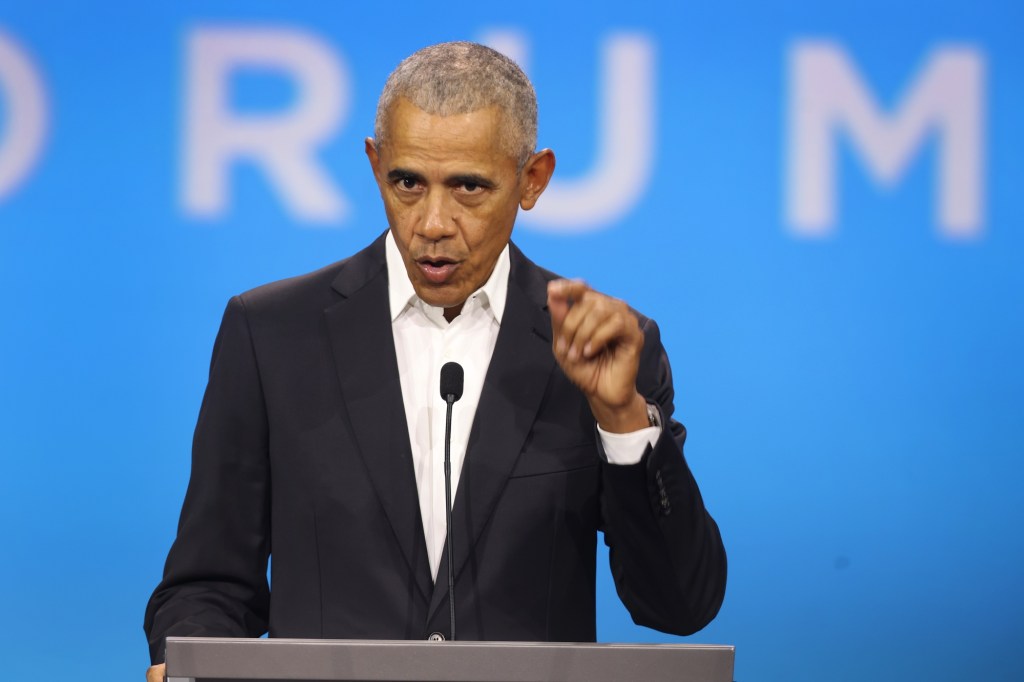
    In a recent thought-provoking speech, former US President Barack Obama offered a compelling perspective on reframing the economic debate.

    Obama delved into economic history, acknowledging capitalism as the unparalleled generator of wealth and innovation. While recognising its historical successes, he pointed out the shortcomings, emphasising that wealth generation doesn’t automatically equate to a just society. He also reminded us of capitalism’s historical compatibility with slavery, exploitation, and environmental degradation.

    The former president acknowledged the role of reformers, organizers, and visionaries in tempering capitalism’s excesses, particularly in the aftermath of the Great Depression and World War II. He underscored the importance of democratic governments in moderating capitalism, highlighting investments in education, social safety nets (of which we should be very proud of here in Europe, and continue maintaining), and regulations to maintain economic balance.

    Obama astutely analyzed the unraveling of the post-Cold War consensus, attributing it to globalization, automation, and the internet. Obama also noted how China and Russia demonstrated that capitalism can thrive under authoritarian regimes as well. He skillfully connected the 2008 financial crisis and the more recent pandemic to the vulnerabilities of a globally connected world, showcasing the interdependence of economies.

    Addressing the concerns of the younger generation, Obama recognized the growing doubts about achieving or surpassing previous living standards. He engaged with the argument that capitalism’s emphasis on growth and consumption, particularly in the face of climate change, might be problematic. Yet, he balanced this by asserting the continued importance of growth and productivity, to uplift billions more out of poverty, urging progressives not to ignore these fundamental economic principles.

    Obama called for a collective effort to align economic policies with our deepest values, echoing the sentiment that economic choices profoundly impact the fabric of our lives. He challenges all of us, who are interested in the commons, to be the new heroes who strengthen the bonds of trust and shape an economic and democratic system that aligns with our shared values and principles.

    Watch the speech: https://www.youtube.com/watch?app=desktop&v=gbog2qF5x-A

    Watch my selected 10 min highlights on Instagram: https://www.instagram.com/p/Cz_DioxI62W/

  • Luxembourg’s Old-Age Dependency Ratio

    Luxembourg’s Old-Age Dependency Ratio

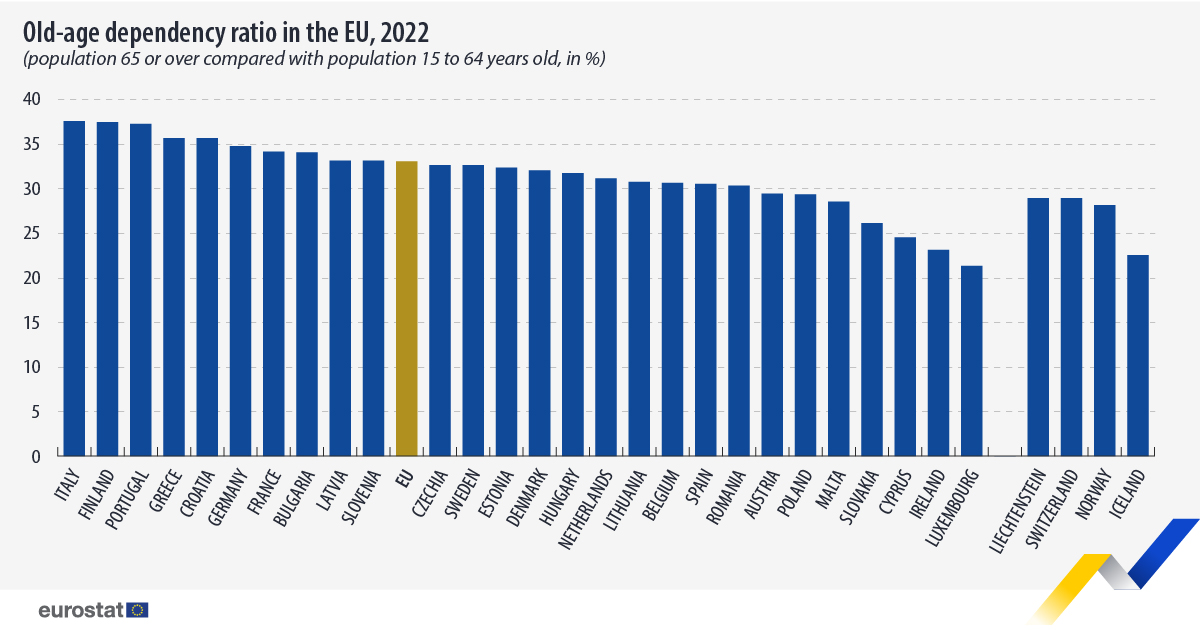
    Luxembourg, is modestly redefining the demographic narrative within the EU. The reason is clear and precise: its old-age dependency ratio is the envy of our neighbors, and it all boils down to a strategic influx of a young, tax-paying, (and mostly European) workforce.

    This isn’t a stroke of luck; it’s policy at its most pragmatic. Luxembourg has cracked the code by actively courting a diverse pool of skilled workers, predominantly from within Europe. Unlike many EU nations grappling with an aging population, Luxembourg has managed to sustain a robust balance between its elderly and working-age citizens.

    The secret lies in the numbers: a workforce that not only contributes to the nation’s economic prosperity but also ensures a manageable burden on its social support systems. In Luxembourg, the elderly aren’t an impending crisis; they’re a population well-supported by the vibrant and tax-generating younger demographic.

    As we gear up for the EU elections in June 2024, Luxembourg’s success story holds crucial lessons. It’s not just about economic growth; it’s about ensuring that the backbone of this success, the young and tax-paying workforce, actively participates in shaping the future of the European Union.

    The call to action is clear: this demographic segment, largely responsible for Luxembourg’s enviable old-age dependency ratio, must not be sidelined in the democratic process. Their voices, their concerns, and their votes need to reverberate in the upcoming elections. The very demographic that has propelled Luxembourg to its unique position is the key to navigating the challenges of an aging population across the EU.

    Ahead of June 2024, register to vote for the European elections in Luxembourg on June 9, and then as we step into the polling booths, let’s not forget the lesson from our country: a thriving, engaged, and diverse workforce is not just an economic asset; it’s the linchpin of a sustainable demographic future for the European Union.

  • Renew Europe’s EU Reform Vision

    Renew Europe’s EU Reform Vision

    The European Union is at a critical juncture, seeking to evolve its governance structure and further its capacity for unified action. Amidst this discussion, our country’s role as an EU capital looms large, not just geographically but symbolically—a meeting ground of diverse cultures and a linchpin for European unity.

    The proposed reforms, advocated by Renew Europe, present a bold vision for a more robust European Union. They prioritize enhancing European democracy, amending Article 7, and extending competences to propel the EU towards increased effectiveness and adaptability.

    While I support the reforms, I respectfully dissent on the proposal to rename the Commission as the ‘Executive’. Preserving the name ‘Commission’ maintains a sense of familiarity and continuity, crucial for the EU’s relationship with its citizens. Changing it might inadvertently detach the Commission from the recognition it has garnered.

    What’s being proposed?

    • European Democracy Enhancement
    • Amend Article 7 for better protection of common values.
    • Remove unanimity requirement.
    • Set clear deadlines for Council action.
    • Grant European Court of Justice authority in violations.
    • Introduction of EU Referendum
    • Aim to involve citizens in critical EU decisions.
    • Empowerment of European Parliament
    • Grant right of initiative for the Parliament to propose legislation.
    • New Competences
    • Establishment of Defense Union and Energy Union.
    • Exclusive competences in environment, biodiversity, and climate change agreements.
    • Shared competences in public health, civil protection, industry, and education.
    • EU Institution Reforms
    • Elimination of unanimity rule in the Council.
    • Introduction of a new Qualified Majority Vote system.
    • Proposal to restructure the Commission to an ‘Executive’ with 15 members, with the President appointed by the Parliament and confirmed by the Council.