Tag: Christos Floros

  • More Democracy for Young People

    More Democracy for Young People

    As someone deeply rooted in the fabric of European culture and governance, the initiative of MOREin24 Luxembourg strikes a resounding chord within me.

    Growing up surrounded by the intricate workings of European institutions, having had the privilege of witnessing the functioning of the EU from a very young age, I am elated to share my experience and support this groundbreaking effort aimed at encouraging wider participation in the forthcoming EU Elections of 2024 from young people across Luxembourg.

    The event on November 15th, at Melia Luxembourg, organised in collaboration with Change for Luxembourg, promises to be connect young changemakers. Short, inspiring talks in under 15 minutes will be coupled with invaluable insights, fostering an environment conducive to exchanging ideas and perspectives among attendees.

    MOREin24 Luxembourg represents a movement dedicated to bridging the gap between Luxembourg’s youth and critical topics such as youth engagement, voter participation, and the European Union.

    Supported by the European Parliament and spearheaded by the European Youth Card Association (EYCA), the initiative aims to evoke a tidal wave of change, instigating a call to action among young citizens and residents. It strives to embolden them to embrace their inherent right to engage in the democratic process.

    The heart of MOREin24 Luxembourg lies in its mission to ensure that the voice of every member of society resonates in the upcoming EU Elections in Luxembourg.

    This launch marks a pivotal moment in empowering our diverse communities in Luxembourg to drive change.

    I invite you to join us in championing active engagement in the EU Elections 2024. Let us collectively ensure that every voice is heard and every citizen feels empowered to shape the destiny of our shared European landscape.

    Together, we can ignite a movement that reverberates far beyond the ballot box, propelling change and progress across our continent.
  • Europe’s Shift to Renewables & Energy Independence

    Europe’s Shift to Renewables & Energy Independence

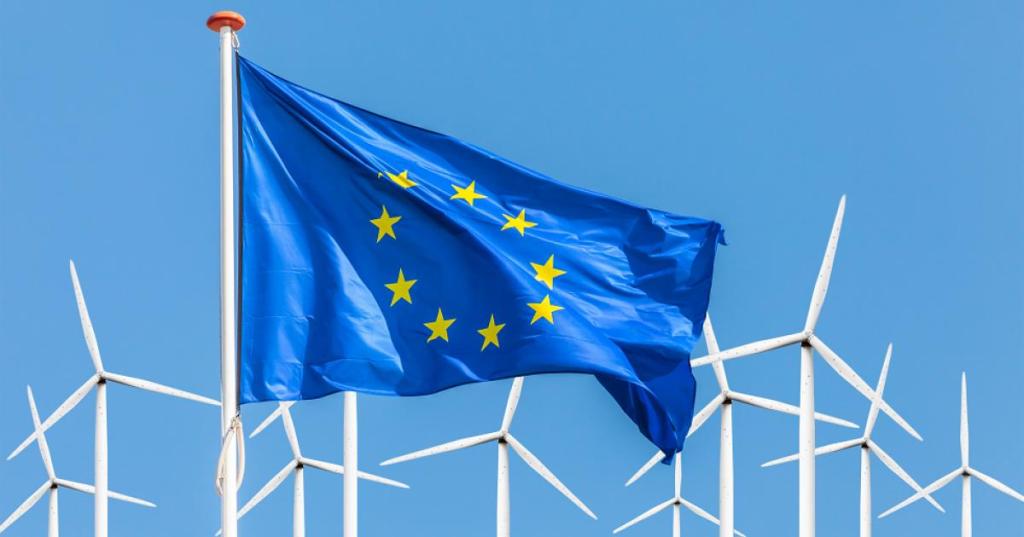
    The drive towards renewable energy sources is not just a climate imperative but also a strategic move for Europe’s energy independence. The transition to renewables is pivotal in liberating Europe from traditional energy dependencies and securing its self-reliance in the energy sector. This shift marks a crucial step towards reshaping the continent’s energy landscape, bolstering its autonomy, and ensuring a more stable, sustainable future.

    Embracing sustainable energy options enables Europe to balance the climate crisis and curtail its dependence on non-renewable fossil fuels, minimizing vulnerability to fluctuating global energy markets and geopolitical tensions. The abundance and predictability of these renewable sources offer Europe a path towards greater energy autonomy and environmental resilience.

    Solar energy, with its vast potential and accessibility across Europe, stands as a key in this shift towards independence. The harnessing of solar power not only mitigates the environmental impact but also decentralizes energy production, empowering communities and nations to generate their electricity. This transition fosters a more self-reliant energy infrastructure, reducing Europe’s susceptibility to disruptions in the global energy supply chain.

    Wind energy, is another significant component of Europe’s journey towards energy independence, and continues to offer immense promise. Its harnessing across the continent’s coastal and open spaces provides a diversified energy portfolio, lessening dependence on imported energy. Wind power’s fairly consistent availability and technological advancements can drive Europe closer to self-sufficiency, contributing to a more secure and stable energy future.

    Hydro power, a proven, and reliable renewable energy source, further underlines Europe’s quest for autonomy. Investment in innovative hydroelectric technologies amplifies Europe’s energy independence, and can help ensure a more self-reliant power supply.

    This strategic shift towards renewable energy is further amplified by the imperative to bolster energy efficiency measures. Enhancing efficiency across industries and buildings is pivotal in reducing energy waste, optimizing consumption, and ensuring Europe’s energy self-sufficiency. By investing in energy-efficient technologies and sustainable practices, Europe should and will fortifiy its energy independence, reduce reliance on external energy sources and fortify its energy resilience.

    For a self-sufficient, stable, and sustainable energy future for Europe.

  • Europe’s Global Agency after Brexit

    Europe’s Global Agency after Brexit

    In the aftermath of Brexit and the impending first EU elections post the UK’s departure, the European Union faces a critical juncture, demanding a collective reevaluation and reinvigoration of its purpose and influence on the world stage.

    The urgency for unity and coherence within the EU has never been more pressing. As the EU endeavors to exert its influence in global forums such as the G7 and G20, it must organize, consolidate, and fortify its collective strength. Moreover, Luxembourg, as a founding member and the EU capital, possess a unique opportunity to drive this collective effort forward, particularly by engaging and empowering more Europeans to partake in the political process.

    The EU stands at a pivotal moment where it must redefine and solidify its purpose and stance in a world witnessing seismic geopolitical shifts. As the world evolves, challenges mount, and global power dynamics shift, it is imperative for the EU to consolidate its voice, stand as a unified force, and independently advocate for its collective interests.

    The EU, with its combined economic power, cultural diversity, and commitment to democratic principles, possesses the potential to influence global policy and shape international discourse. However, this potential remains under-realized due to internal fragmentation and a lack of cohesive action. The time has come for the EU to synchronize its policies, pool its resources, and assert its united front on the world stage.

    Encouraging greater participation and voter registration among European citizens in Luxembourg is instrumental in fortifying the EU’s democratic foundation. As Luxembourg gears up for EU elections, there exists a prime opportunity to enhance voter engagement, emphasizing the significance of the EU and its impact on the lives of its citizens.

    Support for the DP and Renew Europe in Luxembourg will a step towards a more inclusive, progressive, and integrated Europe. By uniting behind a common vision, Luxembourg and other member states can drive the EU towards a future marked by increased agency and a more decisive role in global affairs. A more coordinated and assertive European Union is not only advantageous for its members but is crucial in navigating the challenges of the 21st century, including climate change, economic resilience, and security concerns.

    The time is now, and Luxembourg stands at the forefront of this pivotal movement.

  • Addressing Economic Vulnerabilities in the EU and Shifting to Sustainable Growth

    Addressing Economic Vulnerabilities in the EU and Shifting to Sustainable Growth

    In his recent analysis, Nicolas Goetzmann, Head of Research and Macroeconomic Strategy at Financière de la Cité, offers a compelling and comprehensive examination of our current economic landscape, highlighting the critical issues plaguing the United States, China, and the European Union.

    He astutely points out the United States’ relative stability is grounded in a robust domestic demand that continues to fuel the country’s development. In contrast, China is grappling with an outdated growth model, characterized by unsustainable levels of investment and a heavy trade surplus. And in the tussle for economic supremacy between the U.S. and China, the European Union, particularly the Eurozone, finds itself in a precarious position, weakened by a lackluster domestic demand and a heavy reliance on an external trade structure that’s been geopolitically undermined in recent years.

    Goetzmann suggests that European strategic ambition, focused on “strategic autonomy,” is at odds with our current development model rooted in external demand and characterized by internal weakness. To address this, Goetzmann advocates for a macroeconomic model dedicated to restoring and structurally supporting internal demand within Europe.

    Such a shift, Goetzmann argues, would benefit European businesses by creating a robust domestic market akin to the United States. It would simultaneously reduce Europe’s vulnerability to external demand and elevate the income of its population. This strategy would foster structural growth, lead to increased investment, and drive future growth potential. Additionally, it would offer more significant fiscal leeway to Eurozone governments.

    To the least, this is a call to action. Worth reading, more than happy to hear your thoughts.

  • And the Case for EU Defense?

    And the Case for EU Defense?

    As we look back at the tumultuous events of the past two decades, it’s impossible to ignore the seismic shifts in global geopolitics. Georgia, Syria, Ukraine, Israel: all these recent and current conflicts serve as stark reminders that our world order is fraying at the seams.

    The violations of longstanding norms of international law by a permanent member of the UN Security Council have released a Pandora’s box of warlike tendencies. War is no longer mostly confined to history books; it is reemerging as the ultimate arbiter, underlining the law of force as the new rule.

    This growing instability isn’t merely a distant menace but is inexorably creeping towards Europe. The pressing question now is whether the EU can muster the strength needed to make its diplomatic efforts truly effective, and work towards European Defense.

    The European Union must now grapple with the reality of power. This means crafting mechanisms within its member states to ensure the integrity of our political model, safeguard our interests, and support our allies.

    To gain the respect of increasingly emboldened global actors, Europe cannot shy away from the military dimension. The need for a strong defense is evident. We’ve got to aspire to be more self-reliant.

    At the moment, we seek reassurance in grand alliances and issue calls for restraint to international actors who are boldly disregarding them. The challenge before us is clear: will Europe seize the moment to secure its future in a rapidly evolving world?

  • AI: Augmenting our Potential, Not Replacing It

    AI: Augmenting our Potential, Not Replacing It

    The AI revolution is well underway, with the technology demonstrating unprecedented abilities in areas such as natural language processing, image recognition, and complex problem-solving (Hi Talkwalker!). Yet, the essence of this revolution goes beyond just the technology itself; it lies in the profound changes AI can bring to human society and the workforce.

    The fear that AI will replace humans in the workplace is a narrative that often takes center stage. However, it’s imperative that we shift our perspective. Instead of viewing AI as a threat, we should embrace it as a tool for augmenting our capabilities.

    • AI can complement human creativity. It can analyze data, recognize patterns, and generate novel ideas. This collaboration between humans and AI can result in more imaginative solutions to complex problems.
    • AI can handle repetitive, data-intensive tasks with speed and precision, freeing humans to focus on more value-added work. This leads to increased efficiency and productivity.
    • In education, AI can tailor learning experiences to individual students, adapting to their pace and preferences. It empowers educators with data-driven insights to enhance teaching methodologies.
    • AI in healthcare assists doctors in diagnosing diseases more accurately and personalizing treatment plans. It ensures that patients receive the best care possible.
    • AI plays a vital role in monitoring and optimizing resource use, reducing waste, and mitigating environmental issues. By collaborating with AI, we can address global challenges more effectively.

    AI is not the harbinger of a jobless future; it’s an opportunity to redefine how we work, learn, and create. The collaborative potential of humans and AI is what sets this revolution apart. It’s a partnership where the strengths of each entity amplify the other’s capabilities.

    With this newfound potential, it’s vital to address the ethical dimensions of AI. Transparency, fairness, and accountability should guide the development and deployment of AI systems. We must ensure that AI technologies do not perpetuate biases or threaten individual freedoms.

    As AI becomes more integrated into our lives, there’s an urgent need for education and upskilling. By embracing AI as an augmentation tool, we open the door to exciting new career opportunities and encourage a continuous learning mindset.

    AI is not here to replace us; it’s here to help us reach new heights, solve complex challenges, and enhance our quality of life. By embracing AI as a partner in our journey, we unlock unprecedented opportunities that will shape the future of our society and the world at large.