Tag: elections luxembourg 2023

  • Addressing Global Wealth Inequality and Global Tax Evasion

    Addressing Global Wealth Inequality and Global Tax Evasion

    Few challenges loom as large as wealth inequality. The staggering chasm between the world’s haves and have-nots demands innovative solutions and steadfast commitment.

    It is imperative for the EU to spearhead initiatives combating global wealth inequality, grounded in the social-liberal ethos that defines us. I believe that Luxembourg’s international financial know-how can play a constructive role to help shape a vision where financial expertise converges with social justice.

    A social-liberal EU direction can deliver a more equitable global economic order.

    1. Progressive Global Taxation and fighting Tax Evasion:
      In true social-liberal spirit, the EU can join the US and others in championing the cause of progressive global taxation and ensure tax evasion is fought throughout the world. We must call for tax policies that pave the way for a more equitable and optimised distribution of resources, within an economically free, but always socially responsible and accountable market. This resonates with our commitment to individual freedoms and equal opportunities, and protection against monopolies.
    2. Responsible Business Practices:
      ALDE and ‘Renew Europe’ advocate for a dynamic and responsible business landscape. The EU can lead the charge by instituting frameworks that foster ethical practices—fair wages, ethical sourcing, and eco-friendly operations.
    3. Developing Countries:
      The EU must intensify support for developing friends. Fair trade, educational investments, and debt relief are not mere policies; they’re expressions of social and humane solidarity.
  • Barack Obama’s Vision for an Inclusive Future and the future of Capitalism

    Barack Obama’s Vision for an Inclusive Future and the future of Capitalism

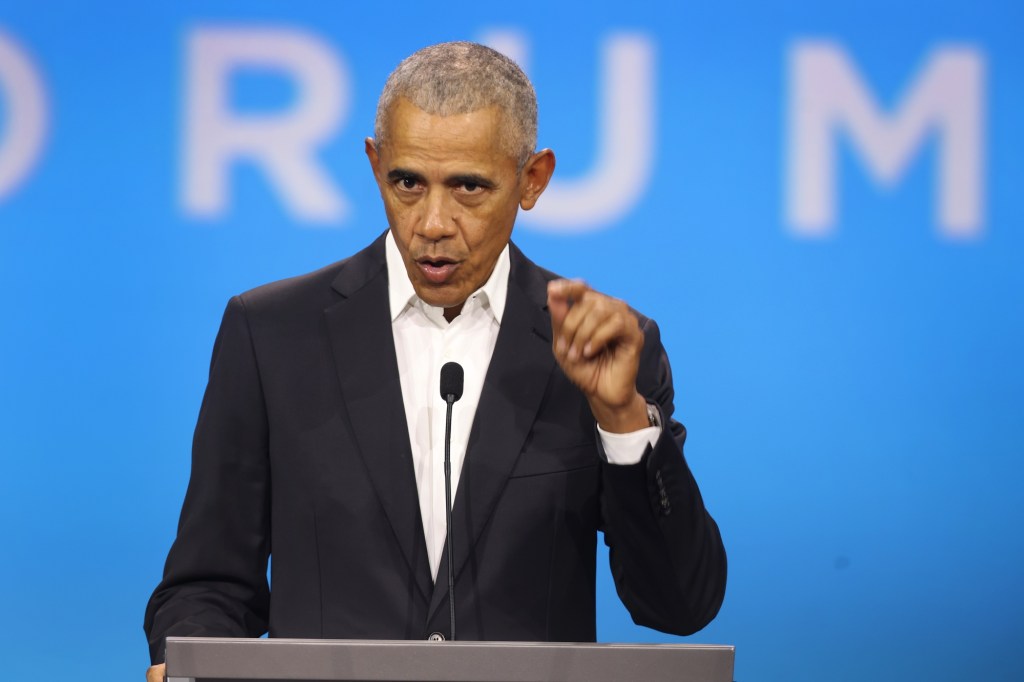
    In a recent thought-provoking speech, former US President Barack Obama offered a compelling perspective on reframing the economic debate.

    Obama delved into economic history, acknowledging capitalism as the unparalleled generator of wealth and innovation. While recognising its historical successes, he pointed out the shortcomings, emphasising that wealth generation doesn’t automatically equate to a just society. He also reminded us of capitalism’s historical compatibility with slavery, exploitation, and environmental degradation.

    The former president acknowledged the role of reformers, organizers, and visionaries in tempering capitalism’s excesses, particularly in the aftermath of the Great Depression and World War II. He underscored the importance of democratic governments in moderating capitalism, highlighting investments in education, social safety nets (of which we should be very proud of here in Europe, and continue maintaining), and regulations to maintain economic balance.

    Obama astutely analyzed the unraveling of the post-Cold War consensus, attributing it to globalization, automation, and the internet. Obama also noted how China and Russia demonstrated that capitalism can thrive under authoritarian regimes as well. He skillfully connected the 2008 financial crisis and the more recent pandemic to the vulnerabilities of a globally connected world, showcasing the interdependence of economies.

    Addressing the concerns of the younger generation, Obama recognized the growing doubts about achieving or surpassing previous living standards. He engaged with the argument that capitalism’s emphasis on growth and consumption, particularly in the face of climate change, might be problematic. Yet, he balanced this by asserting the continued importance of growth and productivity, to uplift billions more out of poverty, urging progressives not to ignore these fundamental economic principles.

    Obama called for a collective effort to align economic policies with our deepest values, echoing the sentiment that economic choices profoundly impact the fabric of our lives. He challenges all of us, who are interested in the commons, to be the new heroes who strengthen the bonds of trust and shape an economic and democratic system that aligns with our shared values and principles.

    Watch the speech: https://www.youtube.com/watch?app=desktop&v=gbog2qF5x-A

    Watch my selected 10 min highlights on Instagram: https://www.instagram.com/p/Cz_DioxI62W/

  • AI: Augmenting our Potential, Not Replacing It

    AI: Augmenting our Potential, Not Replacing It

    The AI revolution is well underway, with the technology demonstrating unprecedented abilities in areas such as natural language processing, image recognition, and complex problem-solving (Hi Talkwalker!). Yet, the essence of this revolution goes beyond just the technology itself; it lies in the profound changes AI can bring to human society and the workforce.

    The fear that AI will replace humans in the workplace is a narrative that often takes center stage. However, it’s imperative that we shift our perspective. Instead of viewing AI as a threat, we should embrace it as a tool for augmenting our capabilities.

    • AI can complement human creativity. It can analyze data, recognize patterns, and generate novel ideas. This collaboration between humans and AI can result in more imaginative solutions to complex problems.
    • AI can handle repetitive, data-intensive tasks with speed and precision, freeing humans to focus on more value-added work. This leads to increased efficiency and productivity.
    • In education, AI can tailor learning experiences to individual students, adapting to their pace and preferences. It empowers educators with data-driven insights to enhance teaching methodologies.
    • AI in healthcare assists doctors in diagnosing diseases more accurately and personalizing treatment plans. It ensures that patients receive the best care possible.
    • AI plays a vital role in monitoring and optimizing resource use, reducing waste, and mitigating environmental issues. By collaborating with AI, we can address global challenges more effectively.

    AI is not the harbinger of a jobless future; it’s an opportunity to redefine how we work, learn, and create. The collaborative potential of humans and AI is what sets this revolution apart. It’s a partnership where the strengths of each entity amplify the other’s capabilities.

    With this newfound potential, it’s vital to address the ethical dimensions of AI. Transparency, fairness, and accountability should guide the development and deployment of AI systems. We must ensure that AI technologies do not perpetuate biases or threaten individual freedoms.

    As AI becomes more integrated into our lives, there’s an urgent need for education and upskilling. By embracing AI as an augmentation tool, we open the door to exciting new career opportunities and encourage a continuous learning mindset.

    AI is not here to replace us; it’s here to help us reach new heights, solve complex challenges, and enhance our quality of life. By embracing AI as a partner in our journey, we unlock unprecedented opportunities that will shape the future of our society and the world at large.

  • 1 in 3 Luxembourgers is a naturalised citizen.

    1 in 3 Luxembourgers is a naturalised citizen.

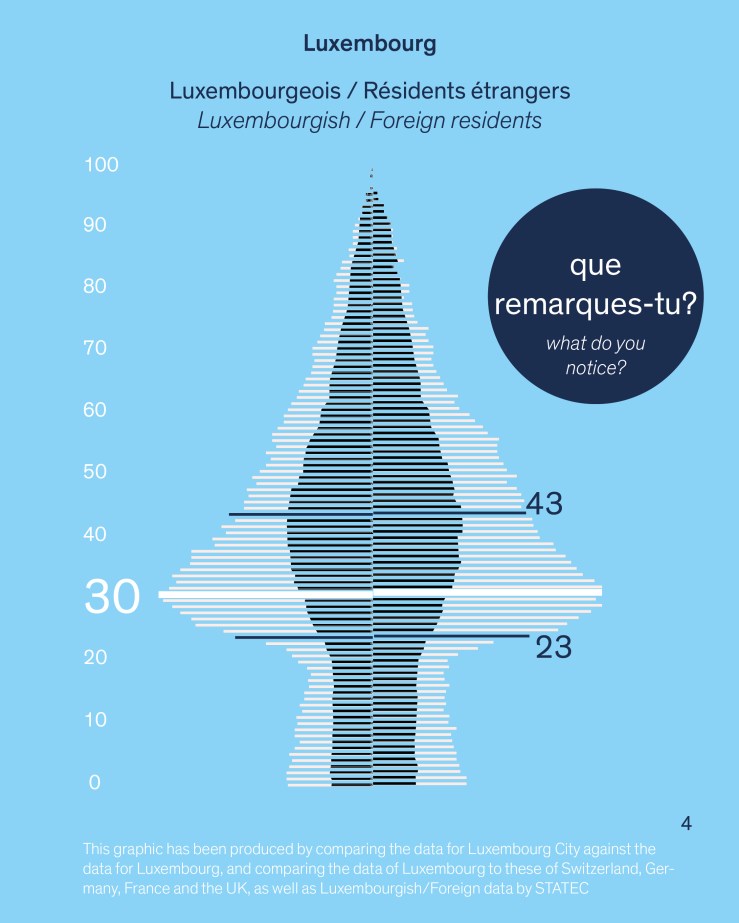
    1 in 3 Luxembourgish citizens here in the heart of Europe, in Luxembourg, is now a naturalized citizen. 1 in 2 residents is a non-citizen. 3 in 4 people working in Luxembourg are non-citizens. 🇱🇺

    These facts are not just about numbers; it represents the tapestry of stories, cultures, and dreams that make up our country.

    Looking ahead to 2030, the proportion of naturalised citizens, is set to grow even more, transforming our society and enriching our collective experience. But what does this mean for us as Luxembourgish citizens? And for our democracy?

    It’s not just a demographic shift; it’s a call to action. As our society diversifies, it’s our shared responsibility to ensure that all voices are heard and considered in the decisions that shape our democracy.

    I believe that every journey of immigration, every tale of growth, and every story of building a new life in Luxembourg adds a unique hue to the canvas of our nation. These perspectives are an opportunity to influence the very rules that guide our society.

    Our compatriots who’ve chosen Luxembourg as their new home have so much to offer. Their contributions aren’t just to be confined to workplaces; they must extend to our social leadership and democratic processes. The tapestry of perspectives they bring will help us in creating a more inclusive and harmonious Luxembourg.

    This brings us to an important thought: empowerment. We need to actively encourage more of our fellow citizens and residents to step into leadership roles.

    By doing so, we can tap into their diverse experiences and channel their passion and knowledge and perspectives into shaping our country’s bright, European future.

    As we gear up for the upcoming October vote, there’s a crucial point to consider. Your vote is your voice, and by connecting with the right people, you can vote tactically to support those who champion inclusivity and diversity and the true coming-together of our diverse, multicultural nation.

    It’s time to bridge the gap between citizens and leaders, to foster an environment where every perspective, old or new, is respected and valued.

    Luxembourg is evolving, and we’re all a part of this evolution. Let’s stand together, united in our commitment to embrace diversity, empower our fellow citizens, and pave the way for a future that’s brighter and more inclusive than ever before.

  • Together for Luxembourg

    Together for Luxembourg

    Moien, I’m Christos, I think its time I spoke to you directly.

    I love Luxembourg, our beautiful City, and our European Union, and I want to make sure it works for all of us.

    We are diverse and international.

    Whether you are Luxembourgish with many generations before you, or you grew up here, you have become a citizen, or you are a resident, old or new, Our society is shaped by all of us.

    Our contribution to society matters, our presence is felt throughout this city and country, and is shaping it and our future.

    It’s about time this diversity is represented, so that we can decide our future together.

    You and I can be instigators of change. I believe that, and I need you to believe that too.

    Thank you for following and helping share our message of community.

  • Luxembourg, the city of 30 year olds

    Luxembourg, the city of 30 year olds

    🇬🇧 + 🇫🇷 Did you know? Luxembourg is a very young city!

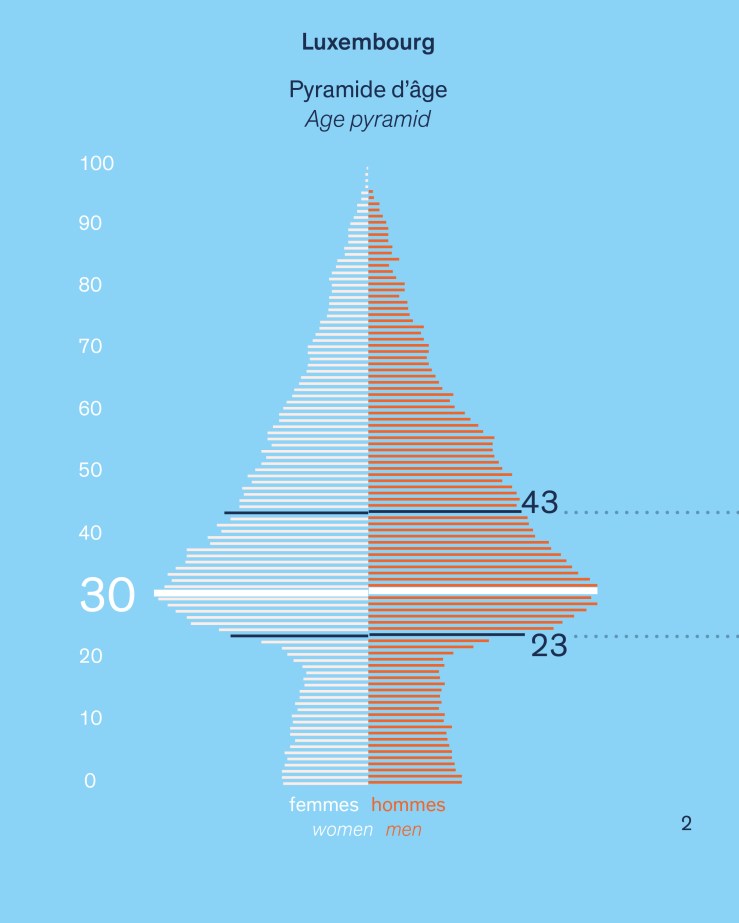
    More people are 30 year olds than any other age, and more people are between the ages of 23 to 43 than any other age.

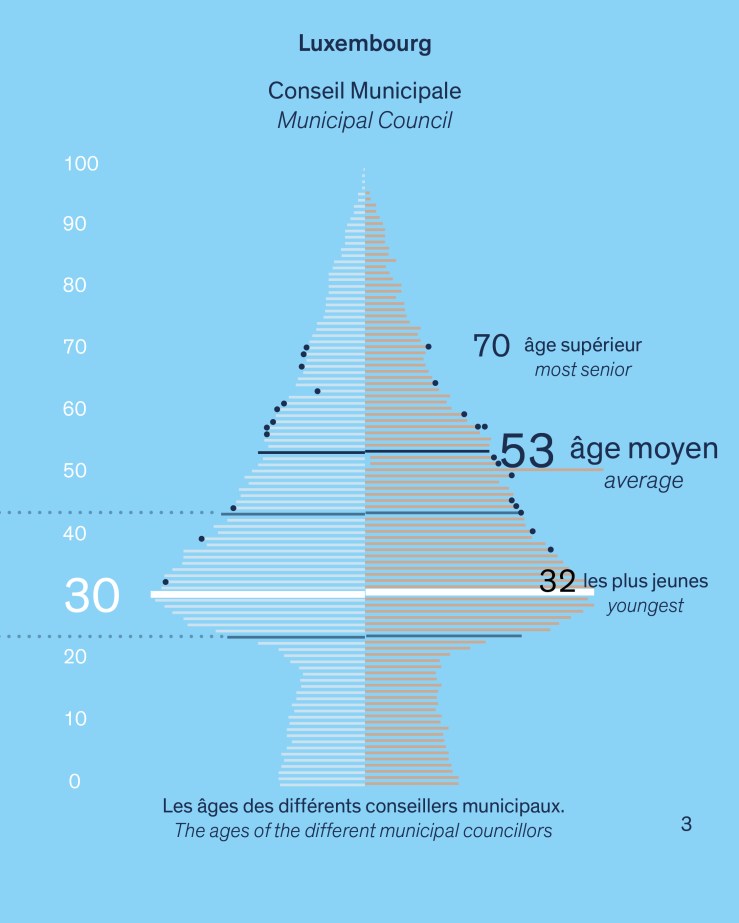
    What does that mean? Well, if you’re complaining about the dating pool in Luxembourg as a young profesional, maybe try a better bar, but in terms of representation, it means, we have dropped the ball. It means so far, we are not representing what we are, in our political and social dialogue.

    As a society, we need to look ourselves in the mirror, and accept, that what makes us wonderful, is this diversity, is this young talent coming from accross Europe and the world, it is their energy and their work, and therefore we also need to trust that these voices also belong in our social dialogue.

    He who writes this, know what he’s talking about, having grown up an immigrant in Luxembourg, having acquired, patriotically, my Luxembourgish nationality, during the early days of this health crisis, as I was one of the first volunteers, along with many, many foreign-residents in the first lines, and knowing, that this is my home, this is my country I want to contribute to, and I too, deserve to have a voice, in how we shape its future. And so do you.

    A huge thank you to Jana DeGrott for amplifying this article / post on Instagram, by inviting me to collaborate on its sharing.

    En Francais

    ●Le saviez-vous? Luxembourg est une ville très jeune !

    Plus de personnes ont 30 ans que n’importe quel autre âge, et plus de personnes ont entre 23 et 43 ans que n’importe quel autre âge.

    Qu’est-ce que ça veut dire? Eh bien, si vous vous plaignez du ‘dating pool’s au Luxembourg en tant que jeune professionnel, essayez peut-être un meilleur bar, mais en termes de représentation, cela signifie que nous avons laissé tomber la balle. Cela signifie que jusqu’à présent, nous ne sommes pas représentés tels que nous sommes, dans notre dialogue politique et social.

    En tant que société, nous devons nous regarder dans le miroir et accepter que ce qui nous rend merveilleux, c’est cette diversité, c’est ce jeune talent venant de toute l’Europe et du monde, c’est leur énergie et leur travail, et donc nous aussi avons besoin de croire que ces voix ont aussi leur place dans notre dialogue social.

    Celui qui écrit ceci, sait de quoi il parle, ayant grandi immigré au Luxembourg, ayant acquis, patriotiquement, ma nationalité luxembourgeoise, durant les premiers jours de cette crise sanitaire, car j’étais l’un des premiers volontaires, avec beaucoup, de nombreux résidents étrangers en première ligne, et sachant que c’est chez moi, c’est mon pays, et moi aussi, je mérite d’avoir une voix sur la façon dont nous façonnons son avenir. Et toi aussi.