Tag: Luxembourg

  • Our Dream of Europe

    Our Dream of Europe

    Do you like my shirt in this video? I think I have about 50 shirts, if not more.

    That’s a lot of shirts. Winter shirts, summer shirts, office shirts.

    If it helps, I’ve owned many of them for more than 10 years and I still wear them.

    But this isn’t a newsletter about fast fashion. It’s about Europe.

    My grandmother owned two skirts. In her entire life, she owned two skirts. She keeps reminding me of this.

    She bought a dress once, just once. Then, she cut it in half to make two skirts. When my father was young, she worked in the small shop my grandparents ran, keeping my father in a little bucket beside her as she worked.

    My mother grew up in a house without running water. No hot water. They carried water into the house and warmed it on the stove.

    That wasn’t 100 years ago. That was 50 years ago. In Europe. In the West. In our European Union.

    Too many of us have forgotten—or never lived—what true hardship feels like. Not just individual poverty, but poverty on a collective, systemic scale.

    We have taken our collective progress for granted. And now, many of us are complicit in dismantling it.

    Populist politicians, who don’t understand the complexity and value of our collective progress, are hastening our decline. And we, in our ignorance, too often support them.

    At the same time, establishment politicians cling to power, even here in Luxembourg. They’re not creating the space for a new generation to lead, to build on what we’ve achieved, and to take us forward.

    A Fragile Foundation

    Let’s not forget what made our progress possible. The European Union was built from the ashes of two world wars. It’s a dream rooted in peace, collective security, and economic cooperation.

    These, our, achievements require constant maintenance.

    Today, political apathy and polarisation threaten the foundation of these achievements.

    Our Engagement Today?

    In Luxembourg, only one in ten eligible (non-citizen) voters participates in local elections.

    This apathy isn’t unique to Luxembourg.

    Meanwhile, those who do engage are often driven by frustration or fear, creating an echo chamber of extremes.

    We see this in the rise of populist movements that capitalize on dissatisfaction but fail to deliver real solutions.

    If we’re to reverse this trend, we need action at both the individual and systemic levels:

    1. Individuals: Join civic organisations, volunteer, or simply vote. Show up where it’s hard to make a difference.
    2. Systems: Politicians must ensure their actions are accountable—not just to today’s voters but to future generations. Policies must align with long-term goals, from combating climate change to ensuring equitable economic growth.

    The Dream of Europe

    I am inspired by the resilience of Ukrainians fighting for their democracy and their commitment to a European future.

    I am moved by the Georgian people, marching for the hope of Europe.

    Their courage reminds us what’s at stake—and what we have to lose if we take Europe for granted.

    It’s not rocket science.

    It’s far more complicated.

    But that’s why we need to start.

    Our dream of Europe rests on each and every one of you.

    Only together, and with massive effort, we can sustain it and build a brighter, fairer future for all.

  • How to address Political Participation in Luxembourg

    How to address Political Participation in Luxembourg

    One of our biggest challenges in Luxembourg is political participation.

    When we consider the future of our country, we have to ask: Are we all in?

    Because the truth is, the challenges we face need everyone’s input.

    We need your voice, your ideas, your energy.

    Here’s what we’ve got:

    • Only about 10% of non-citizens vote.
    • Nearly half of our residents are non-citizens.

    As of 2023, about 47% of Luxembourg’s population are foreign nationals.

    Back in 2000, it was around 37%.

    Here’s the question:

    • How do we make everyone feel they have a stake in our future?

    In 2015, we had a referendum that could have extended voting rights to foreign residents who’ve lived here for over 10 years.

    We lost that opportunity.

    So now, we need to continue finding and building alternative ways to understand how people want us to lead, and towards where.

    It’s not just about voting (although that’s a great start, so register to vote for the next ones, it takes 2 minutes).

    It’s about participation at every level.

    It’s about caring for our commons—our shared spaces, our communities, our environment.

    We need to find ways to include more people, to convince them that their voice matters.

    Because it does.

    If we want to tackle the big issues—whether it’s housing, climate change, or economic development—we need everyone on board.

    So here’s my call to action:

    Join the dialogue, where it is.

    Join political platforms, parties, debates (online or offline – even better)

    Whether you’re a lifelong Luxembourger or you’ve just moved here, your perspective is valuable. It helps us inform our decisions.

    We need to explore new ways to engage with all residents, to gather their feedback, their hopes, their ideas for our future.

    We can’t afford to have half of our population feel disconnected.

    Your thoughts?

    Christos Floros

  • Can Luxembourg lead in AI?

    Can Luxembourg lead in AI?

    Let’s have a real conversation.

    When we ask if Luxembourg can lead in AI, we’re not questioning our country’s capability.

    We’re really asking whether we’re ready to back the people who are already pushing the boundaries.

    I’m thinking of Misch Strotz from LetzAI, today. Misch and the team are the kind of innovators who make you sit up and think, “F8vk, this is happening right here in Luxembourg!” They’re putting us on the map in a global race that’s moving faster every day.

    Let’s be honest—we’ve got challenges:

    – Living Costs: Starting something new is tough in Luxembourg.

    – We’re Culturally Cautious: Taking risks isn’t exactly our national pastime.

    – WHERE’S THE MONEY?: Tech start-ups need capital, and the ecosystem here isn’t as nurturing as it could(should) be.

    It’s not about whether we have talent.

    We do.

    It’s about whether we’re creating the right environment for that talent to thrive.

    If a company from Luxembourg becomes a global household name, something people talk about for the next 20 years, it’s going to be LetzAI.

    That’s the potential I see in LetzAI. Their market reach could be massive—from Netflix producers and Hollywood studios to advertisers across Europe and Asia. They’re already becoming a go-to tool for creators around the world.

    They empower people and brands to contribute their own content, creating “AI Models” that respect intellectual property. As Misch puts it:

    “Better AI requires better niche data. By encouraging users to add themselves and optimize their datasets on our platform, we’re tackling one of AI’s biggest problems: the lack of quality data for niche content.”

    This opens many doors; two that I want to highlight here for my Luxembourg IP laywers and investors:

    – Intellectual Property: They are offering SOLUTIONS in a time when AI and COPYRIGHT are in a messy relationship.

    – Creator Economy: They will be HELPING artists and creators MONETISE and TRACK the impact of their work in ways we haven’t seen before.

    If I were in VC, I’d back them in a heartbeat.

    Supporting companies like LetzAI isn’t just good for them; it’s good for all of us.

    We said years ago we wanted to set the stage for Luxembourg to become a tech hub.

    We got very good at saying it.

    Now it’s time to show how it’s done.

    While we’re pushing forward, we obviously can’t ignore the impact of AI on society. The UN released the “Governing AI for Humanity” report last week and it talks about how we need global cooperation to manage the risks of AI and make sure its benefits reach everyone.

    But the key word is ‘while’.

    We (especially in Europe) have done a lot to be ahead of regulation, but not ahead of Tech.

    And here’s something I’ve kept saying and we need to consider seriously: the future of AI should be shaped by democratic values and democratic countries.

    If we leave AI development to countries or companies that don’t prioritise transparency and individual freedoms, we put the future of our democracies at risk.

    Supporting teams like LetzAI isn’t just business — it ensures Luxembourg can be an active and influential participant in the global AI conversation, outside of Parliaments and Bureaucracies: in the actual tech.

    So, can Luxembourg lead in AI?

    I believe we can.

    But now is the moment to prove it by supporting and funding our innovators.

    Those are my thoughts. What are yours?

    Christos Floros

  • “2024 is history in the making” interview with Chronicle.lu

    “2024 is history in the making” interview with Chronicle.lu

    Chronicle.lu: In a context of geopolitical and economic uncertainty, plus taking into account Eurosceptic/anti-Europe narratives (talks of EU exits – and this being the first European election since the 1970s without the UK) and the fact that this is a “record” year for elections worldwide, why do you feel it is important that more people (not least potential first-time voters) head to the polls in June 2024?

    Christos Floros: Voting is our civic duty. It’s how we shape the future of our society, at every scale, locally, nationally, internationally. In democratic societies, at least. Here in Luxembourg, citizens are required to vote.

    If we could legally make every resident vote, I believe we would. Because in Luxembourg we really do see it as a duty, if you live and work in this country, we want you to take responsibility for it, too.

    2024 is history in the making. The year they’ll point to in the future and say, “That’s when we stood up for democracy” or the opposite. The latter option, well, let’s just say Trump getting re-elected, makes it scarily possible. Remember, he was elected after the shockwave of Brexit, right?

    This year, Europe should send a different kind of shockwave to the US. A nod to our American allies, a message that says, “Hey, we’re still building that post-WWII world together.” A wake-up call. And guess how we do that? Electing pro-EU leaders across our Union in June.

    We gotta rekindle that commitment in Europe. Our peace, our freedom, our freedom of movement, our Erasmus, our shared prosperity, all these things, we’ve achieved together, we’ve got to remind every single European that this only works, when we work together and when politicians are also willing to take responsibility for what didn’t go as planned, what we didn’t get right. Otherwise, we are going to leave the field free for the far right… And those who scream “no more Europe” are basically condemning us all. We, as individual nations, can’t navigate this new world we are entering, alone. […] We live in a world of giants now, and going it solo for any of us is a recipe for disaster. We can and will continue to love and cherish our homelands, celebrate our traditions, and at the same time we must continue to aspire to build our bigger selves together. We need more Union today, than we needed in the 90’s or the 2000s.

    This is not just an election, it’s a chance to shape history. It’s our opportunity to show the world that Europe is still a beacon of hope, collaboration, and progress […] And that’s why I want everyone to sign up to vote before 15 April, to vote on 9 June.

    Read the full interview: https://chronicle.lu/category/politics/48625-change-for-luxembourg-founder-discusses-importance-of-european-elections

  • Ready to renew our commitment to Europe

    Ready to renew our commitment to Europe

    Our campaign of inclusion and participation has never been about one person.

    All of it has been about you, about all of us together.

    About the belief that when more people get a say, our democracy works better.

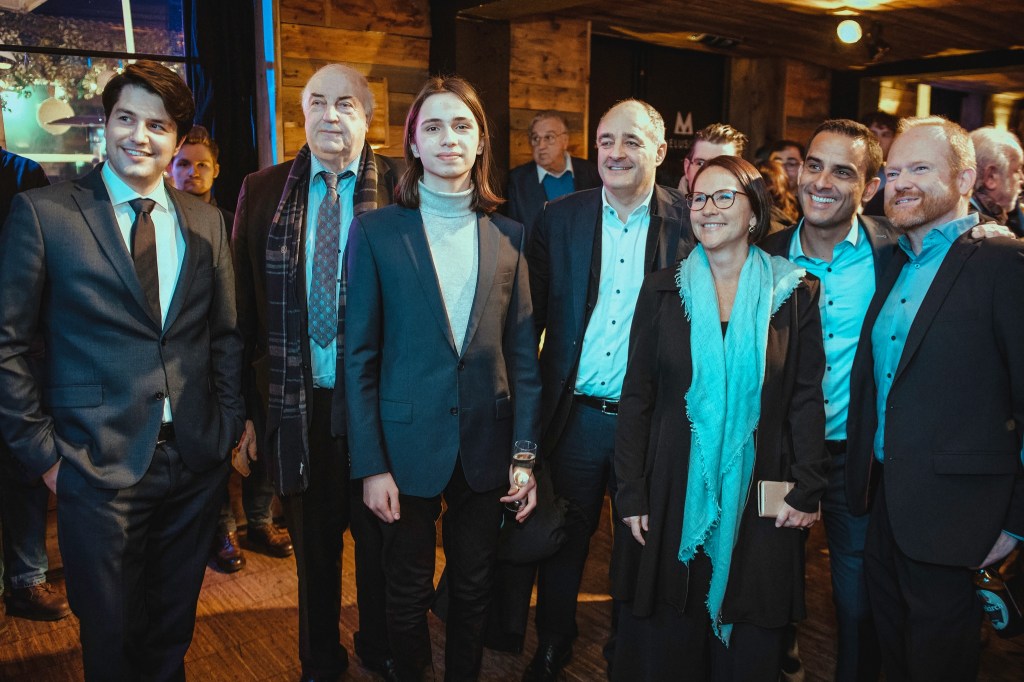
    I am incredibly happy to have seen so many new faces, so many of you last night, showing up, getting involved.

    Luxembourg needs all of us, our European Union needs all of us.

    United in diversity is the motto of our Union, and where could that be more true, than in our Luxembourg?

    Luxembourg brings us together, and we will continue to celebrate this, and show the rest of Europe, what we can do when we work together.

    In these images, you will see people from Luxembourg to Romania to India, who all have one thing in common: Luxembourg is their home.

    Many of them have already become Luxembourgish citizens, many of them are European, many of them were always Luxembourgish citizens, what we all have in common is that we believe that Europe can work, must work, and will work, if we work together.

    Thank you once again, for all the interesting conversations and every word of encouragement.

    But more importantly, thank you for showing up, thank you for your engagement, thank you for your voice.

  • Human Rights have no borders

    Human Rights have no borders

    Human rights serve as the unshakable foundation of a just and fair society, safeguarding the inherent value and dignity of every individual human. These fundamental rights transcend borders and contexts.

    They represent ‘assured freedoms’, not bestowed upon us by nature, but meticulously defined by the laws and rules we’ve collectively fought for and championed. To defend human rights is to recognize their fragility, acknowledging that they are not automatic features of our existence. Instead, they are guaranteed by our collective commitment to protect and uphold them. It’s a shared responsibility that extends beyond individual interests and national boundaries.

    The phrase ‘assured freedoms’ encapsulates the essence of human rights – freedoms we’ve not stumbled upon but have actively secured through concerted efforts. The assurance of these rights depends on our dedication to defend and uphold them.

    Failure to safeguard these rights constitutes a collective forfeiture, putting at risk the hard-earned fabric of justice and equality. The price of silence or indifference is the erosion of the very principles that have been woven into the societal tapestry through painstaking struggles and relentless advocacy.

    The defense of human rights is not merely a duty; it is a collective responsibility that binds us together in the pursuit of a world where dignity, justice, and equality prevail.