Tag: Luxembourg Ville

  • Who wants to lead?

    Who wants to lead?

    Hello,

    The elections are over.

    But those of us who are engaged in politics know that elections are never over.

    That democracy is not a periodic appointment, but a constant, passionate, selfless and demanding engagement. Because democracy is simply the electoral system that allows participatory selection of leadership, but leadership is required throughout.

    I will continue to do my best, to contribute to our young country’s and our Union’s present and future, and to offer you reasons to participate and get engaged yourselves. My engagement did not begin a month ago, and will certainly not seize now.

    I’m grateful and thankful to all those who supported our effort, and I’m convinced that with your engagement, our generation will finally be able to take its future in its own hands.

    State of Affairs, Technology and Misinformation

    The situation in Europe worries me, and should worry us all. Whilst we enjoy some of the highest standards of living in the world, we have become complacent and susceptible to those who seek to divide us, and exploit our weaknesses.

    The extremes are polarising us, by amplifying our fears and using each other to drive us further apart. The moderate political centre, from socialists to conservatives, is being pulled further and further apart. Moderation, consensus, policies by and for all, are out — those who shout louder want increasingly, entirely different things.

    This is happening across Europe and across most Western liberal democracies. It’s not the first time our societies reach such a breaking point, however I still hope this time around we’ll be able to handle these situations more efficiently. After all, we’ve never had as much technology, never had the power to communicate as instantly, and never been as enabled to be informed and rally against a common cause (and unfortunately, empowered by the same technology to be misinformed and divided).

    Western leadership is dwindling, and that worries me for the world’s stability. Just look at who’s in Borgo Egnazia for the G7 today. Those who are dividing us internally, those politicians and the politics of division and finger pointing, those who claim to want to sustain every part of the system that supports us, whilst breaking and changing every part of it: they simply can’t. You can’t have your cake and eat it. Only moderates get that. And we’ve done a terrible job of communicating this.

    The Lack of Meaningful Debate

    Which brings me back to our elections. Where was the debate? Personally, if it weren’t for my own social media and online presence, which I maintained alone, I would have reached zero people. Unfortunately, I had zero media engagements. But even those who did. Was there debate? Was there real discussion about the big issues facing our continent today? Were there actual debates? I’d argue I only saw shows, but no debate. Talking points being communicated, but no exchange. And I refuse to believe that our public does not desire it. We saw very limited exchanges, heavily moderated exchanges. 

    Did we discuss the urgent questions surrounding our environmental impact on the world? Did we discuss any of the crucial debates happening worldwide around our access to resources? Specifically, plans to continue to press on with deep sea mining? Did we discuss the scopes and limitations of the European Union vis a vis our engagement and influence in Israel and Gaza, in Ukraine, in Russia, in China and Taiwan, in Africa? Did we discuss immigration beyond the talking points presented by political parties (with facts and expertise?); did we discuss the resurgence of religious political influence throughout Europe? Did we discuss voting participation in Luxembourg, and what it means that so many of our EU compatriots chose to vote in Luxembourg? And how about showing an interest in all candidates? Political parties do not define us, nor do they define our ideas; it is we, the party members, who define our parties — and by not allowing all of us some minimum visibility, you are not accurately representing either the process, ourselves, or the public’s options. I was asked not to criticise the press during the campaign, but I hope this is seen at least now, not as negative criticism, but positive feedback and criticism to improve. Because we desperately need the press today, we desperately need the media to contribute to our democracy.

    “My advice to the press is to remember that you’re an important part of government and democracy, and act like it.” Howard Dean, former governor of Vermont

    “The backbone of any democracy is an independent, professional and responsible media. Their role is to inform, criticise and stimulate debate.” Peter Joseph Millett CMG, British Diplomat

    “The media today is driven by numbers. If you get a congressman idiotic enough to take pictures of himself and tweet them out, that gets 600 times more coverage than the dangers of an Iranian nuclear weapon.” Newt Gingrich, former speaker of the House (USA)

    If we want to restore our ability to decide together, based evidence and not ideology, if we want to enable ourselves to live and co-exist and decide together, we need to enable an environment that rewards stepping up to offer yourself for leadership, an environment where ideas and exchange of facts and perspectives is not only permitted, certainly not thwarted, but supported. We need the press to step up, and play a role in mediating and flourishing our democratic debate, or it will be entirely ignored, for the much more efficient, direct, and entire uncensored social media, where extremist, flashy, unfounded claims attract, maintain, and grow the voting base of those who offer very little substance, but a very good show.

    The world needs leadership, Europe needs leadership, Luxembourg needs leadership — and we need my generation, your generation, the generation after us, to be inspired and convinced, that the herculean task of putting yourself up for public leadership positions, is worthwhile and not simply toxic and thankless (even if it’s certainly the latter).

    (By the way, if some of you are thinking of our climate and ability to protect our natural habitat while reading this, well done! Without clear leadership, we will be en route to destroy the very ecosystem that sustains all of us)

    I sincerely hope that over the next 5 years, I can convince more of you to get involved, and get engaged in our shared decision making.

    Who wants to lead?

    The fight for our democracies must continue, with you.

    We’re just beginning.

    Christos FLOROS

    My ancestors called themselves Roman. I call myself European. How long will we last? It’s up to us.

  • Human Rights have no borders

    Human Rights have no borders

    Human rights serve as the unshakable foundation of a just and fair society, safeguarding the inherent value and dignity of every individual human. These fundamental rights transcend borders and contexts.

    They represent ‘assured freedoms’, not bestowed upon us by nature, but meticulously defined by the laws and rules we’ve collectively fought for and championed. To defend human rights is to recognize their fragility, acknowledging that they are not automatic features of our existence. Instead, they are guaranteed by our collective commitment to protect and uphold them. It’s a shared responsibility that extends beyond individual interests and national boundaries.

    The phrase ‘assured freedoms’ encapsulates the essence of human rights – freedoms we’ve not stumbled upon but have actively secured through concerted efforts. The assurance of these rights depends on our dedication to defend and uphold them.

    Failure to safeguard these rights constitutes a collective forfeiture, putting at risk the hard-earned fabric of justice and equality. The price of silence or indifference is the erosion of the very principles that have been woven into the societal tapestry through painstaking struggles and relentless advocacy.

    The defense of human rights is not merely a duty; it is a collective responsibility that binds us together in the pursuit of a world where dignity, justice, and equality prevail.

  • Barack Obama’s Vision for an Inclusive Future and the future of Capitalism

    Barack Obama’s Vision for an Inclusive Future and the future of Capitalism

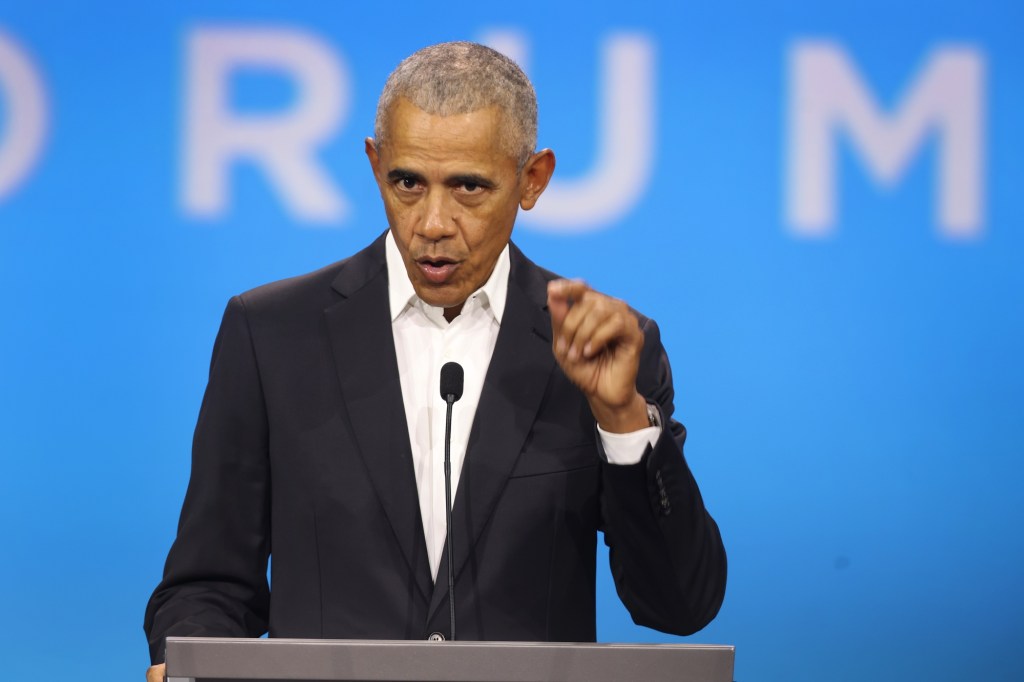
    In a recent thought-provoking speech, former US President Barack Obama offered a compelling perspective on reframing the economic debate.

    Obama delved into economic history, acknowledging capitalism as the unparalleled generator of wealth and innovation. While recognising its historical successes, he pointed out the shortcomings, emphasising that wealth generation doesn’t automatically equate to a just society. He also reminded us of capitalism’s historical compatibility with slavery, exploitation, and environmental degradation.

    The former president acknowledged the role of reformers, organizers, and visionaries in tempering capitalism’s excesses, particularly in the aftermath of the Great Depression and World War II. He underscored the importance of democratic governments in moderating capitalism, highlighting investments in education, social safety nets (of which we should be very proud of here in Europe, and continue maintaining), and regulations to maintain economic balance.

    Obama astutely analyzed the unraveling of the post-Cold War consensus, attributing it to globalization, automation, and the internet. Obama also noted how China and Russia demonstrated that capitalism can thrive under authoritarian regimes as well. He skillfully connected the 2008 financial crisis and the more recent pandemic to the vulnerabilities of a globally connected world, showcasing the interdependence of economies.

    Addressing the concerns of the younger generation, Obama recognized the growing doubts about achieving or surpassing previous living standards. He engaged with the argument that capitalism’s emphasis on growth and consumption, particularly in the face of climate change, might be problematic. Yet, he balanced this by asserting the continued importance of growth and productivity, to uplift billions more out of poverty, urging progressives not to ignore these fundamental economic principles.

    Obama called for a collective effort to align economic policies with our deepest values, echoing the sentiment that economic choices profoundly impact the fabric of our lives. He challenges all of us, who are interested in the commons, to be the new heroes who strengthen the bonds of trust and shape an economic and democratic system that aligns with our shared values and principles.

    Watch the speech: https://www.youtube.com/watch?app=desktop&v=gbog2qF5x-A

    Watch my selected 10 min highlights on Instagram: https://www.instagram.com/p/Cz_DioxI62W/

  • 1 in 3 Luxembourgers is a naturalised citizen.

    1 in 3 Luxembourgers is a naturalised citizen.

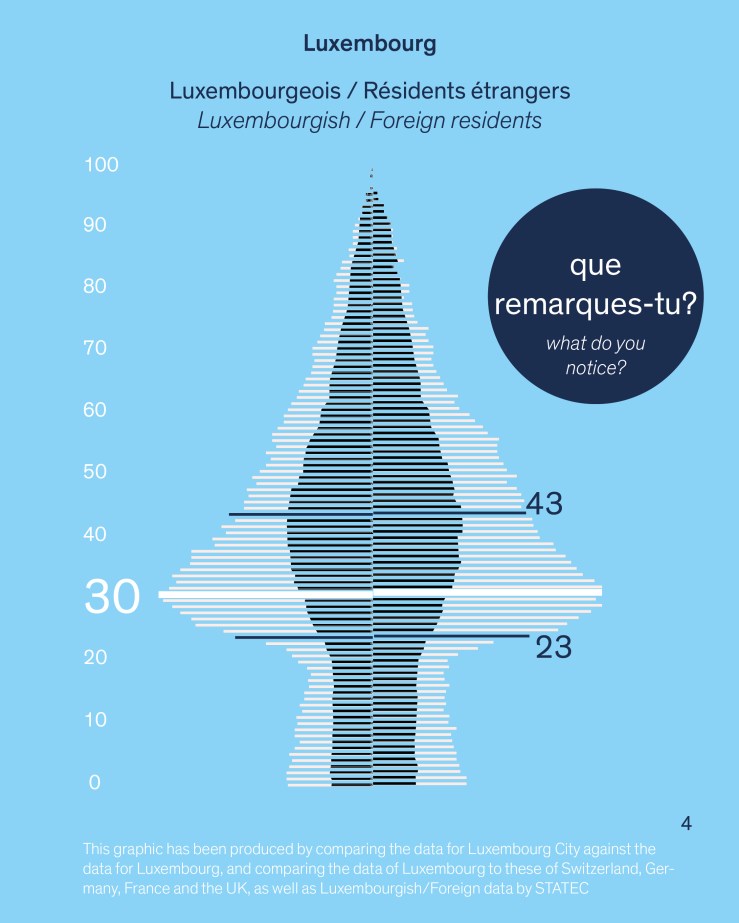
    1 in 3 Luxembourgish citizens here in the heart of Europe, in Luxembourg, is now a naturalized citizen. 1 in 2 residents is a non-citizen. 3 in 4 people working in Luxembourg are non-citizens. 🇱🇺

    These facts are not just about numbers; it represents the tapestry of stories, cultures, and dreams that make up our country.

    Looking ahead to 2030, the proportion of naturalised citizens, is set to grow even more, transforming our society and enriching our collective experience. But what does this mean for us as Luxembourgish citizens? And for our democracy?

    It’s not just a demographic shift; it’s a call to action. As our society diversifies, it’s our shared responsibility to ensure that all voices are heard and considered in the decisions that shape our democracy.

    I believe that every journey of immigration, every tale of growth, and every story of building a new life in Luxembourg adds a unique hue to the canvas of our nation. These perspectives are an opportunity to influence the very rules that guide our society.

    Our compatriots who’ve chosen Luxembourg as their new home have so much to offer. Their contributions aren’t just to be confined to workplaces; they must extend to our social leadership and democratic processes. The tapestry of perspectives they bring will help us in creating a more inclusive and harmonious Luxembourg.

    This brings us to an important thought: empowerment. We need to actively encourage more of our fellow citizens and residents to step into leadership roles.

    By doing so, we can tap into their diverse experiences and channel their passion and knowledge and perspectives into shaping our country’s bright, European future.

    As we gear up for the upcoming October vote, there’s a crucial point to consider. Your vote is your voice, and by connecting with the right people, you can vote tactically to support those who champion inclusivity and diversity and the true coming-together of our diverse, multicultural nation.

    It’s time to bridge the gap between citizens and leaders, to foster an environment where every perspective, old or new, is respected and valued.

    Luxembourg is evolving, and we’re all a part of this evolution. Let’s stand together, united in our commitment to embrace diversity, empower our fellow citizens, and pave the way for a future that’s brighter and more inclusive than ever before.

  • Together for Luxembourg

    Together for Luxembourg

    Moien, I’m Christos, I think its time I spoke to you directly.

    I love Luxembourg, our beautiful City, and our European Union, and I want to make sure it works for all of us.

    We are diverse and international.

    Whether you are Luxembourgish with many generations before you, or you grew up here, you have become a citizen, or you are a resident, old or new, Our society is shaped by all of us.

    Our contribution to society matters, our presence is felt throughout this city and country, and is shaping it and our future.

    It’s about time this diversity is represented, so that we can decide our future together.

    You and I can be instigators of change. I believe that, and I need you to believe that too.

    Thank you for following and helping share our message of community.

  • Luxembourg, the city of 30 year olds

    Luxembourg, the city of 30 year olds

    🇬🇧 + 🇫🇷 Did you know? Luxembourg is a very young city!

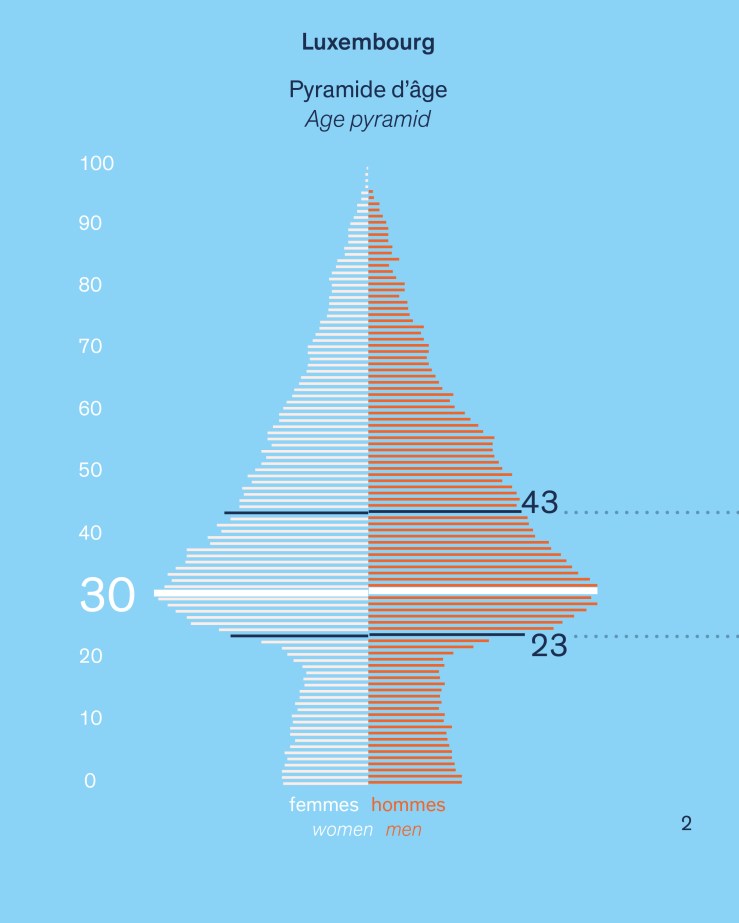
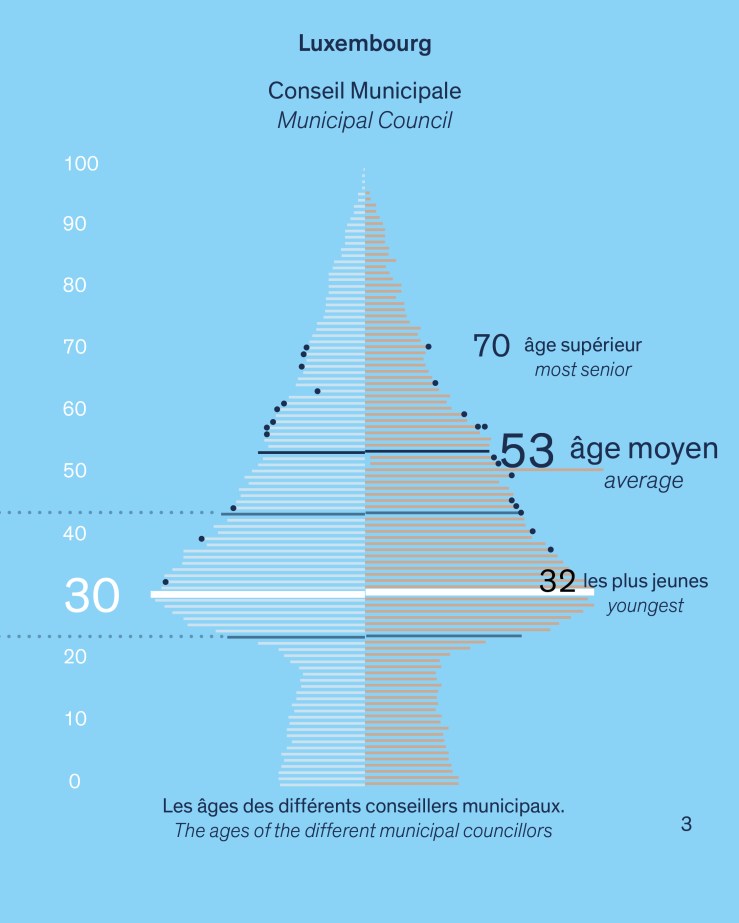
    More people are 30 year olds than any other age, and more people are between the ages of 23 to 43 than any other age.

    What does that mean? Well, if you’re complaining about the dating pool in Luxembourg as a young profesional, maybe try a better bar, but in terms of representation, it means, we have dropped the ball. It means so far, we are not representing what we are, in our political and social dialogue.

    As a society, we need to look ourselves in the mirror, and accept, that what makes us wonderful, is this diversity, is this young talent coming from accross Europe and the world, it is their energy and their work, and therefore we also need to trust that these voices also belong in our social dialogue.

    He who writes this, know what he’s talking about, having grown up an immigrant in Luxembourg, having acquired, patriotically, my Luxembourgish nationality, during the early days of this health crisis, as I was one of the first volunteers, along with many, many foreign-residents in the first lines, and knowing, that this is my home, this is my country I want to contribute to, and I too, deserve to have a voice, in how we shape its future. And so do you.

    A huge thank you to Jana DeGrott for amplifying this article / post on Instagram, by inviting me to collaborate on its sharing.

    En Francais

    ●Le saviez-vous? Luxembourg est une ville très jeune !

    Plus de personnes ont 30 ans que n’importe quel autre âge, et plus de personnes ont entre 23 et 43 ans que n’importe quel autre âge.

    Qu’est-ce que ça veut dire? Eh bien, si vous vous plaignez du ‘dating pool’s au Luxembourg en tant que jeune professionnel, essayez peut-être un meilleur bar, mais en termes de représentation, cela signifie que nous avons laissé tomber la balle. Cela signifie que jusqu’à présent, nous ne sommes pas représentés tels que nous sommes, dans notre dialogue politique et social.

    En tant que société, nous devons nous regarder dans le miroir et accepter que ce qui nous rend merveilleux, c’est cette diversité, c’est ce jeune talent venant de toute l’Europe et du monde, c’est leur énergie et leur travail, et donc nous aussi avons besoin de croire que ces voix ont aussi leur place dans notre dialogue social.

    Celui qui écrit ceci, sait de quoi il parle, ayant grandi immigré au Luxembourg, ayant acquis, patriotiquement, ma nationalité luxembourgeoise, durant les premiers jours de cette crise sanitaire, car j’étais l’un des premiers volontaires, avec beaucoup, de nombreux résidents étrangers en première ligne, et sachant que c’est chez moi, c’est mon pays, et moi aussi, je mérite d’avoir une voix sur la façon dont nous façonnons son avenir. Et toi aussi.