Tag: news

  • Have we forgotten Ukraine?

    Have we forgotten Ukraine?

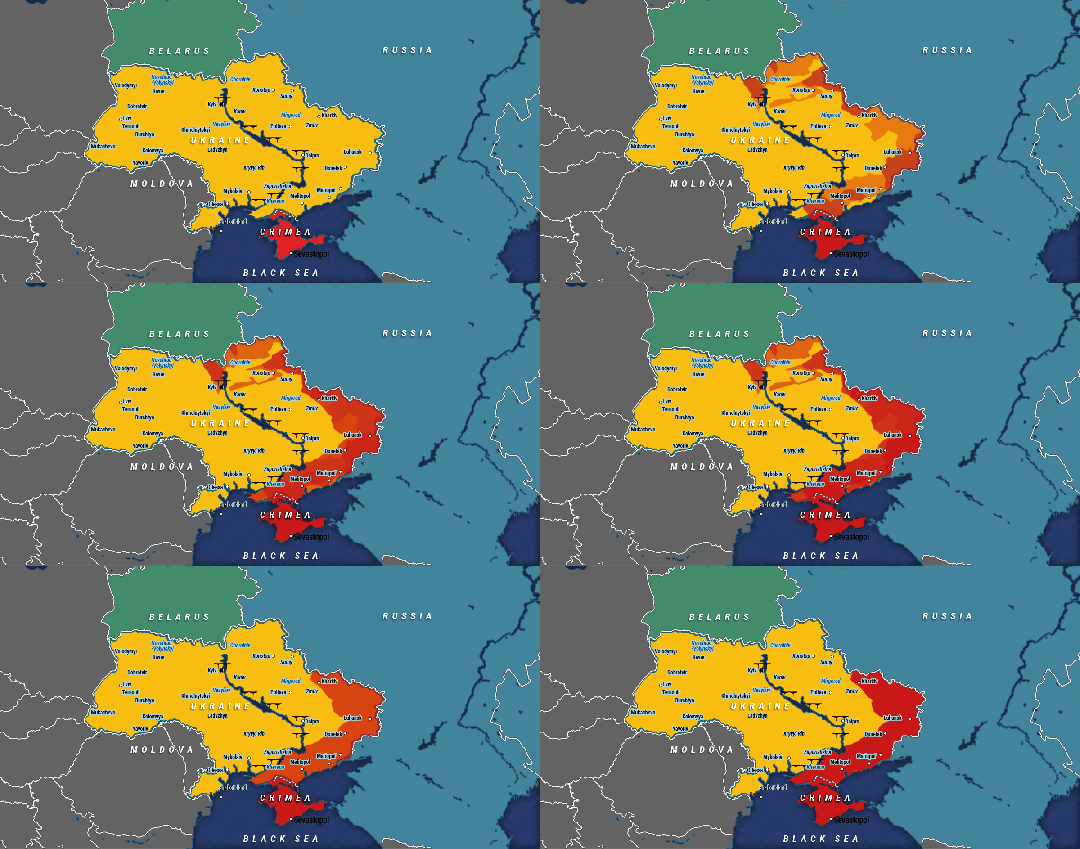
    Recent advances by Russian forces north and north-east of Kharkiv and intensified attacks along the eastern front are reminders that we must remain steadfast in supporting Ukraine.

    Russia’s recent territorial gains in Ukraine represent a significant threat to the stability and security of the European continent. The advances near Kharkiv and the intense fighting in the eastern regions highlight Moscow’s persistent ambition to extend its influence and control further into Europe. Allowing Russia to succeed would embolden other authoritarian regimes, undermine NATO’s collective security framework, and destabilize the broader region.

    The war in Ukraine is not just a regional conflict; it is a fundamental battle over the principles of national sovereignty and the rule of law.

    While other urgent and brutal conflicts and warfare around the world understandably capture public attention, we must not lose sight of the ongoing situation in Ukraine. Despite heavy losses, Ukrainian forces continue to hold critical positions, demonstrating the importance of sustained support.

    By supporting Ukraine, we defend the principles that underpin our global order and ensure that aggression and lawlessness do not prevail.

    The world must not turn away. It is imperative that we maintain our support and stand united against the forces of tyranny and oppression (wherever they are).

    At the same time, while we grapple with the grave allegations against Israel and the complex situation in Gaza, it is crucial to prioritise human lives first. Yes, of course, the international community must strive to support the Palestinian peoples’ self-determination and ensure that any violations of international law are met with consequences. However, our immediate priority must be the cessation of all warfare to prevent further loss of life.

    The tragic situations in Ukraine, Gaza, and other conflict zones demand urgent attention and resolution. Ending the bloodshed must come first, paving the way for peace and justice to follow.

  • Is it really Europe we’re talking about?

    Is it really Europe we’re talking about?

    Soundbites dominate discourse. National interests overshadow broader visions. We lose sight of the bigger picture. This is even more apparent in these European Parliament elections, where the ballot box may once again become a battleground for national grievances and triumphs rather than a platform for discussing and deciding the future of Europe as a whole.

    So, is it really Europe we’re talking about?

    In a European post-2004 era marked by unprecedented interconnectedness, where events in one corner of Europe and the globe can ripple across continents in seconds, the answer should be, a resounding yes. Whether it’s climate change, migration, or economic instability, the challenges facing Europe today transcend national borders. Ignoring this reality in favor of narrow, short-term interests is not only shortsighted but also perilous. Fragmented approaches, driven by individual national interests, will only serve to weaken our collective resilience. To confront the next stage of the global order effectively, we need a strong, cohesive EU capable of speaking with one voice on the world stage.

    It’s time to talk about Europe.

    This means recognizing that our fates are intertwined, and that only by working together can we navigate the challenges that lie ahead.

    It’s also about reclaiming our agency in shaping the world around us.

    We have a responsibility to engage in constructive dialogue, to seek common ground, and to advocate for policies that advance the greater good.

    This is not to say that national interests should be disregarded. On the contrary, they should be viewed through a European lens, mindful of their implications for the continent as a whole. By aligning our priorities and pooling our resources, we can amplify our impact and create a Europe that is not only stronger but also more resilient and prosperous.

    Are we willing to rise to the challenge of building a better Europe for future generations?

    The time for complacency is over. The time to talk about Europe is now.

  • A Vision for a Stronger and United Europe

    A Vision for a Stronger and United Europe

    Our Democratic Party (DP) election programme for the period 2024-2029.

    We outline a vision for a stronger and more united European Union. ​ In a time of social upheaval, a changing climate, and geopolitical risks, the DP emphasizes the need for collective action and a self-confident EU capable of addressing these challenges. ​Here’s a quick overview, and I encourage you to explore the full document for more details.

    Economic and Social Priorities ​

    • Building a competitive, resilient, and sustainable economy that creates jobs. ​
    • Strengthening the EU’s investment capacity to drive ecological and digital transitions. ​
    • Developing renewable energy sources and reducing dependence on fossil fuels. ​
    • Ensuring access to essential medicines and strategic reserves in Europe. ​
    • Promoting research and development to enhance competitiveness and tackle energy prices. ​
    • Investing in digitalization, cybersecurity, and defense capabilities.

    Effectively Combating Climate Change ​

    • Implementing the obligations of the Paris Climate Agreement and the commitments of the Green Deal. ​​
    • Urgently investing in renewable energies and expanding carbon sinks. ​
    • Promoting sustainable management of natural resources and circular economy practices. ​
    • Introducing reusable systems for packaging and combating programmed obsolescence. ​

    The Common Agricultural Policy ​​

    • Addressing the challenges faced by the agricultural sector, including price pressures and ecological transition. ​
    • Ensuring fair compensation for farmers affected by biodiversity protection measures. ​
    • Supporting scientific research to revitalize European agriculture. ​
    • Reforming the CAP to align with the Green Deal and improve implementation.

    Health

    • Prioritizing prevention and strengthening the EU’s capacity to respond to health crises. ​
    • Developing a decision-making capacity in the area of health and increasing production and storage of medical supplies. ​
    • Supporting medical research and utilizing digital data for innovative treatments.
    • Ensuring access to healthcare and protecting the rights of vulnerable groups.

    Strong Institutions for a High-Performance EU ​

    • Advocating for a Convention to revise the Treaties and improve the EU’s decision-making mechanisms. ​
    • Reforming the unanimity rule and enhancing qualified majority voting. ​
    • Strengthening the role of the European Parliament and promoting regular exchanges with citizens. ​
    • Defending Luxembourg’s role as the capital of Europe and ensuring smooth operation of EU institutions. ​

    Preparing the EU and Candidate Countries for Future Enlargements

    • Guaranteeing the maintenance of fundamental values and the ability to sanction violations.
    • Reforming the CAP and increasing the EU’s absorption capacity. ​
    • Welcoming new member states in stages based on their readiness and EU reform progress. ​
    • Strengthening European defense capabilities and promoting security cooperation. ​

    The EU’s Foreign Affairs and Defense Policy ​

    • Developing a coherent and effective foreign policy decision-making process. ​
    • Strengthening the EU’s voice in the world and promoting international cooperation. ​
    • Redefining relations with the African continent and supporting African representation in the UN Security Council. ​
    • Promoting cultural exchanges and defending artistic creation. ​

    New Migration Policy ​

    • Ensuring the right of asylum for those fleeing war, violations, and dictatorships. ​
    • Enhancing cooperation with countries of origin and transit and promoting humanitarian monitoring. ​
    • Strengthening solidarity and fair burden-sharing among member states. ​
    • Developing legal channels for skilled migration and addressing root causes of migration pressures.

    Rights and Values

    • Promoting gender equality, combating gender-based violence, and supporting LGBTQIA+ rights.
    • Protecting women’s reproductive rights and ensuring equal access to participation and decision-making. ​
    • Strengthening children’s rights and supporting education and cultural exchange programs.
    • Fighting discrimination and promoting social inclusion. ​

    Better Prospects for Young People​​

    • Supporting children’s rights, education, and vocational training.
    • Strengthening the Erasmus+ program and promoting youth entrepreneurship and innovation. ​
    • Addressing mental health challenges and combating drug use through balanced strategies.
    • Ensuring access to housing and promoting diverse housing typologies. ​

    Culture

    • Embracing cultural diversity, digital innovation, and sustainability. ​
    • Defending artistic creation and protecting cultural heritage.
    • Supporting cultural exchanges and promoting cultural diplomacy. ​
    • Strengthening the socio-economic impact of the cultural sector and protecting creators’ rights. ​

    Want to read the full document and explore the party’s detailed proposals for the future of Europe?

  • Strengthening our Democracy

    Strengthening our Democracy

    Democracy stands as the bedrock of citizens’ empowerment and collective decision-making.

    As we works towards a more vibrant EU democracy, our compass must point firmly towards the significance of active citizenship and the power vested in our collective voice.

    Why Voting Matters

    At the heart of any thriving democracy lies the ballot box – a sacred space where citizens cast their votes to shape the future. The EU elections, often overshadowed by national contests, are a crucial arena where the voice of each individual resonates in the halls of power.

    The importance of voting in these elections cannot be overstated; it is the foundation upon which our shared destiny is built. As citizens of the EU, we must recognize that our participation is not just a right but a responsibility that defines the very essence of our democratic values.

    Sending a Pro-EU Signal

    In an era marked by divisive rhetoric and the rise of nationalism, the EU elections become a battleground for shaping the narrative. By casting a pro-EU vote, we send a powerful signal that transcends borders and challenges the forces of fragmentation.

    Our collective endorsement of a united Europe reinforces the idea that, together, we are stronger. It is a declaration that we believe in collaboration, solidarity, and a shared destiny, even in the face of adversity.

    Engagement Beyond the Ballot

    Democracy is not a spectator sport; it requires active participation beyond the act of voting. To fortify the pillars of our democratic system, we must encourage more citizens to engage not only at the polls but also within the intricate web of political parties and civil society.

    It is through these engagements that we shape the narrative, influence policy, and ensure that our democracy remains vibrant and responsive to the needs of the people.

    Communication is Key

    One of the cornerstones of a thriving democracy is transparent and effective communication. To reinforce the European Parliament’s role, it is imperative that the work undertaken within its walls is communicated clearly and comprehensively to the citizens it serves.

    Bridging the gap between policymakers and the public fosters a sense of trust and understanding, laying the groundwork for a more engaged and informed electorate.

    Empowering the EU Parliament

    To bolster EU democracy, we must empower the European Parliament with the ability to take the lead in shaping policies. Granting the EU Parliament greater powers of initiative enhances its role as a true representative of the people.

    This shift not only reinforces the democratic principles upon which the EU was founded but also ensures that the institution is dynamic, responsive, and capable of driving positive change.

    Democracy… More Democratic

    As we aspire to build a more perfect union, EU democracy must be brought closer to its citizens. This involves creating mechanisms for more direct involvement, encouraging citizen-led initiatives, and fostering a culture of inclusivity.

    By making democracy more accessible, representative, intersectional and responsive at the grassroots level, we ensure that the European project remains deeply rooted in the aspirations and realities of its diverse population.

    As we approach the next EU elections, lets seize the opportunity to breathe new life into our democracy and reaffirm our commitment to a united and democratic European Union.

  • “2024 is history in the making” interview with Chronicle.lu

    “2024 is history in the making” interview with Chronicle.lu

    Chronicle.lu: In a context of geopolitical and economic uncertainty, plus taking into account Eurosceptic/anti-Europe narratives (talks of EU exits – and this being the first European election since the 1970s without the UK) and the fact that this is a “record” year for elections worldwide, why do you feel it is important that more people (not least potential first-time voters) head to the polls in June 2024?

    Christos Floros: Voting is our civic duty. It’s how we shape the future of our society, at every scale, locally, nationally, internationally. In democratic societies, at least. Here in Luxembourg, citizens are required to vote.

    If we could legally make every resident vote, I believe we would. Because in Luxembourg we really do see it as a duty, if you live and work in this country, we want you to take responsibility for it, too.

    2024 is history in the making. The year they’ll point to in the future and say, “That’s when we stood up for democracy” or the opposite. The latter option, well, let’s just say Trump getting re-elected, makes it scarily possible. Remember, he was elected after the shockwave of Brexit, right?

    This year, Europe should send a different kind of shockwave to the US. A nod to our American allies, a message that says, “Hey, we’re still building that post-WWII world together.” A wake-up call. And guess how we do that? Electing pro-EU leaders across our Union in June.

    We gotta rekindle that commitment in Europe. Our peace, our freedom, our freedom of movement, our Erasmus, our shared prosperity, all these things, we’ve achieved together, we’ve got to remind every single European that this only works, when we work together and when politicians are also willing to take responsibility for what didn’t go as planned, what we didn’t get right. Otherwise, we are going to leave the field free for the far right… And those who scream “no more Europe” are basically condemning us all. We, as individual nations, can’t navigate this new world we are entering, alone. […] We live in a world of giants now, and going it solo for any of us is a recipe for disaster. We can and will continue to love and cherish our homelands, celebrate our traditions, and at the same time we must continue to aspire to build our bigger selves together. We need more Union today, than we needed in the 90’s or the 2000s.

    This is not just an election, it’s a chance to shape history. It’s our opportunity to show the world that Europe is still a beacon of hope, collaboration, and progress […] And that’s why I want everyone to sign up to vote before 15 April, to vote on 9 June.

    Read the full interview: https://chronicle.lu/category/politics/48625-change-for-luxembourg-founder-discusses-importance-of-european-elections