Tag: Politics

  • All Hail King Donald 👑

    All Hail King Donald 👑

    It’s time we face the music.

    The era of rules-based international order is over — and we should embrace our fate.

    The world’s richest democracy is making it very clear: sovereignty is negotiable, alliances are optional, and the only thing that really matters is what one man feels on any given day.

    After all, who needs boring, outdated concepts like international law, multilateral cooperation, or predictable foreign policy when we can simply crown Trump the rightful king of the free world and let him run global affairs the way he’s always wanted — by gut instinct, grievance, and a gold-plated iPhone while he chats with his Gold Card friends?

    If he wants Canada, he can have it.

    If Europe wants to stay independent, it should probably learn how to build tanks. And if Ukraine still hopes for support, they should definitely start investigating Hunter Biden and sign away their natural wealth.

    That’s the deal — take it or leave it.

    Obviously, absolutely not.

    This isn’t a joke, though the absurdity of it is hard to ignore.

    What’s happening right now is more than just the return of Trump—it’s the systematic dismantling of the world order built since 1945. Ukraine’s future hangs in the balance of every Western election. The Middle East simmers on the edge of full-scale regional war.

    Meanwhile, the U.S. is flirting with imperial fantasies — making it very clear that this administration won’t just turn away from its allies, but actively reshape the world into one where might makes right.

    What’s left of Europe’s complacency should have been shattered by now.

    The reality is this: nobody is coming to save us.

    If we want to preserve anything — democracy, self-determination, or even the basic idea that smaller nations have the right to exist — Europe needs to stand up and claim its own role in the world.

    That means investing in our own defense. It means building our own digital infrastructure. It means competing in technology, media, and the very systems that shape the public sphere — without waiting for permission or protection.

    The world order is being broken in real time.

    What comes next is up to those who decide to build.

    I want to know what you think about all of this.

    Christos

  • Gaza cease-fire comment

    Gaza cease-fire comment

    The announcement of a ceasefire between Israel and Hamas is welcome news. After 15 months of devastating violence, the prospect of hostages being freed, significant aid finally reaching Gaza, and a pause to hostilities feels like a step in the right direction. But this isn’t peace—it’s a pause. And what happens next is far from certain.

    The deal, as it stands, is straightforward but fragile. In the first stage, women, children, and elderly hostages held by Hamas will be released in exchange for hundreds of Palestinian prisoners held by Israel. Displaced Palestinians in Gaza will begin returning to their homes—what’s left of them—and Israeli troops will withdraw from populated areas. Humanitarian aid will also increase, with hundreds of trucks expected to cross into Gaza daily.

    Negotiations for what comes next will start soon, but there’s no guarantee they’ll succeed. Both sides harbor deep distrust, and even as the agreement was announced, airstrikes and rocket attacks continued. The violence hasn’t stopped yet, and there’s a real chance it could flare up again.

    This war has been brutal. Thousands of lives have been lost, entire neighborhoods destroyed, and families ripped apart. Even with a ceasefire, the people in Gaza face a long road ahead. Homes will need rebuilding, supplies are critically low, and the emotional toll is beyond measure.

    The same is true for the families of hostages in Israel, who have spent weeks not knowing if their loved ones are alive. For them, the deal offers some answers, but not all. And for the families who don’t get the news they had hoped for, this ceasefire won’t feel like relief—it will feel like another loss.

    The agreement shows that both sides are willing to talk, at least for now, but six weeks isn’t a long time. If these talks fail, the fighting will start again, and everything gained could be lost.

    It’s hard to be hopeful after so much suffering, but it’s also hard to ignore that this deal, however small, is something. A pause. A chance, even if it’s slim, to build on.

    For now, all we can do is wait and watch.

  • Syria: Caution Before Celebration

    Syria: Caution Before Celebration

    Syria has been liberated. That’s the headline.

    It’s a sentence that carries so much weight. For some, it’s a moment of hope.

    For others, it’s the beginning of worry.

    It’s easy to jump to conclusions when power shifts hands. But if there’s one thing the last decade should have taught us, it’s this: the fall of a regime is not the same as the rise of peace.

    I remember the early debates about Syria. The case for intervention. The case against it. Back then, every side claimed moral high ground. Some said intervention would protect civilians. Others warned it would only lead to more destruction. Looking back, it’s hard to say anyone was completely right. What we do know is that ordinary Syrians paid the price.

    This time, the situation feels eerily familiar. Assad is gone. Rebel forces have taken control. Images of freed prisoners fill social media feeds. Some of them spent years in dungeons like Saydnaya — a place so horrific it was called a “human slaughterhouse.”

    For them, this moment is freedom. For their families, it’s justice.

    But I’m holding back on total celebration. Not because I doubt the value of toppling a dictator, but because I know what happens next is just as important as what happened before.

    When power shifts in the Middle East, the story rarely ends there. Leaders fall. New factions rise. Promises of “liberation” are made. And yet, too often, the people remain trapped in a cycle of violence and uncertainty.

    We’ve seen this before. Libya. Iraq. Afghanistan. We cheer for the end of one era, only to watch another one begin—just as bloody, just as brutal.

    The question on my mind isn’t, “Is Assad gone?” It’s, “What comes next?”

    The West will face a choice soon. To recognize the new leaders or to isolate them. To engage or to retreat. If history is any guide, we won’t get this decision right unless we start thinking beyond the immediate.

    If we cheer too soon, if we look away too quickly, we risk letting history repeat itself.

    Hope isn’t a strategy.

    This time, let’s not mistake liberation for the end of struggle.

    This time, let’s be prudent. Let’s be vigilant.

    For Syria, and the whole middle east.

  • Our Dream of Europe

    Our Dream of Europe

    Do you like my shirt in this video? I think I have about 50 shirts, if not more.

    That’s a lot of shirts. Winter shirts, summer shirts, office shirts.

    If it helps, I’ve owned many of them for more than 10 years and I still wear them.

    But this isn’t a newsletter about fast fashion. It’s about Europe.

    My grandmother owned two skirts. In her entire life, she owned two skirts. She keeps reminding me of this.

    She bought a dress once, just once. Then, she cut it in half to make two skirts. When my father was young, she worked in the small shop my grandparents ran, keeping my father in a little bucket beside her as she worked.

    My mother grew up in a house without running water. No hot water. They carried water into the house and warmed it on the stove.

    That wasn’t 100 years ago. That was 50 years ago. In Europe. In the West. In our European Union.

    Too many of us have forgotten—or never lived—what true hardship feels like. Not just individual poverty, but poverty on a collective, systemic scale.

    We have taken our collective progress for granted. And now, many of us are complicit in dismantling it.

    Populist politicians, who don’t understand the complexity and value of our collective progress, are hastening our decline. And we, in our ignorance, too often support them.

    At the same time, establishment politicians cling to power, even here in Luxembourg. They’re not creating the space for a new generation to lead, to build on what we’ve achieved, and to take us forward.

    A Fragile Foundation

    Let’s not forget what made our progress possible. The European Union was built from the ashes of two world wars. It’s a dream rooted in peace, collective security, and economic cooperation.

    These, our, achievements require constant maintenance.

    Today, political apathy and polarisation threaten the foundation of these achievements.

    Our Engagement Today?

    In Luxembourg, only one in ten eligible (non-citizen) voters participates in local elections.

    This apathy isn’t unique to Luxembourg.

    Meanwhile, those who do engage are often driven by frustration or fear, creating an echo chamber of extremes.

    We see this in the rise of populist movements that capitalize on dissatisfaction but fail to deliver real solutions.

    If we’re to reverse this trend, we need action at both the individual and systemic levels:

    1. Individuals: Join civic organisations, volunteer, or simply vote. Show up where it’s hard to make a difference.
    2. Systems: Politicians must ensure their actions are accountable—not just to today’s voters but to future generations. Policies must align with long-term goals, from combating climate change to ensuring equitable economic growth.

    The Dream of Europe

    I am inspired by the resilience of Ukrainians fighting for their democracy and their commitment to a European future.

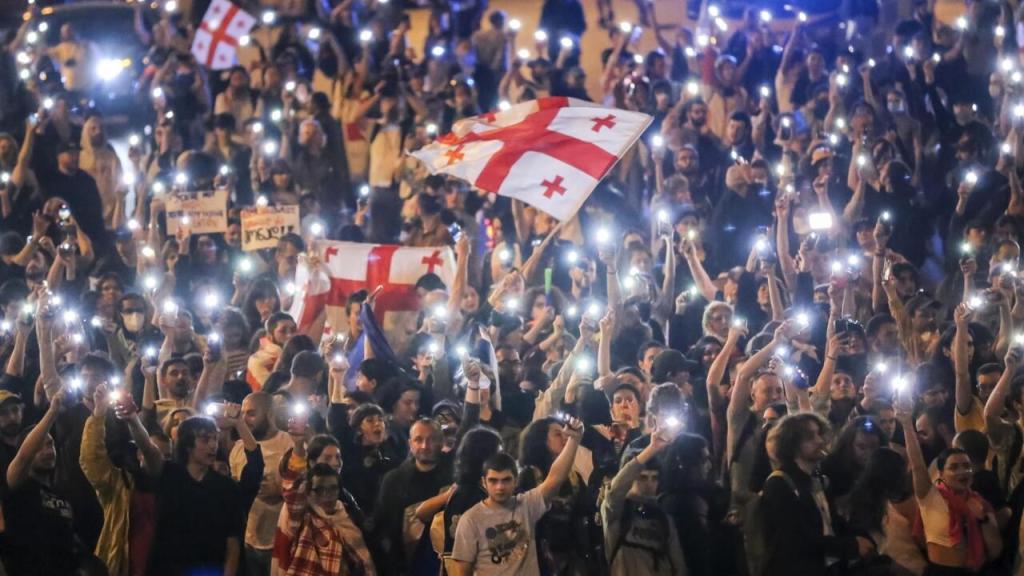
    I am moved by the Georgian people, marching for the hope of Europe.

    Their courage reminds us what’s at stake—and what we have to lose if we take Europe for granted.

    It’s not rocket science.

    It’s far more complicated.

    But that’s why we need to start.

    Our dream of Europe rests on each and every one of you.

    Only together, and with massive effort, we can sustain it and build a brighter, fairer future for all.

  • Georgia’s European Crossroads

    Georgia’s European Crossroads

    The streets of Tbilisi have erupted in protests—protests against a government that has turned its back on its people’s aspirations for democracy and European integration.

    The images are both inspiring and heartbreaking: tens of thousands marching with EU and Georgian flags, their voices demanding a future of transparency and freedom, met with tear gas, water cannons, and violence.

    This is a pivotal moment—not just for Georgia, but for Europe.

    The decision by the Georgian Dream government to suspend EU accession talks is more than a policy choice; it’s a betrayal. It’s a betrayal of the Georgian people, who have consistently and courageously expressed their desire for a European future. And it’s a betrayal of the democratic values that form the bedrock of Europe.

    How did we get here?

    The ruling Georgian Dream party, accused of rigging last month’s parliamentary elections, has steadily moved the country away from its democratic commitments.

    The EU granted Georgia candidate status last year, but with clear conditions for reform. Instead of meeting those conditions, the government has doubled down on authoritarian tactics, passing repressive laws and silencing dissent.

    When the European Parliament called for accountability, Prime Minister Irakli Kobakhidze lashed out, accusing EU leaders of blackmail and foreign interference. His rhetoric, echoing that of other authoritarian-leaning leaders, seeks to distract from the undeniable: his government has failed to uphold the democratic promise Georgians fought so hard for.

    Now, Europe faces a choice.

    Will we act decisively to support the Georgian people in their quest for a democratic future? Or will we allow yet another government to undermine democracy while claiming impunity?

    The stakes are immense.

    Georgia is a nation that has consistently resisted Russian influence, standing as a beacon of pro-European sentiment in a region fraught with instability. Its people have made their choice clear, but their government has chosen to suppress that choice.

    We should not let this moment pass.

    The EU must act—not just with statements but with concrete measures. This means applying targeted sanctions against those responsible for democratic backsliding. It means bolstering civil society and independent media in Georgia. And it means making it clear that the door to Europe remains open—but only if the Georgian government respects its people’s will.

    Europe must stand with them—not just because Georgia’s future is at stake, but because Europe’s credibility is as well. If we fail to support those fighting for democracy on our borders, what message does that send to others looking to the EU as a model of freedom and justice?

    This isn’t just about sanctions or diplomatic pressure. It’s about reaffirming what Europe stands for.

    The Georgian people are showing us what courage looks like. Now it’s our turn to show them what solidarity looks like.

    This is a moment for leadership, for bold action, for standing on the side of those who fight for democracy.

    Let’s make it clear: Europe sees Georgia. Europe stands with Georgia.

    And together, we can ensure that the dream of a democratic, European Georgia does not die in the streets of Tbilisi.

    My friend Vato, is on the ground in Tbilisi, and is sharing firsthand accounts of the protests. His videos capture both the courage of the demonstrators and the stark reality of the violence they face—tear gas, water cannons, and masked enforcers intent on silencing dissent.

  • How to address Political Participation in Luxembourg

    How to address Political Participation in Luxembourg

    One of our biggest challenges in Luxembourg is political participation.

    When we consider the future of our country, we have to ask: Are we all in?

    Because the truth is, the challenges we face need everyone’s input.

    We need your voice, your ideas, your energy.

    Here’s what we’ve got:

    • Only about 10% of non-citizens vote.
    • Nearly half of our residents are non-citizens.

    As of 2023, about 47% of Luxembourg’s population are foreign nationals.

    Back in 2000, it was around 37%.

    Here’s the question:

    • How do we make everyone feel they have a stake in our future?

    In 2015, we had a referendum that could have extended voting rights to foreign residents who’ve lived here for over 10 years.

    We lost that opportunity.

    So now, we need to continue finding and building alternative ways to understand how people want us to lead, and towards where.

    It’s not just about voting (although that’s a great start, so register to vote for the next ones, it takes 2 minutes).

    It’s about participation at every level.

    It’s about caring for our commons—our shared spaces, our communities, our environment.

    We need to find ways to include more people, to convince them that their voice matters.

    Because it does.

    If we want to tackle the big issues—whether it’s housing, climate change, or economic development—we need everyone on board.

    So here’s my call to action:

    Join the dialogue, where it is.

    Join political platforms, parties, debates (online or offline – even better)

    Whether you’re a lifelong Luxembourger or you’ve just moved here, your perspective is valuable. It helps us inform our decisions.

    We need to explore new ways to engage with all residents, to gather their feedback, their hopes, their ideas for our future.

    We can’t afford to have half of our population feel disconnected.

    Your thoughts?

    Christos Floros