Category: Blog

  • How the EU Can Help Young People Find a Home

    How the EU Can Help Young People Find a Home

    Let’s talk about housing. Not about soaring penthouses and bidding wars. Let’s talk about the kind young people across Europe are struggling to find: a decent, affordable place to call home.

    Now, housing policy is primarily a national competency. But here’s the thing: a generation stuck in cramped flatshares or priced out of the market altogether isn’t good for national economies, social mobility, or frankly, the future of Europe.

    The EU, as the champion of social progress and economic dynamism, can – and should – play a leading role. We’re not talking about a Housing Commissioner (though that’s a conversation for another day). We’re talking about smart policy frameworks that incentivize member states and empower young Europeans.

    Here’s a couple of ideas; and why I insisted on Housing being in our programme.

    1. Across the continent, red tape and permitting nightmares are strangling new construction. The EU can work with national governments to streamline approvals, especially for projects that prioritize affordability and diverse housing typologies. Think student dorms, co-operative housing models, and mixed-use developments that integrate housing with offices and green spaces.

    2. Financing a first home is a boulder on young shoulders. The EU can encourage national programs that offer loan guarantees, down payment assistance schemes, and tax breaks for first-time buyers. But let’s not forget developers. Here, the EU can create incentives for building diverse housing options, not just luxury condos.

    3. From Vienna’s renowned social housing program to innovative co-operative models in Germany, Europe has a wealth of successful housing policies. The EU can act as a platform for knowledge exchange, facilitating member states to learn from each other and adapt successful approaches to their specific contexts.

    4. The EU should continue to convene panels of architects, urban planners, mobility experts, and social scientists. To advise on best practices for sustainable, inclusive housing development that integrates seamlessly with transportation networks and public services. Their insights can inform national policy decisions and ensure we’re building not just homes, but livable, thriving communities.

    This isn’t about a one-size-fits-all solution. Each member state has its own unique housing challenges. But the EU can be the orchestra conductor, setting the tone and harmonizing national policies towards a shared goal: ensuring young Europeans have a secure and affordable place to build their lives.

    This isn’t just about bricks and mortar. It’s about a generation feeling empowered, rooted in their communities, and ready to contribute their full potential to a brighter European future. Let’s get building.
  • Recognising Poverty at EU level

    Recognising Poverty at EU level

    It’s crucial to talk about the harsh reality of poverty. Across the European Union, millions of people struggle to make ends meet every day.

    According to recent data, around 118 million people in the EU are at risk of poverty or social exclusion.

    But numbers alone don’t tell the whole story. Poverty isn’t just about lacking money; it’s also about lacking access to basic needs like healthcare, education, and decent housing. It’s about feeling excluded from society, unable to fully participate and thrive.

    From a Social-Liberal standpoint, addressing poverty is a matter of justice and equality. Everyone should have the chance to live a dignified life, regardless of their background or circumstances.

    So, what can be done to tackle poverty at the EU level?

    Firstly, we need stronger social safety nets to catch those who are falling through the cracks.

    Secondly, we must invest in education and training to empower people to break the cycle of poverty.

    Thirdly, we need to address the root causes of poverty, including inequality and discrimination. This requires policies that promote fair wages, affordable housing (both social and private), and equal opportunities for all. It also means ensuring we put in place a fair tax system, that keeps us globally competitive, but also makes sure everyone pays their fair share.

    Lastly, we must foster solidarity and cooperation among EU member states to tackle poverty collectively. By sharing best practices and resources, we must amplify our efforts and make a meaningful difference in the lives of millions.

    The EU already has some initiatives in place, but more needs to be done. It’s time for member states to stop seeing poverty as a national problem, and work together for a truly unified approach.

    I am glad we have decided to recognise poverty as an EU-wide issue in our programme, following my proposal, and I am convinced that our party and its European family will contribute to combatting poverty in the near future.

  • Thousands of People Will Vote for the First Time

    Thousands of People Will Vote for the First Time

    I am happy to live in a country of free, and independent media, able to scrutinise and criticise politicians and I am also happy to clarify on my sincere, consistent, and independent actions to encourage our fellow compatriots to grasp the opportunity of taking responsibility for our shared future.

    Since 2021, I’ve made tireless efforts, as a private citizen, to inform and encourage more of our compatriots to exercise their democratic right to vote, here in Luxembourg.

    Democracy requires participation. Participation means taking responsibility for the future.

    At the heart of these efforts: to increase voter registration and strengthen our democracy. To facilitate this process, I established a page on my personal site, which has existed for over a decade, which served as a gateway for individuals interested in receiving updates and information from myself regarding my register to vote efforts.

    The overall response to our efforts has been overwhelmingly positive. I have received thousands of encouraging messages from people who will vote for the first time, but also people who have enjoyed the effort to strengthen our democracy, Luxembourgers, naturalised citizens, EU Citizens and Non-EU citizens. People who vote for different parties, people in different parties, and people who never engaged in politics before. This demonstrates a genuine interest for increased political involvement and representation within our diverse society. I am proud to say that thousands of people will vote for the first time thanks to these efforts, and this win belongs to each person who joined our multiplier efforts, and the country will benefit for it!

    I welcome the additional attention this publication has brought to the critical issue of voter registration. It is my hope that this discourse will further encourage individuals to participate in the democratic process and contribute to shaping the future of our society, in the long-term.

    Together, let us continue to strive towards a more inclusive and representative democratic society, at every level of our democracy in Luxembourg and across the EU.

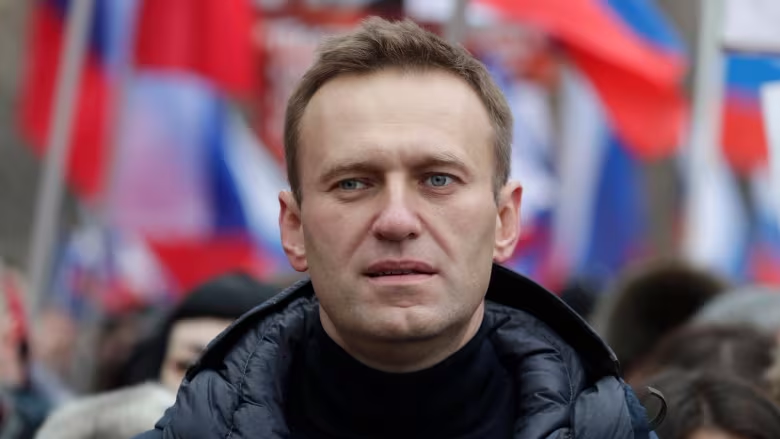
  • A hero of democracy: Alexey Navalny

    A hero of democracy: Alexey Navalny

    With heavy hearts we must pay tribute to a fearless advocate for democracy and human rights – Alexey Navalny.

    Navalny’s journey was not just a personal struggle against corruption and oppression but a symbol of resistance that resonated globally.

    The world watched in shock and disbelief as Navalny faced a nerve agent poisoning in 2020, a sinister attempt to silence his voice. Despite the grave risks, he chose to return to Russia in 2021, fully aware that he would be met with hostility and danger.

    His subsequent imprisonment and harsh sentences only strengthened his resolve, as seen in his recent court appearance in January 2024, where he faced adversity with remarkable spirit.

    Navalny paid the ultimate price for his unwavering commitment to justice and democracy.

    His life and sacrifice should serve as a rallying cry for all of us who believe in the principles of democracy, human rights, and the rule of law.

    May Alexey Navalny’s legacy inspire us all to continue the fight for a better, more just world.

    In solidarity,

    Christos

  • We welcome Greece to the Ranks of Marriage Equality Champions

    We welcome Greece to the Ranks of Marriage Equality Champions

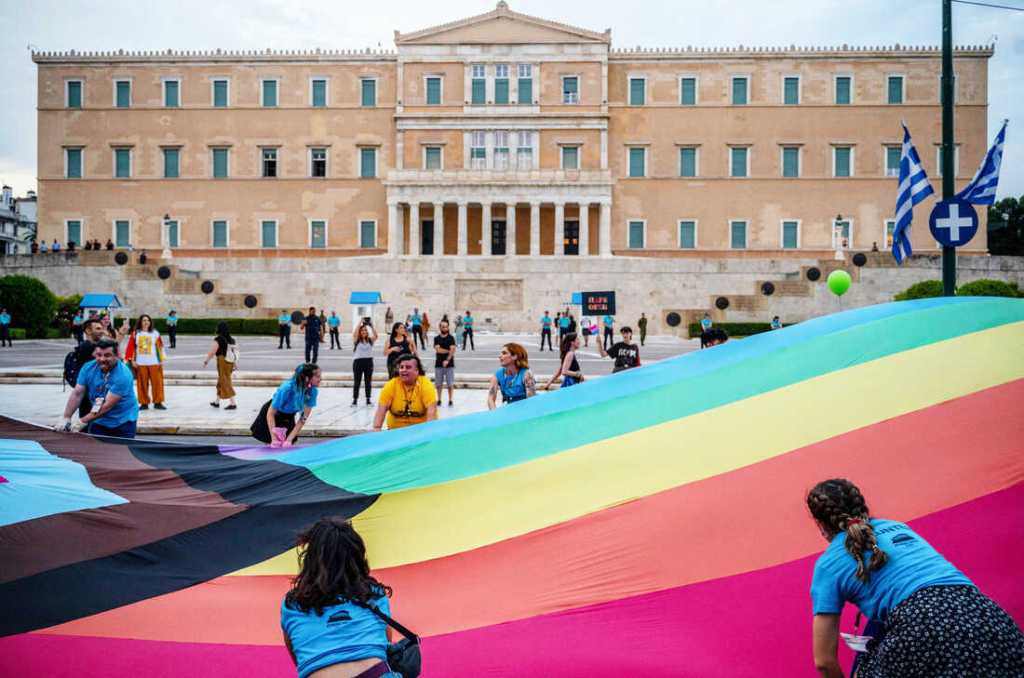
    In a historic moment for human rights, Greece has become the 16th EU member state to legislate marriage equality, joining us in Luxembourg in championing the fundamental right to love.

    For decades, the LGBTQ+ community in Greece has tirelessly campaigned for marriage equality in a socially conservative landscape. And now, the bill, passed by 176 lawmakers, grants same-sex couples the right to wed and adopt children, marking a historic shift in Greek society.

    As Greece takes its place among the most progressive countries in the world, citizens are expressing pride in the nation’s evolution. This pride must serve as a testament to the transformative power of legislative change in shaping societal mindsets, even if it’s painfully slow; together we make progress happen, as best we can.

    As we celebrate this victory, let it serve as a reminder of the importance of standing up for fundamental rights, speaking out against discrimination, and fostering a world where love knows no bounds. May Greece’s proud moment inspire other nations to embrace progress, understanding, and the universal right to love freely.

    Bravo Greece.

    Love is Love.

    C

  • To Renew Europe we must win people’s trust and attention in the 2024 European Elections

    To Renew Europe we must win people’s trust and attention in the 2024 European Elections

    This decade, we must defend democratic values and ensure we are still able to excerpt influence globally, as a united Europe.

    We must encourage our compatriots to vote, to show a strong democratic Luxembourg voice, for a strong European Union.

    We should offer a programme that is pragmatic, and calls for European unity, cooperation and European compromise, so that we can continue working together, in the face of global challenges.

    Our Party must ensure that the EU remains globally competitive, able to defend itself, and driven by the potential that lies in our future instead of what the Conservatives and Nationalists are trying to offer us, which is inspired from an illusion of our past, and is a road to nowhere.

    The only way to be able to do any of that, is to ensure our Renew Europe / ALDE / Liberal group remains strong. And that means offering something substantial, something our fellow Luxembourgers, and Europeans, here and across Europe, can believe we can work towards. It means offering new hope, new direction, and communicating that intention effectively.

    If we don’t, the polls that show us disappearing from the European pedestal, will materialize in June.

    So let us work together, to become the guarantors of our common European destiny.

    Christos Floros

    Luxembourg

    Christos Floros with Charles Goerens and Yuriko Backes (DP, Renew Europe)

    .

    When is the deadline to register to vote in the European Elections in Luxembourg?

    The deadline to register to vote in Luxembourg for the 2024 Elections to the European Parliament is April 15, 2024.

    When is the deadline to sign up to vote in the European Elections in Luxembourg?

    The deadline to register to vote in Luxembourg for the 2024 Elections to the European Parliament is April 15, 2024.

    Who can I vote for in the EU elections 2024 in Luxembourg?

    The Democratic Party of Luxembourg is the party of choice for those seeking a pragmatic, ambitious and social, liberal and democratic future for Europe and our European Union.

    How to register to vote in Luxembourg?

    To register to vote in Luxembourg in 2024, you will need to sign up online through MyGuichet. Click the button above, or here to get started, and sign up to vote.

    Who can vote in Luxembourg?

    All EU Citizens living in Luxembourg can sign up to vote in Luxembourg for the EU Elections of 2024. You must register to vote before April 15.

    How to vote in Luxembourg?

    In Luxembourg can elect up to 6 MEPs. You get 6 crosses, which you can give to 6 different candidates, or you can give 2 crosses to 3 candidates, or vote for our list. More information on how to vote correctly, by clicking here.

    Ass de Christos Floros Lëtzebuergesch?

    Jo, de Christos Floros ass e Lëtzebuerger. Hie gouf 1993 zu Athen gebuer, a Griicheland. De Christos ass an der Stad opgewuess, wou seng Famill sech 1994 niddergelooss huet. Hien huet op der Europäescher Schoul vu Lëtzebuerg studéiert an zu Oxford, London a Boston studéiert, ier hien zréck op Lëtzebuerg koum fir seng Aarbecht ofzeschléissen. Studien an Aarbecht.

    Christos Floros est-il luxembourgeois ?

    Oui, Christos Floros est luxembourgeois. Il est né à Athènes, en Grèce, en 1993. Christos a grandi à Luxembourg-Ville, où sa famille s’est installée en 1994. Il a fréquenté l’École européenne de Luxembourg et étudié à Oxford, Londres et Boston, avant de revenir au Luxembourg pour terminer ses études et travailler.

    Who is Charles Goerens?

    Charles Goerens is a Member of the European Parliament (MEP) from Luxembourg for the Democratic Party and Renew Europe. Goerens has been a member of the European Parliament from 1982 to 1984, from 1994 to 1999, and again from 2009 until now. He is 71 years old and lives in Schieren.

    What is our priority for the EU Elections 2024 in Luxembourg?

    This decade, we must defend democratic values and ensure we are still able to excerpt influence globally, as a united Europe.

    Our Party must ensure that the EU remains globally competitive, able to defend itself, and driven by the potential that lies in our future instead of what the Conservatives and Nationalists are trying to offer us, which is inspired from an illusion of our past, and is a road to nowhere.