Tag: Luxembourg

  • Barack Obama’s Vision for an Inclusive Future and the future of Capitalism

    Barack Obama’s Vision for an Inclusive Future and the future of Capitalism

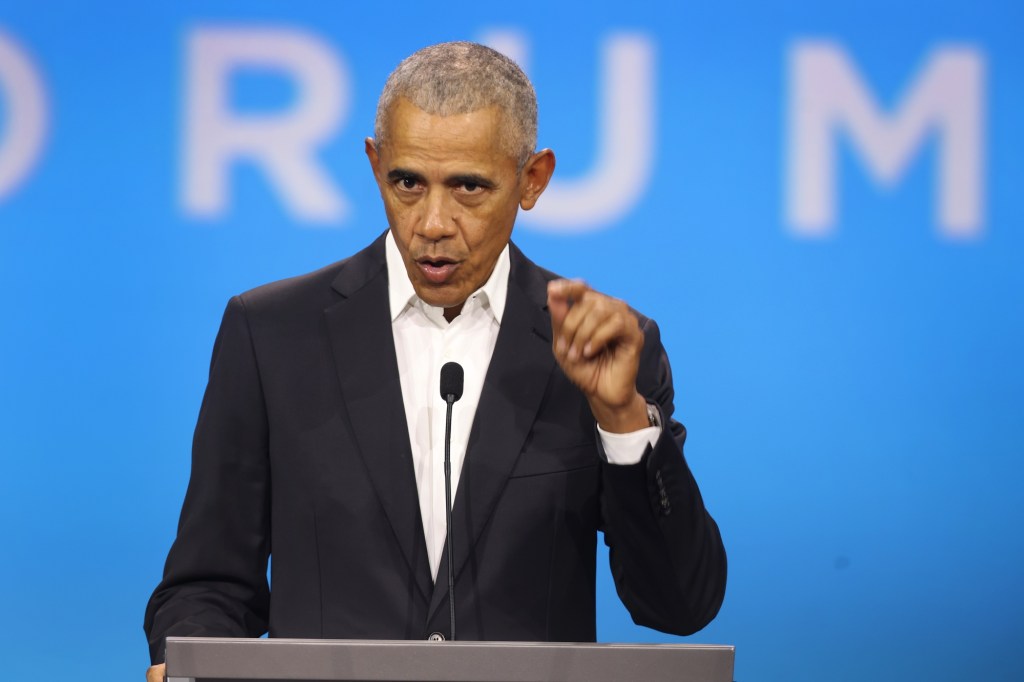
    In a recent thought-provoking speech, former US President Barack Obama offered a compelling perspective on reframing the economic debate.

    Obama delved into economic history, acknowledging capitalism as the unparalleled generator of wealth and innovation. While recognising its historical successes, he pointed out the shortcomings, emphasising that wealth generation doesn’t automatically equate to a just society. He also reminded us of capitalism’s historical compatibility with slavery, exploitation, and environmental degradation.

    The former president acknowledged the role of reformers, organizers, and visionaries in tempering capitalism’s excesses, particularly in the aftermath of the Great Depression and World War II. He underscored the importance of democratic governments in moderating capitalism, highlighting investments in education, social safety nets (of which we should be very proud of here in Europe, and continue maintaining), and regulations to maintain economic balance.

    Obama astutely analyzed the unraveling of the post-Cold War consensus, attributing it to globalization, automation, and the internet. Obama also noted how China and Russia demonstrated that capitalism can thrive under authoritarian regimes as well. He skillfully connected the 2008 financial crisis and the more recent pandemic to the vulnerabilities of a globally connected world, showcasing the interdependence of economies.

    Addressing the concerns of the younger generation, Obama recognized the growing doubts about achieving or surpassing previous living standards. He engaged with the argument that capitalism’s emphasis on growth and consumption, particularly in the face of climate change, might be problematic. Yet, he balanced this by asserting the continued importance of growth and productivity, to uplift billions more out of poverty, urging progressives not to ignore these fundamental economic principles.

    Obama called for a collective effort to align economic policies with our deepest values, echoing the sentiment that economic choices profoundly impact the fabric of our lives. He challenges all of us, who are interested in the commons, to be the new heroes who strengthen the bonds of trust and shape an economic and democratic system that aligns with our shared values and principles.

    Watch the speech: https://www.youtube.com/watch?app=desktop&v=gbog2qF5x-A

    Watch my selected 10 min highlights on Instagram: https://www.instagram.com/p/Cz_DioxI62W/

  • Luxembourg’s Old-Age Dependency Ratio

    Luxembourg’s Old-Age Dependency Ratio

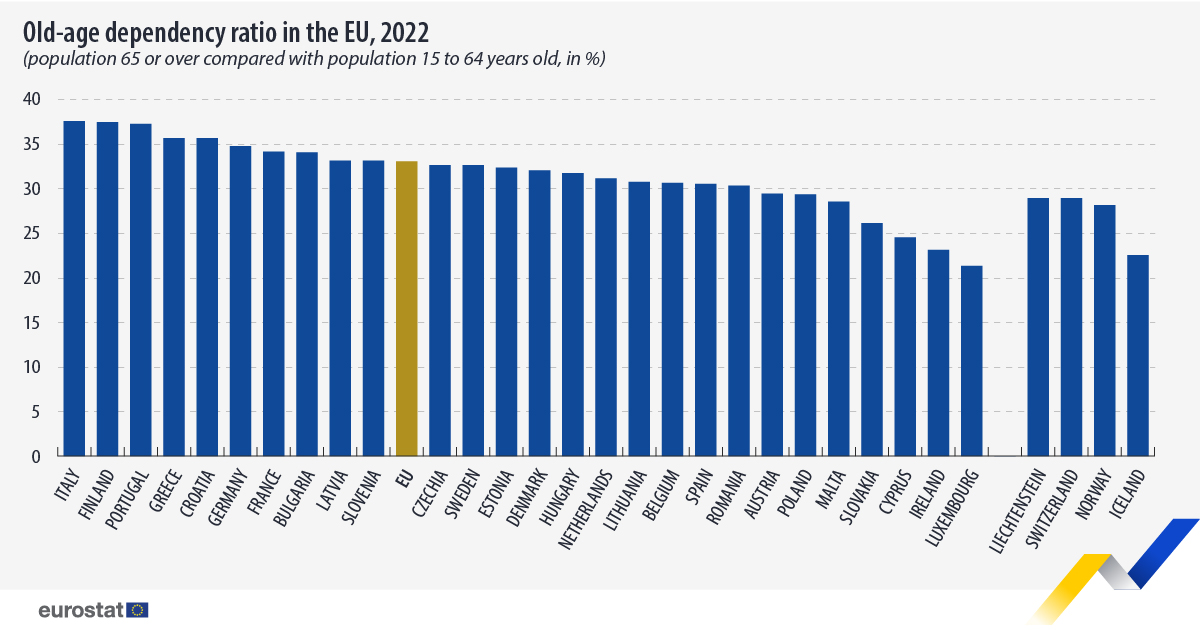
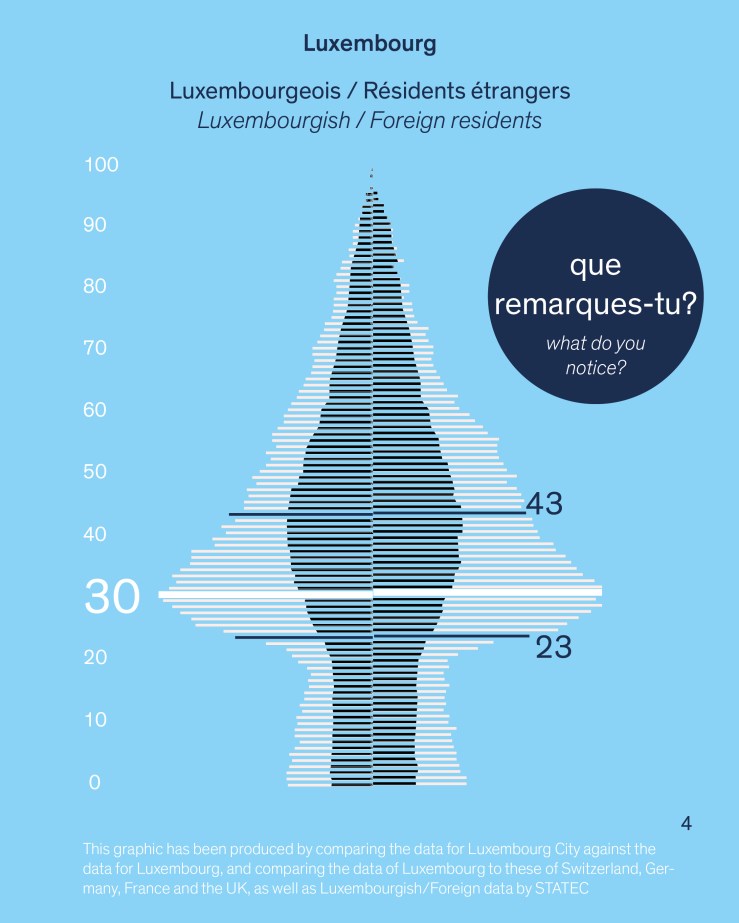
    Luxembourg, is modestly redefining the demographic narrative within the EU. The reason is clear and precise: its old-age dependency ratio is the envy of our neighbors, and it all boils down to a strategic influx of a young, tax-paying, (and mostly European) workforce.

    This isn’t a stroke of luck; it’s policy at its most pragmatic. Luxembourg has cracked the code by actively courting a diverse pool of skilled workers, predominantly from within Europe. Unlike many EU nations grappling with an aging population, Luxembourg has managed to sustain a robust balance between its elderly and working-age citizens.

    The secret lies in the numbers: a workforce that not only contributes to the nation’s economic prosperity but also ensures a manageable burden on its social support systems. In Luxembourg, the elderly aren’t an impending crisis; they’re a population well-supported by the vibrant and tax-generating younger demographic.

    As we gear up for the EU elections in June 2024, Luxembourg’s success story holds crucial lessons. It’s not just about economic growth; it’s about ensuring that the backbone of this success, the young and tax-paying workforce, actively participates in shaping the future of the European Union.

    The call to action is clear: this demographic segment, largely responsible for Luxembourg’s enviable old-age dependency ratio, must not be sidelined in the democratic process. Their voices, their concerns, and their votes need to reverberate in the upcoming elections. The very demographic that has propelled Luxembourg to its unique position is the key to navigating the challenges of an aging population across the EU.

    Ahead of June 2024, register to vote for the European elections in Luxembourg on June 9, and then as we step into the polling booths, let’s not forget the lesson from our country: a thriving, engaged, and diverse workforce is not just an economic asset; it’s the linchpin of a sustainable demographic future for the European Union.

  • Europe’s Global Agency after Brexit

    Europe’s Global Agency after Brexit

    In the aftermath of Brexit and the impending first EU elections post the UK’s departure, the European Union faces a critical juncture, demanding a collective reevaluation and reinvigoration of its purpose and influence on the world stage.

    The urgency for unity and coherence within the EU has never been more pressing. As the EU endeavors to exert its influence in global forums such as the G7 and G20, it must organize, consolidate, and fortify its collective strength. Moreover, Luxembourg, as a founding member and the EU capital, possess a unique opportunity to drive this collective effort forward, particularly by engaging and empowering more Europeans to partake in the political process.

    The EU stands at a pivotal moment where it must redefine and solidify its purpose and stance in a world witnessing seismic geopolitical shifts. As the world evolves, challenges mount, and global power dynamics shift, it is imperative for the EU to consolidate its voice, stand as a unified force, and independently advocate for its collective interests.

    The EU, with its combined economic power, cultural diversity, and commitment to democratic principles, possesses the potential to influence global policy and shape international discourse. However, this potential remains under-realized due to internal fragmentation and a lack of cohesive action. The time has come for the EU to synchronize its policies, pool its resources, and assert its united front on the world stage.

    Encouraging greater participation and voter registration among European citizens in Luxembourg is instrumental in fortifying the EU’s democratic foundation. As Luxembourg gears up for EU elections, there exists a prime opportunity to enhance voter engagement, emphasizing the significance of the EU and its impact on the lives of its citizens.

    Support for the DP and Renew Europe in Luxembourg will a step towards a more inclusive, progressive, and integrated Europe. By uniting behind a common vision, Luxembourg and other member states can drive the EU towards a future marked by increased agency and a more decisive role in global affairs. A more coordinated and assertive European Union is not only advantageous for its members but is crucial in navigating the challenges of the 21st century, including climate change, economic resilience, and security concerns.

    The time is now, and Luxembourg stands at the forefront of this pivotal movement.

  • From Luxembourg to Ukraine: Unity and Solidarity

    From Luxembourg to Ukraine: Unity and Solidarity

    Luxembourg’s population might seem like a mere speck amidst the vastness of our world, and the European Union’s share stands at just 5.7%… it’s easy to feel small and insignificant.

    But beneath those percentages lies a truth that can’t be ignored: unity is our strength, and together, we hold the power to shape our shared future and continue building our democratic, liberal, fairer world.

    To honour Ukraine’s national day right here in Luxembourg I joined LUkraine, and the Ukrainian community in Luxembourg at Hesperange park yesterday afternoon.

    I was and continue to be incredible inspired by the resilience of the Ukrainian people.

    The air yesterday was electric with an undeniable revolutionary, yet peaceful, energy. The blue and yellow colours, the laughter, the camaraderie, the kites.

    Their dedication, their passion, and their determination to bring a piece of their homeland to Luxembourg, whilst fighting and fundraising for their people back home, was and is nothing short of inspiring.

    It was more than a celebration; it was a declaration of unity, a resounding reminder that distance could never sever the ties that bind them to their homeland, even as many of them have made Luxembourg their home.

    But beyond the joyous festivities, the shadows of a somber reality loom.

    The war in Ukraine has left over 150,000 homes either destroyed or damaged – a staggering number that eclipses the entirety of Luxembourg’s housing units (roughly 130,000 units).

    Numbers alone can’t capture the gravity of the situation. The sacrifices made by more than 70,000 Ukrainian soldiers – a toll greater than the entire Luxembourgish military personnel 60 times over – showcases an unwavering dedication to defending their homeland. And alongside them, over 9,000 civilians have so far lost their lives, innocent souls caught in the crossfire of conflict.

    The enormity of this loss hits me like a wave, underscoring the urgency of our support for a nation that is fighting for its survival.

    The Ukrainian people, in the face of unimaginable adversity, are showing an incredible spirit of unity, resilience, and hope. Their celebration in Luxembourg wasn’t just about honouring their national day; it was a symbol of their unyielding spirit and a message of solidarity to their compatriots back home.

    The war and our response to the war in Ukraine is a stark reminder that our world is interconnected, and our responsibilities extend beyond borders.

    Our political leaders bear the duty to continuously communicate why supporting Ukraine is more than a gesture of goodwill; it’s a stand for the very principles that define our modern world – democracy, human rights, and international law.

    The very principles Ukraine is defending.

    We may be a small nation, but we must be proud for the support our country has given and continues to give our Eastern neighbours, both directly, and through the European Union.

    And we must continue to support Ukraine, until this war is won, and Ukraine’s people are free, and its sovereign territory, entirely liberated.

  • Luxembourg, the city of 30 year olds

    Luxembourg, the city of 30 year olds

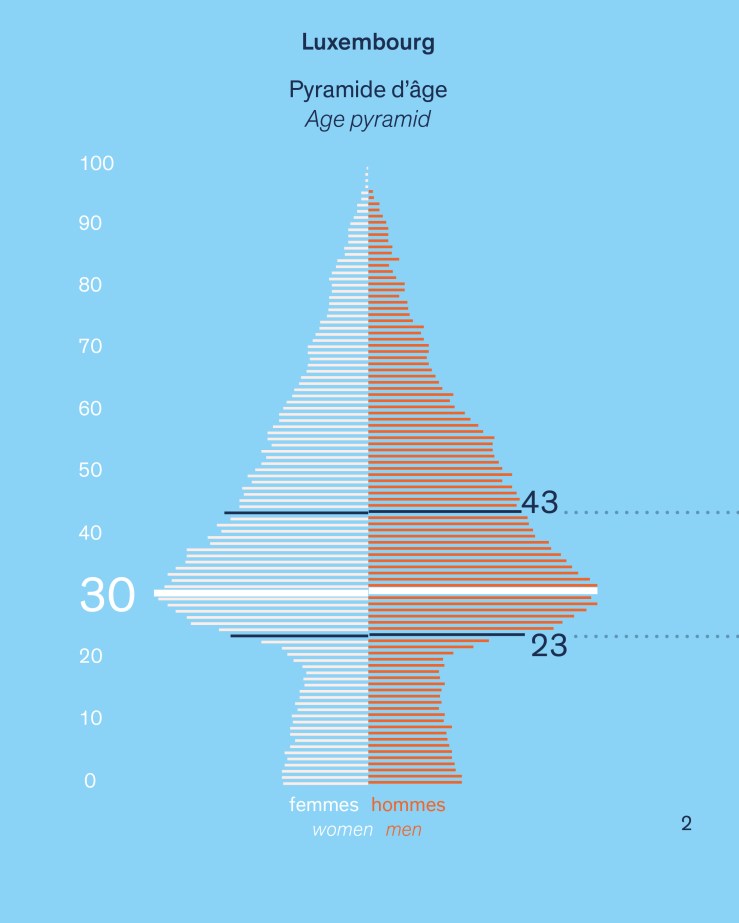
    🇬🇧 + 🇫🇷 Did you know? Luxembourg is a very young city!

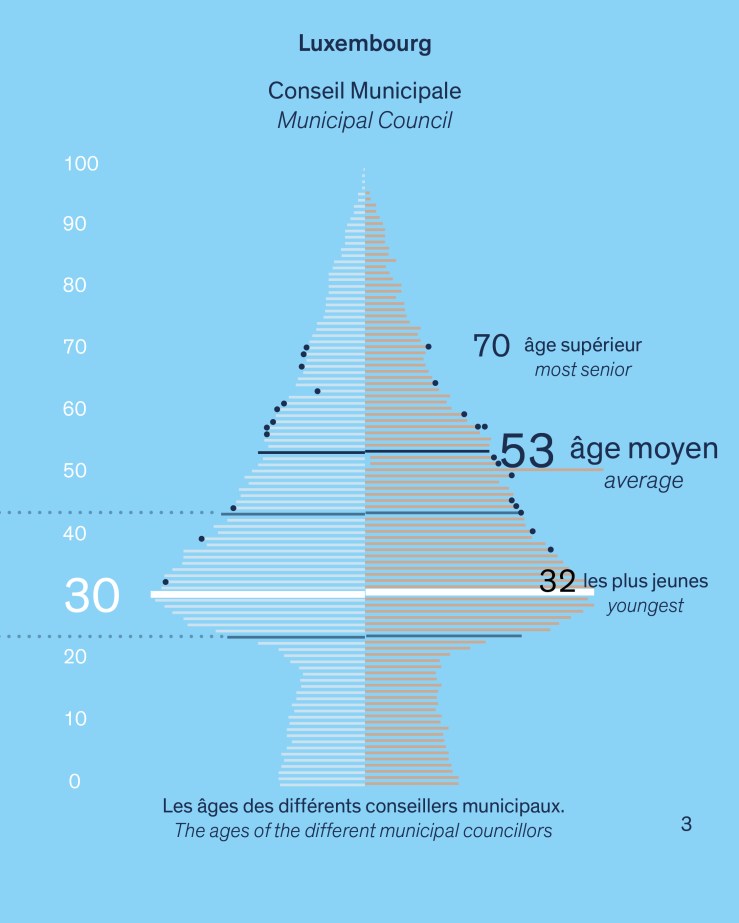
    More people are 30 year olds than any other age, and more people are between the ages of 23 to 43 than any other age.

    What does that mean? Well, if you’re complaining about the dating pool in Luxembourg as a young profesional, maybe try a better bar, but in terms of representation, it means, we have dropped the ball. It means so far, we are not representing what we are, in our political and social dialogue.

    As a society, we need to look ourselves in the mirror, and accept, that what makes us wonderful, is this diversity, is this young talent coming from accross Europe and the world, it is their energy and their work, and therefore we also need to trust that these voices also belong in our social dialogue.

    He who writes this, know what he’s talking about, having grown up an immigrant in Luxembourg, having acquired, patriotically, my Luxembourgish nationality, during the early days of this health crisis, as I was one of the first volunteers, along with many, many foreign-residents in the first lines, and knowing, that this is my home, this is my country I want to contribute to, and I too, deserve to have a voice, in how we shape its future. And so do you.

    A huge thank you to Jana DeGrott for amplifying this article / post on Instagram, by inviting me to collaborate on its sharing.

    En Francais

    ●Le saviez-vous? Luxembourg est une ville très jeune !

    Plus de personnes ont 30 ans que n’importe quel autre âge, et plus de personnes ont entre 23 et 43 ans que n’importe quel autre âge.

    Qu’est-ce que ça veut dire? Eh bien, si vous vous plaignez du ‘dating pool’s au Luxembourg en tant que jeune professionnel, essayez peut-être un meilleur bar, mais en termes de représentation, cela signifie que nous avons laissé tomber la balle. Cela signifie que jusqu’à présent, nous ne sommes pas représentés tels que nous sommes, dans notre dialogue politique et social.

    En tant que société, nous devons nous regarder dans le miroir et accepter que ce qui nous rend merveilleux, c’est cette diversité, c’est ce jeune talent venant de toute l’Europe et du monde, c’est leur énergie et leur travail, et donc nous aussi avons besoin de croire que ces voix ont aussi leur place dans notre dialogue social.

    Celui qui écrit ceci, sait de quoi il parle, ayant grandi immigré au Luxembourg, ayant acquis, patriotiquement, ma nationalité luxembourgeoise, durant les premiers jours de cette crise sanitaire, car j’étais l’un des premiers volontaires, avec beaucoup, de nombreux résidents étrangers en première ligne, et sachant que c’est chez moi, c’est mon pays, et moi aussi, je mérite d’avoir une voix sur la façon dont nous façonnons son avenir. Et toi aussi.

  • Building Kirchberg

    Building Kirchberg

    Kirchberg is the physical manifestation of Luxembourg’s international ambitions.

    Understanding the history of Kirchberg is crucial, as we try to understand how our City plans our lives and our future. It represents the shift for Luxembourg’s dependency on the steel economy, to a service economy.

    Over the now 60 years of development, Kirchberg is still not a successful urbanisation project. The vision has changed a lot through these 6 decades, making its development incoherent.

    In the last 15 years the Fonds de Kirchberg @fonds_kirchberg has re-evaluated a lot of the mistakes of the past, and we hope to deliver a Kirchberg that works, for itself, and as part of the City of Luxembourg @villedeluxembourg , to increase the quality of life of its residents, and increase density and services within the Quartier.

    This Instagram post is a retrospective and first-look into Kirchberg before, now and tomorrow (and the challenges we face)

    If you are interested in learning more about life in Luxembourg, and the issues that should concern us all, please do follow me on Instagram and/or send me a friend request on Facebook.

    Kirchberg before and after.