Category: Blog

  • Yet another call for humanity, and the upholding of international law

    Yet another call for humanity, and the upholding of international law

    I find myself compelled to once more speak of the ongoing tragedy in Gaza.

    No party involved in an armed conflict is above international law. International law sets clear rules on, proportionality, and precautions in attack.

    The intentional killing, injuring, or tormenting of civilians is illegal, and rightly so. October 7th was a tragedy. And once more, in our condemnation of violence, we must also recognise the toll of the brutal response that has ensued, a tragedy of unbelievable proportions.

    The numbers tell the story on their own – hunger, displacement, and a crumbling humanitarian system afflict more than 1.7 million people in Gaza right now.

    The people of Gaza, deserve a chance at a life beyond this perpetual cycle of suffering.

    The international community must work to ensure rapid, safe, and sustained humanitarian access throughout the region, and the end of the campaign on Gaza, that makes both Israelis and Palestinians in Gaza, unsafe, as some cling to power in Jerusalem; instead of prioritising the safety of all people in the region.

    For the survivors of this conflict, the pain will endure. But they must survive first. The hostages in Gaza, the millions of innocent trapped in the crossfire: None are safe right now.

    The international community must not turn a blind eye; we must do what we can to influence the possibility for peace, and then for reconstruction.

    We must, now, urgently, engage in constructive dialogue about the future, so that there may be a future.

    What can the future for Palestinians look like? We must break free from the shackles of conflict and envision a future where stability and coexistence prevail.

    Right now, the members states of the European Union, must assist Israel, not by disengaging, but by insisting it complies with international law. To protect further loss of life in this conflict, and ensure long-term possibilities of peace are possible. We all know the task of achieving lasting peace in the region is Herculean, but as I’ve said before, we’ve got to be able to talk about it, we simply can’t ignore what is happening.

    Ensuring Israel’s safety should not be pursued at the expense of innocent lives in Gaza.

    I pray that those still alive will live.

    I pray that no more lives are lost.

    What number of deaths will make us all say, enough?


    The military campaign today, is not setting up a peaceful future neither for Israelis neither for Palestinians.

    To my Israeli friends: Which Jew, which Israeli wants to continue living in fear of rockets, and terrorism for the next century? None that I know.

    To my Palestinian friends: Which Muslim and which Palestinian wants to continue living in fear of rockets, and terrorism for the next century? None that I know.

    We must work for peace. Now.

  • Pursuing Peace: Upholding International Law in Gaza

    Pursuing Peace: Upholding International Law in Gaza

    As we see a world plagued by conflict and uncertainty, from Gaza to Ukraine, from Africa to East-Asia, the importance of upholding international law has never been more pronounced.

    Even in the midst of war, rules, rights, and standards bind nations together – but their efficacy depends on the vigilant enforcement by the international community, extending from the streets of Kiev to the heart of Gaza.

    The ongoing tragedy in Gaza, Israel, and the broader Middle East demands a fresh perspective on breaking the cycle of hatred and war.

    The United States, may be the most powerful player in global geo-politics, but it is by drawing inspiration from post-World War II Europe that we can find a roadmap for transformation.

    Enemies can evolve into allies, fostering an environment that guarantees the peaceful coexistence of both Israelis and Palestinians. It is a challenging endeavor but one that, if pursued with determination, promises a secure and harmonious future.

    While acknowledging Israel’s right to target those responsible for the horrific terrorist attack of October 7th, it is crucial to scrutinize the methods employed in its response. Justifiable actions should never escalate to a point where they breach the principles of proportionality and humanity. When strikes extend beyond necessity, and the lives of innocent children are needlessly sacrificed, it becomes not only a tragedy but a violation of international law.

    The overwhelming majority of people in Gaza wanted a peaceful resolution even before the escalation.

    That peaceful resolution that was ever-so-closer, with Israel’s growing positive relations with its neighbours, before October 7. It’s commonly accepted it’s part of the reason Hamas decided to strike, because Hamas does not want a peaceful resolution, Hamas exists thanks to and benefits from the current situation.

    The people of Gaza are willing to compromise, to live in peace. Israel wants peace. The unfolding strategy can not continue, it is in no way creating the conditions for long term peace or safety for neither Israelis or Palestinians.

    Today, as I recall in my mind, the events of the Polytechnic uprising in 1973, 50 years ago, where students took a courageous stand against the military junta of Greece at the time, I am reminded of the fact that peace is not merely the absence of conflict but the result of a constant struggle against oppression and the preservation of fundamental human rights. If we fail to uphold and protect these rights, we all lose our freedom.

    World leaders must agree to do whatever is necessary to prevent the massive loss of life in Gaza and prepare all and every avenue for dialogue to achieve an end to this conflict, in the name of peace and freedom, and so that Israelis and Palestinians, Jews, Christians and Arabs can finally live in peace, and pursue their lives and prosper.

  • AI: Augmenting our Potential, Not Replacing It

    AI: Augmenting our Potential, Not Replacing It

    The AI revolution is well underway, with the technology demonstrating unprecedented abilities in areas such as natural language processing, image recognition, and complex problem-solving (Hi Talkwalker!). Yet, the essence of this revolution goes beyond just the technology itself; it lies in the profound changes AI can bring to human society and the workforce.

    The fear that AI will replace humans in the workplace is a narrative that often takes center stage. However, it’s imperative that we shift our perspective. Instead of viewing AI as a threat, we should embrace it as a tool for augmenting our capabilities.

    • AI can complement human creativity. It can analyze data, recognize patterns, and generate novel ideas. This collaboration between humans and AI can result in more imaginative solutions to complex problems.
    • AI can handle repetitive, data-intensive tasks with speed and precision, freeing humans to focus on more value-added work. This leads to increased efficiency and productivity.
    • In education, AI can tailor learning experiences to individual students, adapting to their pace and preferences. It empowers educators with data-driven insights to enhance teaching methodologies.
    • AI in healthcare assists doctors in diagnosing diseases more accurately and personalizing treatment plans. It ensures that patients receive the best care possible.
    • AI plays a vital role in monitoring and optimizing resource use, reducing waste, and mitigating environmental issues. By collaborating with AI, we can address global challenges more effectively.

    AI is not the harbinger of a jobless future; it’s an opportunity to redefine how we work, learn, and create. The collaborative potential of humans and AI is what sets this revolution apart. It’s a partnership where the strengths of each entity amplify the other’s capabilities.

    With this newfound potential, it’s vital to address the ethical dimensions of AI. Transparency, fairness, and accountability should guide the development and deployment of AI systems. We must ensure that AI technologies do not perpetuate biases or threaten individual freedoms.

    As AI becomes more integrated into our lives, there’s an urgent need for education and upskilling. By embracing AI as an augmentation tool, we open the door to exciting new career opportunities and encourage a continuous learning mindset.

    AI is not here to replace us; it’s here to help us reach new heights, solve complex challenges, and enhance our quality of life. By embracing AI as a partner in our journey, we unlock unprecedented opportunities that will shape the future of our society and the world at large.

  • Israel, Palestinians and Peace

    Israel, Palestinians and Peace

    The Middle East has been once again plunged into turmoil, with a tragic escalation of violence in and around Israel, and the Gaza Strip. The European Union and the United States have tried unsuccessfully to bring Israel and the Palestinians closer together in the past. After Saturday’s terrorist attack, the two sides are even further apart. The events of this week have only deepened the complexities and grievances of the Israeli-Palestinian conflict. The shockwaves from this violence reverberate far beyond the region, leaving a lasting impression on the global conscience. It is important to voice support for Israel while advocating for peace and a sustainable resolution.

    The attack on Israel was one of the most severe in its recent history. Thousands have been killed and many more affected, including innocent civilians, women, and children. And Israel, like any other sovereign nation, has the inherent right to self-defense, as recognized by international law. Solidarity with Israel an acknowledgment of this right and a commitment to stand by the people of Israel in their hour of need.

    We must also unequivocally denounce the acts of terrorism perpetrated by Hamas, and their state-sponsors. Additionally, it is important to emphasize that the violence and terror brought forth by Hamas are not representative of the legitimate aspirations of the Palestinian people. The vast majority of people in Gaza want a peaceful Israeli-Palestinian resolution, and Hamas gone. These acts of violence only serve to exacerbate suffering in the region and hinder the prospect of a peaceful resolution. The Palestinian people want peace, security, and prosperity.

    I am pleased that our Union’s (EU) support for the Palestinian people remains and that we are committed to providing humanitarian assistance to those in need. In light of the evolving situation on the ground, I hope the European and International community ensures that we avoid further loss of life, and increase of suffering.

    The path towards peace and cooperation must not be deterred. Our goal must be to promote peace in the region and prevent further violence. Perhaps Yuval Noah Harari is right, a coalition ranging from the US, the EU, Saudi Arabia and the Palestinian Authority – should take responsibility for the Gaza Strip away from Hamas, to rebuild Gaza and simultaneously completely disarm Hamas and demilitarise Gaza. To stand with Israel, the people of Israel and the Palestinians, our ultimate objective must be peace. A peaceful, negotiated settlement is the only path to a brighter future for everyone in the region. Prominent Israeli journalist Gideon Levy has rightly pointed out in his recent article “The Reckoning Must Be With Hamas, Not With All Gazans” that Israel’s far-right must also learn the importance of working towards creating lasting peace. “After 75 years… the worst-case scenario is unfolding” he says. “Threats to flatten Gaza” are not the way towards lasting peace. It is crucial to acknowledge that peace in the region can only be achieved through dialogue, understanding, and a just resolution that addresses the legitimate concerns and aspirations of both Israelis and the Palestinian people. We must ensure, that the people in Gaza are not punished all together, for the crimes that Hamas has perpetrated. This is the only way towards peace, and the only way to guarantee the safety of both peoples.

    These trying, tragic times remind us of the importance of standing for Israel, the people of Israel, the Palestinians, and all the innocent, for peace, justice, and prosperity for all who share peaceful intentions.

    However, as long as the situation continues to be as we know it, we can not expect that Israel will stop defending its interests. Terrorist Hamas must immediately retreat, return the hostages, or will face the Israeli army’s might. As terrible atrocities are being documented, as the worst of our humanity is invoked, in these indescribable times, one thing is clear: if the message coming out from Hamas and their terrorist allies, continues to challenge Israel’s existence, sovereignty and people, then the conflict will unfortunately continue, and the price will be paid, unfairly, by thousands of innocent people.

    My fear, is the escalation of this conflict, and the tragic loss of more lives. Let us hope and work for peace and for compromise, work together, with both parties (Israel and the Palestinians), and be open to resolutions that address the, truly legitimate, concerns on both sides. In the name of peace, and humanity.

  • 1 in 3 Luxembourgers is a naturalised citizen.

    1 in 3 Luxembourgers is a naturalised citizen.

    1 in 3 Luxembourgish citizens here in the heart of Europe, in Luxembourg, is now a naturalized citizen. 1 in 2 residents is a non-citizen. 3 in 4 people working in Luxembourg are non-citizens. πŸ‡±πŸ‡Ί

    These facts are not just about numbers; it represents the tapestry of stories, cultures, and dreams that make up our country.

    Looking ahead to 2030, the proportion of naturalised citizens, is set to grow even more, transforming our society and enriching our collective experience. But what does this mean for us as Luxembourgish citizens? And for our democracy?

    It’s not just a demographic shift; it’s a call to action. As our society diversifies, it’s our shared responsibility to ensure that all voices are heard and considered in the decisions that shape our democracy.

    I believe that every journey of immigration, every tale of growth, and every story of building a new life in Luxembourg adds a unique hue to the canvas of our nation. These perspectives are an opportunity to influence the very rules that guide our society.

    Our compatriots who’ve chosen Luxembourg as their new home have so much to offer. Their contributions aren’t just to be confined to workplaces; they must extend to our social leadership and democratic processes. The tapestry of perspectives they bring will help us in creating a more inclusive and harmonious Luxembourg.

    This brings us to an important thought: empowerment. We need to actively encourage more of our fellow citizens and residents to step into leadership roles.

    By doing so, we can tap into their diverse experiences and channel their passion and knowledge and perspectives into shaping our country’s bright, European future.

    As we gear up for the upcoming October vote, there’s a crucial point to consider. Your vote is your voice, and by connecting with the right people, you can vote tactically to support those who champion inclusivity and diversity and the true coming-together of our diverse, multicultural nation.

    It’s time to bridge the gap between citizens and leaders, to foster an environment where every perspective, old or new, is respected and valued.

    Luxembourg is evolving, and we’re all a part of this evolution. Let’s stand together, united in our commitment to embrace diversity, empower our fellow citizens, and pave the way for a future that’s brighter and more inclusive than ever before.

  • Celebrating the British Luxembourg Society

    Celebrating the British Luxembourg Society

    Strengthening and Building European Connections

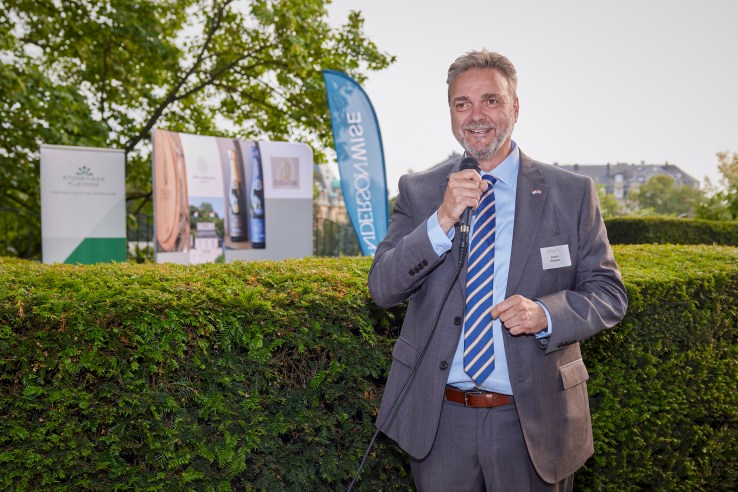
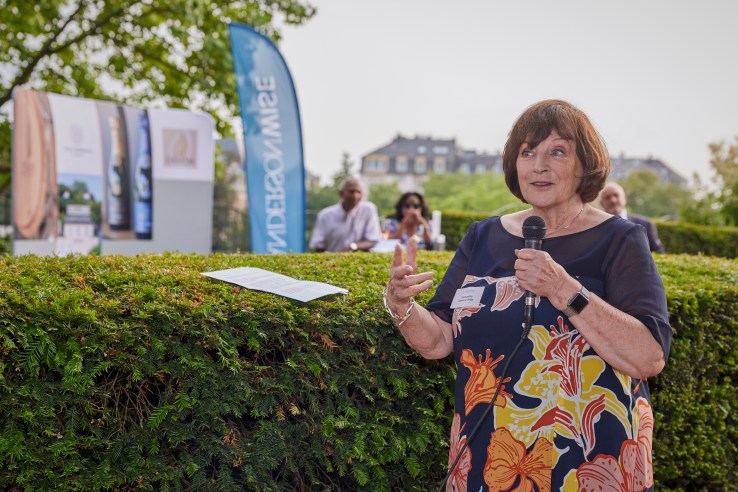
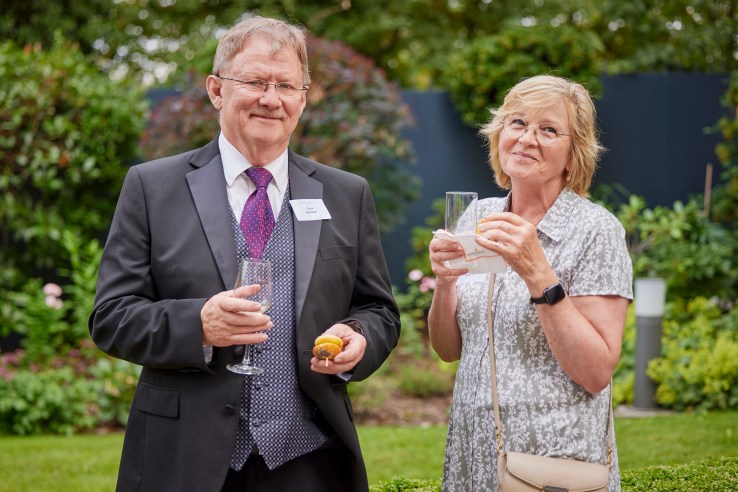
    Last week I had the pleasure of attending the British Luxembourg Society Summer Reception at the British Ambassador’s Residence.

    A wonderful event that also serves as a reminder of the importance of maintaining cultural and social connections between our nations. πŸ‡±πŸ‡ΊπŸ‡¬πŸ‡§

    Christos Floros with Amela Skenderovic (DP) at the British Luxembourg Society Summer Reception at the British Ambassador's Residence in 2023.
    Christos Floros with Amela Skenderovic and David Pierre Rausch.

    The British Luxembourg Society plays a crucial role in fostering connections between Britain and Luxembourg. It provides a space for individuals from all cultures and countries to come together and celebrate shared values, traditions, and history.

    The Summer Reception was a vibrant gathering of people united by a common interest in maintaining strong ties between our nations. The event served as a reminder that, despite political changes, there are people dedicated to building bridges and keeping our connections alive.

    Christos Floros with Luxembourg City Councillor Robert Philippart (Democratic Party, Renew Europe) at the British Luxembourg Society Summer Reception at the British Ambassador's Residence in 2023.
    Luxembourg City Councillor Robert Philippart with Christos Floros.

    A few words about the British Luxembourg Society

    The British Luxembourg Society has a rich history dating back to its establishment in 1947.

    Through the years, it has organised various events, including the prestigious Sir Winston Churchill Memorial Lecture, which has featured renowned speakers including last year former President of the European Commission and former Luxembourg Prime Minister Jean-Claude Juncker.

    This commitment to cultural exchange and promoting bridges is a testament to the dedication of the Society and its members. I have been so lucky to be serving as a Council Member for the last 2 years.

    I would like to express my sincere appreciation to Darren Robinson, the President of the British Luxembourg Society, and Louise Benjamin, the President of the Society until this term, for their remarkable leadership and vision. Their efforts have been instrumental in driving the Society’s growth and impact.

    I believe we would all like to extend our gratitude to all the attendees of the Summer Reception, whose presence and enthusiasm made the event truly special. Furthermore, we would of course want to acknowledge and thank our sponsors whose support enables the Society to continue its valuable community-building work.

    As we move forward, it is essential to remember the importance of organisations like the British Luxembourg Society in fostering understanding and connection. By expanding our range of activities and embracing individuals from all cultures and countries, the Society is opening doors for a more diverse and inclusive community.

    Together, we continue to celebrate our shared values and build a future that embraces unity and collaboration between Britain and Luxembourg, and contribute to Luxembourg’s rich cultural tapestry.