Category: Blog

  • A conversation with Colette Flesch

    A conversation with Colette Flesch

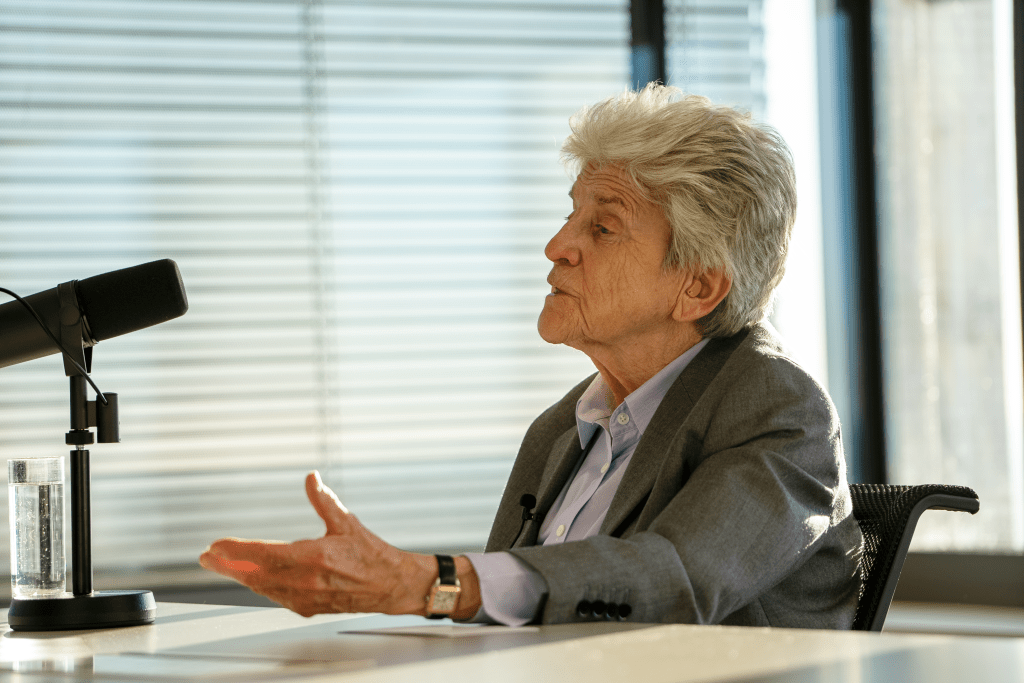
    Colette Flesch, was the first woman to become mayor of Luxembourg City in 1970. The politician discusses her life and work, and immigration in Luxembourg.

    Colette Flesch is a former member of the Chamber of Deputies, former MEP, and former Olympic athlete.

    In this pilot episode of Conversations with Christos, they discuss her life, marked by World War II, and escaping the Nazi invasion of Luxembourg, and working to build a better ‘brave new world’.

    Next Episode coming January 10 2023.

    Conversations with Christos is a TV series (streaming) that I created with RTL. I have meaningful conversations with public figures from Luxembourg and Europe to make their work and lives more accessible to you.

    Christos Floros, in conversation with Colette Flesch at RTL City (December 2022)

  • Everything and Anything, all at once

    Everything and Anything, all at once

    Do you have the time to listen to me whine about everything and anything all at once?

    If you feel like singing this sentence out loud, it is because I’m paraphrasing it from Green Day’s ‘Basket Case’, a song released in 1994, a year after I was born but before the internet became what it is today, before our lives became endlessly connected to digital devices we carry around in our pockets.


    This opinion article appears on RTL Today, Luxembourg’s English-speaking version of RTL, you can also read it there.

    Before you get out of bed, you have the possibility of reading about the Federal Reserve making its biggest interest rate increase in 22 years, the latest on the War in Ukraine, on the Covid-19 pandemic, the killing of Al Jazeera journalist Shireen Abu Aqla in the West Bank; before you brush your teeth, you check your favourite cryptocurrency, only to see your investment is down 25%.

    You check your Instagram and reply to 6 or 7 stories with a cry emoji, or a heart, or a big smile.

    If you’re younger, you may also check Snapchat and TikTok: a video of a Donald Trump fanboy asking for Hunter Biden’s laptop, making a connection between the Bidens, the war in Ukraine and Putin’s left eyebrow, will grace your eyes, just before you swipe up to see a dance of 3 ridiculously good-looking people swapping clothes in mid-air.

    And that’s all before you get ready for the day, and in a matter of minutes. This compounding, of just about anything, stimulates our brains, all the time.

    Even if you’re more meticulous in the way in which you consume your content and try to distinguish between your time wasters and important news, the sheer amount of endless important news means you’re probably reading about everything, all of the time.

    How much of it can we truly process? Some of us become activists who never stop, and some of us choose to ignore almost everything of importance, to protect ourselves from the overload of information.

    I don’t blame either, at a time where everything feels like it’s happening next door, because it’s happening on every second person’s ‘story’ it’s hard to not engage in digital activism, and at the same time, because of all this constant demand for our attention, I also completely understand those who shut everything out.

    But the biggest loser in all of this is us and our society.

    Because of this ‘everything that’s constantly ‘happening’ and ‘breaking’, it seems we have become unable to connect the things that matter most. We have an endless list of priorities, without actually having any priorities.

    We listen to, subscribe and read ‘everything’ but how much of it do we understand? I think the answer is reflected in our polarised politics (around the world). Clearly there’s a lack of understanding on many urgent issues (including, if not primarily, the issue of Climate Change). Knowledge is based on facts, and yet our voting patterns still suggest tribalism and fanaticism.

    On that note, what responsibility do large media and news organisations have in aiding, not just the fight against misinformation, but also in relating the news in efficient and clear ways, not just in traditional forms, but also by taking social media seriously, and releasing their content in new forms and new ways, to make it truly accessible and relevant to their audiences?

    If this is unclear, I’m sorry: “Sometimes my mind plays tricks on me” (that’s Basket Case again).

    Originally submitted and published on RTL Today.

    You may also like to read other articles written by me, published on RTL Today.

    Restoring the promise of a future (on tackling climate change)

    Your children will feel at home in Luxembourg (on social cohesion and building bonds with and within Luxembourg)

    Making Luxembourg your Home (on voting and participating in Luxembourg’s democratic process)
  • The Importance of Participation in a Democracy

    The Importance of Participation in a Democracy

    L’importance de la participation dans une démocratie (lire en francais)

    Barack Obama, in his reply to a student in April 2016, said the following (and it stuck with me since):

    On your college campuses, half the folks, maybe two-thirds of the folks who don’t vote don’t vote because they’re just not paying attention.

    They don’t consider it important.

    And they’re not willing to take the 15 minutes or half hour that it takes to make sure that you’re registered and make sure you actually vote.

    Well, if you care about climate change, you care about college costs, you care about career opportunities, you care about war and peace and refugees, you can’t just complain. You’ve got to vote. And what’s interesting is, is young people as a voting bloc are the least likely to vote, but when you do vote, have the biggest impact on elections.

    Barack Obama, April 2016

    This is incredible relevant for Luxembourg too, where only 10% of the foreign population participates in our elections, even though they are eligible and make up 50% of the country and 70% of the city of Luxembourg.

    You can read my article on RTL today on the matter here.

    We need everyone to participate, to help build a cohesive, inclusive and prosperous future for Luxembourg, the city, the country and our European Union.

    If Luxembourg can lead the way, with its multi-cultural, multi-lingual population, then we can inspire the rest of Europe too.

    Video below

    Barack Obama, dans sa réponse à un étudiant en avril 2016, a déclaré ce qui suit (et cela m’est resté depuis):

    Sur vos campus universitaires, la moitié des gens, peut-être les deux tiers des gens qui ne votent pas, ne votent pas parce qu’ils ne font tout simplement pas attention.

    Ils ne considèrent pas cela important.

    Et ils ne sont pas disposés à prendre les 15 minutes ou la demi-heure qu’il faut pour s’assurer que vous êtes inscrit et que vous votez réellement.

    Eh bien, si vous vous souciez du changement climatique, des frais de scolarité, des opportunités de carrière, de la guerre, de la paix et des réfugiés, vous ne pouvez pas simplement vous plaindre. Vous devez voter. Et ce qui est intéressant, c’est que les jeunes en tant que bloc électoral sont les moins susceptibles de voter, mais lorsque vous votez, ils ont le plus grand impact sur les élections.

    Barak Obama, avril 2016


    C’est incroyablement pertinent pour le Luxembourg aussi, où seulement 10% de la population étrangère participe à nos élections, même s’ils sont éligibles et représentent 50% du pays et 70% de la ville de Luxembourg.

    Vous pouvez lire mon article sur RTL aujourd’hui à ce sujet ici.

    Nous avons besoin que tout le monde participe, pour aider à construire un avenir cohérent, inclusif et prospère pour le Luxembourg, la ville, le pays et notre Union européenne.

    Si le Luxembourg peut ouvrir la voie, avec sa population multiculturelle et multilingue, alors nous pouvons également inspirer le reste de l’Europe.

  • Integration Matters

    Integration Matters

    Foreign Residents and their role in Luxembourgish society, and my plea to get you to participate.

    Everybody knows that Luxembourg is a wealthy, multicultural and multilingual country. Luxembourg is a success story thanks to this international outlook, adopted and developed after World War II. However, where Luxembourg has not gotten it right, is integrating its massive foreign population.

    The biggest issue I need to highlight is that only about 1 in 10 of our foreign residents participate in our local elections. Elections that are far more important than the turnout suggests.

    Read the rest on RTL Today in English —

    En Francais ici 🇫🇷

    Les résidents étrangers et leur rôle dans la société luxembourgeoise, et mon plaidoyer pour vous faire participer.

    Tout le monde sait que le Luxembourg est un pays riche, multiculturel et multilingue. Le Luxembourg est une success story grâce à cette ouverture internationale, adoptée et développée après la Seconde Guerre mondiale. Cependant, là où le Luxembourg n’a pas réussi, il intègre sa population étrangère massive.

    Le plus gros problème que je dois souligner est que seulement environ 1 sur 10 de nos résidents étrangers participe à nos élections locales. Des élections bien plus importantes que ne le suggère le taux de participation.

    Nous sommes un pays d’immigrants. La moitié de la population luxembourgeoise est composée de personnes qui ne sont pas citoyens du pays. De plus, pendant la journée, le Luxembourg a besoin de plus de 200 000 travailleurs supplémentaires pour fonctionner, les soi-disant «frontaliers». Nous sommes très reconnaissants des services que tous ces hommes et ces femmes rendent à notre pays et à notre société.

    Qui décide pour vous ?

    Et vous, immigrés et expatriés au Luxembourg ? Des femmes et des hommes qui vivent ici et élèvent vos enfants ici, dans ce beau pays qui est le nôtre. Les jeunes femmes et hommes qui s’installent ici dans l’espoir d’une vie meilleure — vous avez le droit de voter, de prendre des décisions qui affectent et affecteront votre vie quotidienne. Je vous exhorte à vous inscrire pour voter et participer à notre prise de décision commune, dans notre démocratie.

    Seuls 4% des jeunes adultes étrangers votent.

    Selon le CEFIS (Centre d’Etude et de Formation Interculturelles et Sociales asbl), seulement 1% des jeunes adultes âgés de 18 à 24 ans étaient inscrits sur les listes électorales avant les élections locales de 2017 et un pourcentage tout aussi gênant de 4% des adultes âgés de 25 à 35 ans ont été enregistrés.

    Si vous ne participez pas, vous n’avez pas de voix.

    Les élections locales au Luxembourg sont extrêmement importantes, au niveau local, les communes, telles que la ville de Luxembourg, ont compétence sur toutes les questions d’intérêt communal telles que la propriété communale (logement), les revenus, les dépenses, les travaux, les institutions publiques locales comme les écoles, la nomination du secrétaire communal et du personnel communal — si vous ne participez pas, vous n’avez pas voix au chapitre sur ces questions.

    Si vous envisagez de faire du Luxembourg votre chez-vous, ou si vous vivez déjà ici depuis 10 ou 30 ans mais que vous n’avez jamais voté, je vous exhorte à vous inscrire et de faire entendre votre voix dans notre démocratie.

  • THREE KINGDOMS by Simon Stephens

    THREE KINGDOMS by Simon Stephens

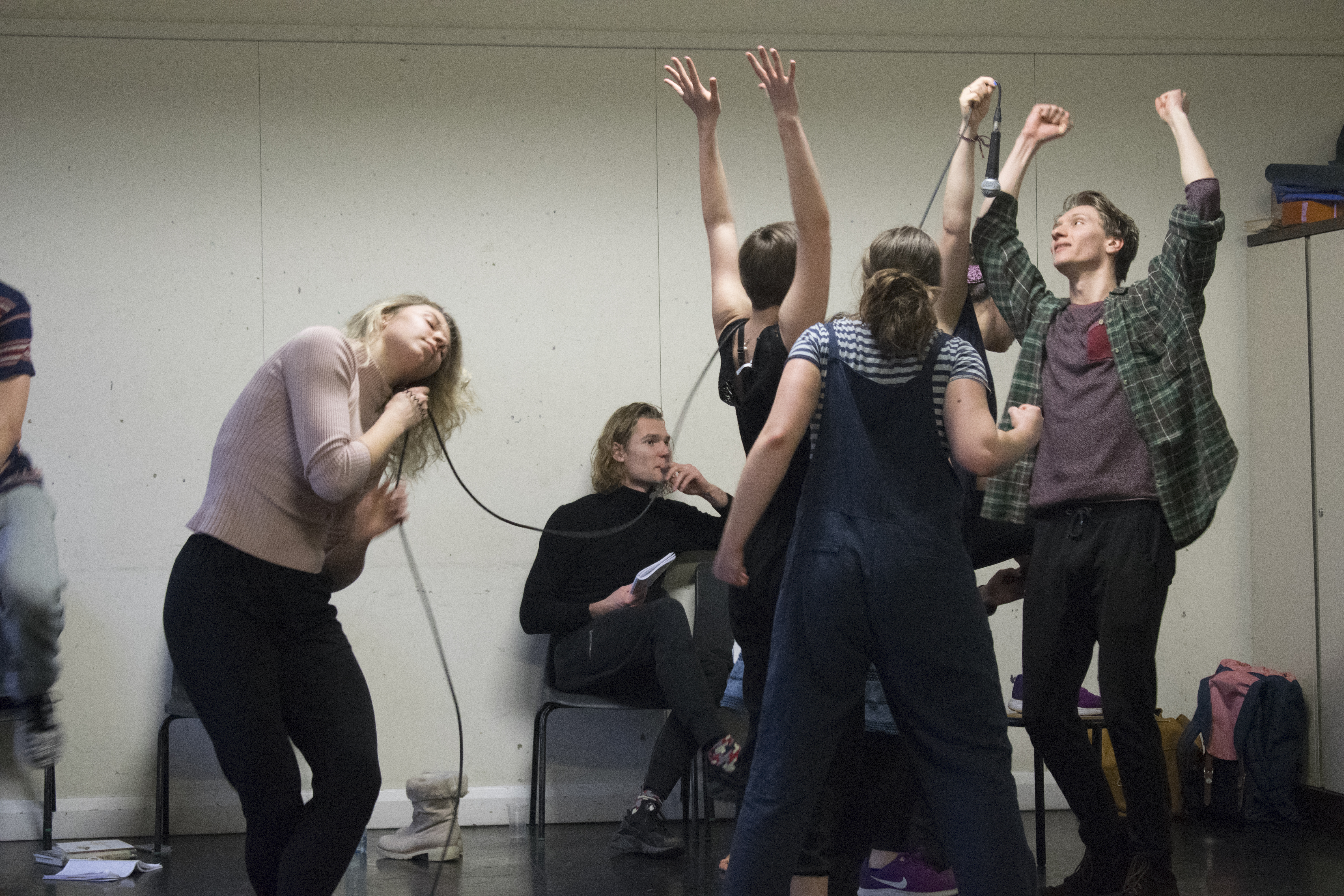
    We, the INTS at East 15, are currently working with an insane dude and brilliant director called Tom Hughes on a play called THREE KINGDOMS. Tom’s method of working is fucking fun. His rehearsal space is epic. I finally feel free to work, to own my own, within the parameters of the play. A freedom partly bestowed upon us by the playwright, Simon Stephens, who, in conversation, when I asked him about how he felt on altering and reshaping his work, he differentiated himself from a novelist, saying he feels very much like a theatre maker, who gives the starting point to a larger creative exploration. That, being the role of the playwright. A word he also etymologically explained.

    _DSC1487.jpg
    Improvised nightmare scene out of nowhere, during the break.

    So far, every day of rehearsal, we dance, and sing, and create and explore.

    The picture above was taken by Tongchai O. Hansen, our AD and fellow INT of 2018, who will be documenting our process on his personal blog. So, head over to Tongchai’s to read his journal!

    Meeting Simon was an absolute joy, I love meeting people who are passionate about their work, and he is a very charismatic person. He offered us very interesting comments and opinions on theatre, working on a play and his own methods. I left that meeting entirely inspired and motivated to work, and now, I’m hoping this inspiration can stay with me, as motivation and self-confidence can always fluctuate.

    In other news, Higher Hopes has been slightly delayed, but still streamlined for release this month.

    Featured Image: Christos Floros, Tom Hughes and Simon Stephens (left to right) (c) Tongchai O. Hansen